01The choice
Two jobs that look alike from the ladder
When glass has clouded, you can swap the glass alone or swap the whole rooflight. This chapter shows why the two jobs are not the same size, and why the cheaper-looking one is not always the sensible one.
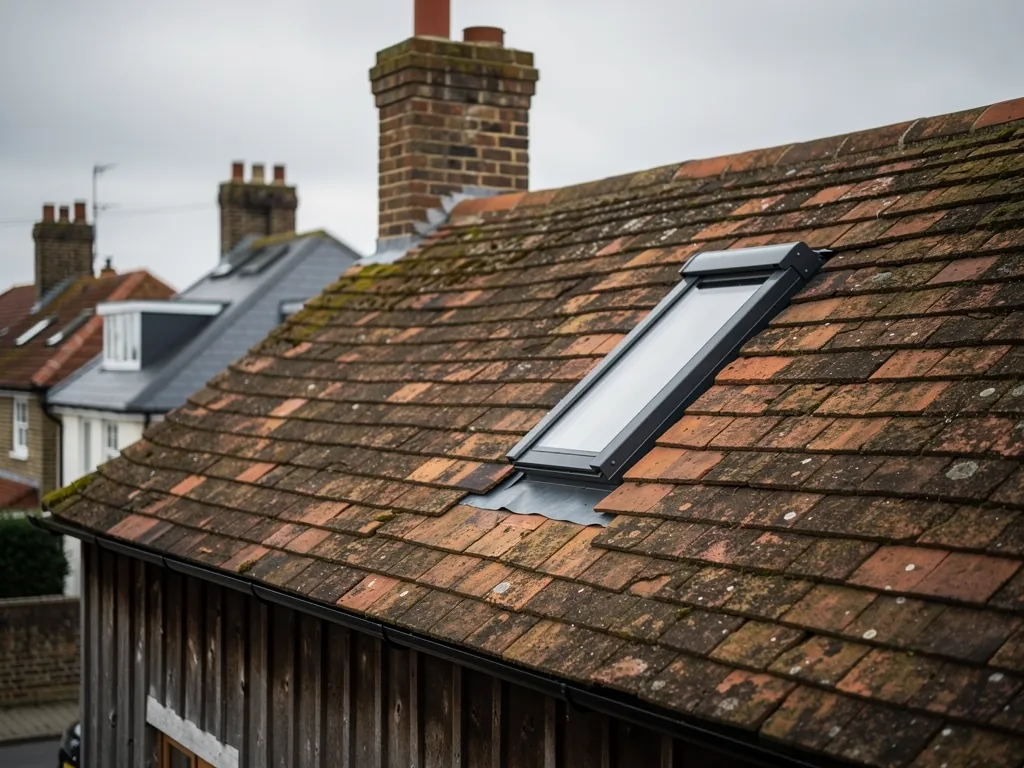
A rooflight, which many people call a skylight, is built from layers, and if you want to replace rooflight sealed unit parts alone it helps to know them. At the centre is the sealed unit: two or three sheets of glass bonded to a spacer, with a gas fill between them. Around that sits the frame, the part that holds the glass and meets the roof. Under the frame is the upstand or kerb, a short raised edge that lifts the frame clear of the roof surface. Past that comes the roof covering and, inside, the lining that finishes the opening.
Replacing the sealed unit means a new glass package goes into the existing frame. Replacing the whole rooflight means frame, glass and often the upstand all come out and a new assembly goes in. Both are replacement. Neither involves keeping something that has stopped doing its job.
Plenty of homeowners think the choice is about money alone. It is really about the condition of everything the glass sits in. A fresh unit in a tired frame is a new problem waiting in an old setting, and a whole new rooflight over a frame that was perfectly good can be more work than the house needs.
Sealed unit only
A new glass package set into the frame you already have. Suits a sound frame where the glass is the one part that has clouded. Not a controlled fitting, so no Building Control notification.
Whole rooflight
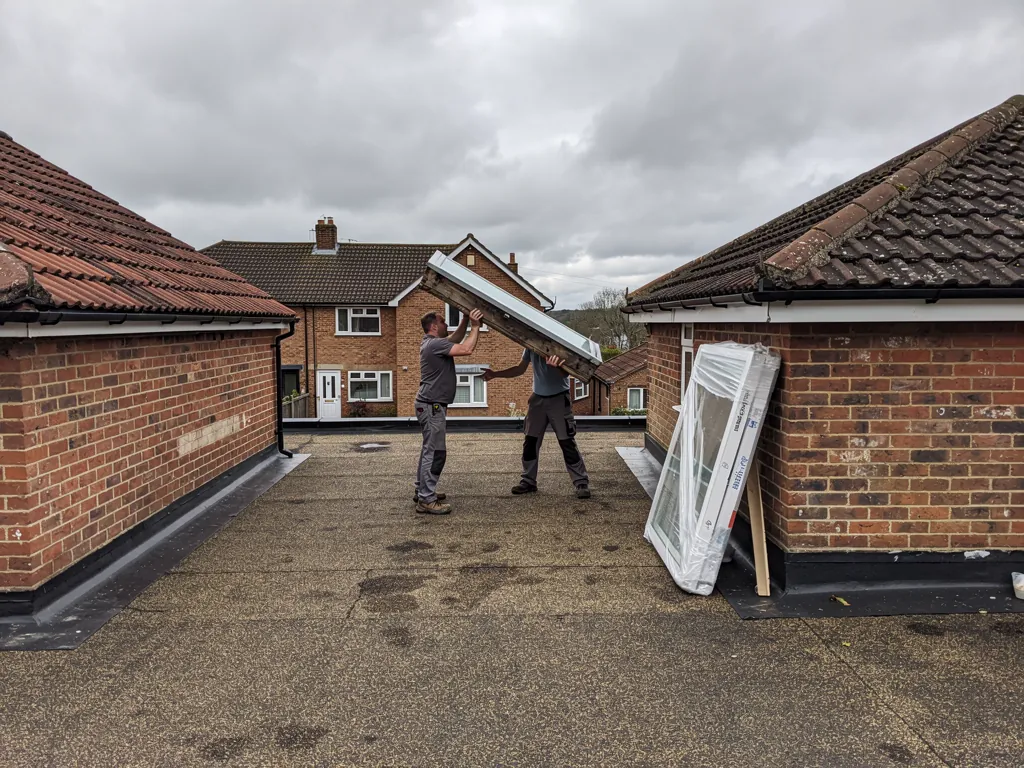
New frame, new glass and, where the kerb needs it, a new upstand. Suits an ageing frame, a poor U-value or a unit that cannot be sourced. A controlled fitting, so it is notified and must meet the limiting U-value.
02Frame check
What the frame has to prove before it earns a new unit
A frame is only worth keeping if it will outlast the glass you put into it. Here is how we judge that on a survey.
The sealed unit is the part with a known weak point, its edge seal. The frame has different ways of ageing. Aluminium frames can corrode at the corners and lose the finish. Timber frames can soften where moisture has sat. uPVC frames can distort, bow or go brittle in strong sun. Any of those can take the new unit with them, because a unit set into a twisted frame is stressed from day one.
If you can feel a cold trickle of air coming down from the frame edge on a windy night, that is a frame and upstand question, not a glass one. A new sealed unit will not touch it. So we look at the frame before we look at the glass. We check that the corners are tight, that the glazing beads or gaskets that hold the unit still grip, and that the frame is flat. Then we look at where the frame meets the upstand, because a gap there lets cold air into the room whatever the glass is doing.
- Corners tight, with no daylight showing through a joint and no powdery white corrosion on aluminium.
- Timber firm when pressed with a thumb, with no dark, soft spots near the bottom edge.
- Frame flat across its length, so the new unit will bed evenly on its setting blocks.
- Gaskets or beads still gripping the glass edge, not shrunken or split.
- Opening vents, where fitted, closing hard against their seals with no light round the edge.
- The frame still sold or measurable, so a unit can be made to fit it exactly.

03Age and fit
When the unit cannot simply be made again
Sometimes the sealed unit route is closed before it starts. The reasons are practical, and a survey sorts them out in one visit.
A sealed unit is made to measure. The maker needs the exact overall size, the glass thickness, the make-up of the build (for example two panes with a gap between, or toughened outer with laminated inner), the spacer type and any coating. If the frame is a known branded product still in production, a matching unit is straightforward. If the maker has stopped selling that range, the unit may need to be built to the measured size, and the new frame may then be the neater answer.
The age of the installation matters for another reason. Older rooflight glass was often made to a lower standard of heat loss than a unit you would specify today. Fitting a like-for-like unit into an old frame will rebuild the old performance and no more. A new complete rooflight lets us specify warm-edge glazing as standard, and a frame designed for it.
Two glazing layers or three
If the frame is deep enough and strong enough, a replacement unit can sometimes carry a better build than the one that came out, such as a low-emissivity coating (a clear metal film that sends warmth back into the room). A shallow old frame may only take a thin unit. In that case you gain little by replacing the glass alone, and the whole rooflight becomes the better route.
- We measure the unit overall and note the glass thickness and spacer width.
- We identify the frame maker and range where there is a label or a mark on the profile.
- We check the frame depth to see what glass build it can accept.
- We confirm whether a matching unit can be supplied or must be made to measure.
- We put both options in the written quote, so you see the difference side by side.
04The rules
Building Regulations: where the line is drawn
The two jobs sit on opposite sides of a regulatory line. Knowing where it falls saves you a surprise and a missed certificate.
Under Part L of the Building Regulations, a rooflight counts as a controlled fitting. Changing the frame and the glass as one is a notifiable job. It has to be notified to Building Control, and the new rooflight has to meet the limiting U-value set for that type of opening. The U-value shows how fast heat gets through a material, counted in watts for each square metre and each degree of temperature gap (W/m²K). The lower the number, the better it holds heat.
Replacing only the sealed unit is different. The frame stays, so the controlled fitting is not being replaced, and the job is not notifiable. That does not make it a free-for-all. The new unit should still be a good one, and we specify warm-edge glazing as standard on both routes.
Where the job is notifiable, we handle the Building Control notification, so there is no form for you to chase. Our guide to rooflights and Building Regulations covers the wider picture, and our page on whether replacing a sealed unit is notifiable goes into that side of the line in detail.
| Job | Notifiable? | What it must meet |
|---|---|---|
| New sealed unit, frame kept | No | Good practice, made to fit the frame |
| Whole rooflight, frame and glass | Yes, we notify | The limiting U-value under Part L |
| Whole rooflight plus new upstand | Yes, we notify | The limiting U-value, with insulated upstand |
05Warmth
What each route does for the heat in your room
A cloudy unit has already stopped insulating properly. How far a replacement can fix that depends on what you are putting it into.
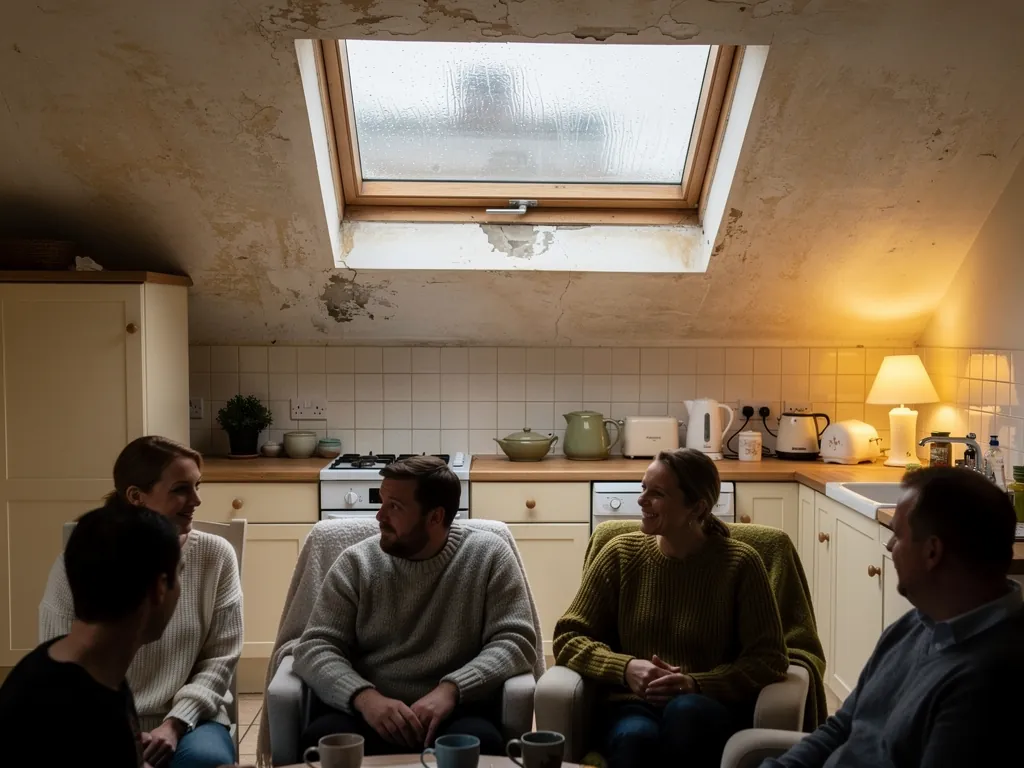
When a seal fails, the gas fill escapes and damp air enters. A unit in that state carries heat across the gap faster than it was designed to. You may not notice in July. You notice in January, as a cold pool of air that drops from the glass over the sofa, or as the heating running a little longer than it used to.
A new sealed unit restores the gas-filled gap and a fresh warm-edge spacer. That alone gives a real improvement over a failed unit. A whole new rooflight goes further, because the frame and the glass are designed as a pair, with a thermal break in the frame (a layer of low-conducting material splitting the inside of the metal from the outside, so cold does not run straight through).
- 2.2W/m²K, the Part L limiting U-value for a replacement rooflight in an existing home
- 1.4W/m²K, a typical figure for a good double glazed rooflight
- 0.2W/m²K, roughly where a well-insulated pitched or flat roof sits
Treat those as guides, not promises: the figure that counts is the one on the rooflight's own datasheet, and it depends on the whole assembly. The gap between glass and insulated roof is why we never promise that a rooflight will match a solid ceiling. We aim for bright rooms that stay warm, which means making the glass as good as the build allows and the edges around it better still.
06Upstand
The kerb underneath, and why it can settle the question
The upstand is the part nobody sees once the job is done. It often decides whether a swap of glass is enough.
On a flat roof, a rooflight sits on a raised kerb, often timber or a moulded upstand, that lifts it clear of the roof surface so water drains away from the opening. A timber kerb that has been damp for years can darken and soften. An uninsulated kerb leaves a chilly band around the opening, which can show as damp or mould on the lining inside.
Changing only the glass does not reach the kerb. Replacing the whole rooflight does, since we expose the upstand, check it and, if needed, rebuild it with insulation as part of the job. That is a real reason to choose the whole rooflight when the upstand is in poor shape, even when the glass is the only thing you have noticed.
For a pitched roof, the equivalent is how the frame meets the roof build-up and the flashing. The same logic applies. If the surround is sound, the glass can go on its own. If it is not, the opening needs rebuilding, and that is a whole-rooflight job. Our guide on the signs a rooflight has failed shows how to spot trouble in the surround as well as the glass.
What we look at around the opening
- Upstand material
- Timber, moulded GRP or insulated composite, noted on survey
- Upstand insulation
- Present or absent, and how thick
- Frame-to-kerb joint
- Tight and even, or gapped and stained
- Internal lining
- Dry and sound, or marked around the reveal
07Deciding
How we help you decide, and what you get in writing
You should not have to guess which route is right. A survey puts both on paper so you can choose with the facts in front of you.
The survey is free and the quote is written. We look at the glass, the frame, the upstand, the lining and the roof around it, and we tell you which route we would take and why. Where both are sound options, the quote sets them out side by side, so the difference in work and in what you gain is clear.
Our order of thinking runs like this. If the frame is sound, the maker is known and the unit can be matched, the sealed unit route is sensible, and it keeps disruption low. If the frame is tired, the upstand is poor, or the old unit was a thin build, the whole rooflight gives you a better room for the money. And if you want to change the size, the vent or the glass make-up, a whole replacement lets you do it at the same time.
One fitting team works the job from start to finish. Floors and furniture are protected, and the work is covered by our 10-year workmanship guarantee. For a rough idea of what to expect, our costs guide gives typical UK ranges, and the full picture of failed glass sits in our misted and failed rooflights section.
- Sealed unit is likely enough when the frame is straight, tight and still sold, and the glass is the only fault.
- Whole rooflight is likely better when the frame is marked, the kerb is soft or the unit build is thin.
- Ask for both options costed whenever the answer is not obvious.
- Ask who handles Building Control on the whole-rooflight route, and get it in writing.
Swapping the glass or the whole rooflight: common doubts
Is replacing just the sealed unit always cheaper?
Usually the job itself is smaller, because the frame and upstand stay. But the sums change if the frame fails soon after. Paying twice for access to the same opening is rarely cheaper in the end. We cost both so you can compare.
Does a whole new rooflight need Building Control?
Yes. Part L treats a whole rooflight as a controlled fitting, so the job is notifiable and the new unit has to meet the limiting U-value. We handle the notification where the work is notifiable.
Does replacing only the glass need notifying?
No. Swapping the sealed unit alone is not notifiable. We still fit a warm-edge unit as standard, so you get the benefit without any paperwork.
Can the new sealed unit be better than the old one?
Sometimes. It depends on how deep the frame is and how much glass thickness it can carry. A deeper frame can take a unit with a low-emissivity coating or a thicker build. A shallow frame may limit you, which is one reason a whole rooflight can suit.
How long does each job take?
A sealed unit swap is usually the quicker of the two, since the frame stays put. A whole rooflight takes longer because the frame and upstand come out and the opening is made good. The survey gives you the time for your own roof.