From the window code to the finished lining
01Overview
What fitting a VELUX roof window involves
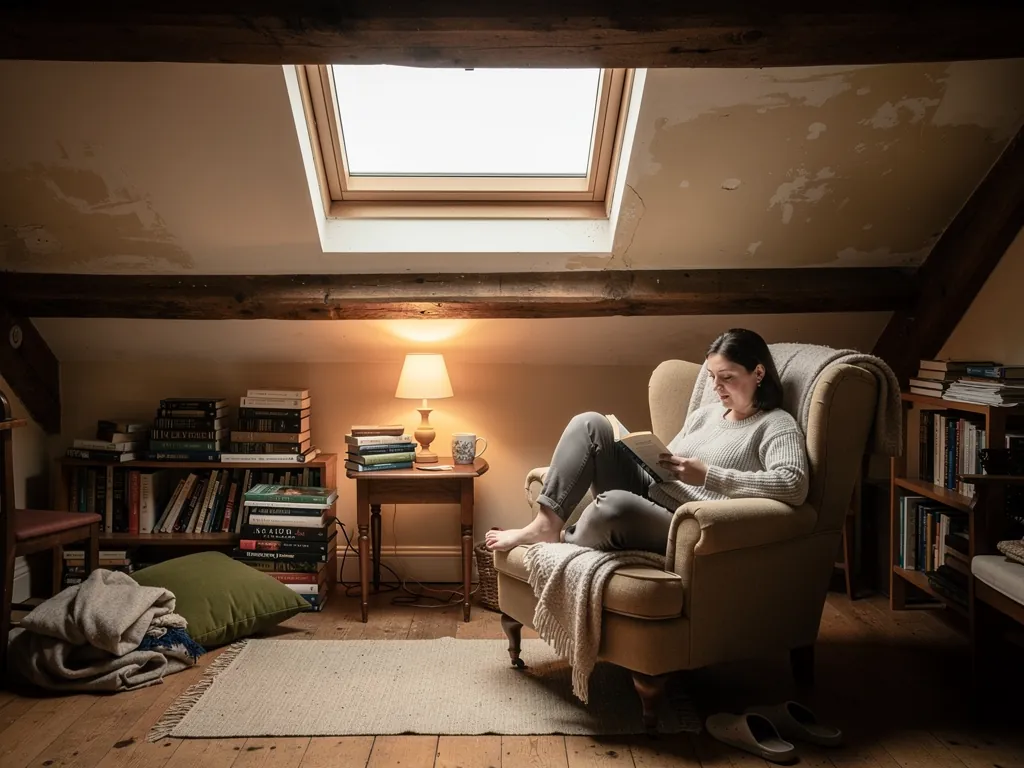
A VELUX window is a roof window made by VELUX, set into the slope of a pitched roof so it lies in line with the tiles. Putting one in, or swapping an old one, is a small structural job with a lot of detail in it.
VELUX is a manufacturer, and its name has become shorthand for any pitched-roof window, the way people say hoover for a vacuum cleaner. We fit their windows, and we fit other makers' roof windows too, such as Keylite and Fakro. We are an independent fitting team. We describe VELUX products here as a neutral guide, so you know what you are choosing between before anyone comes to your house. This is the page for the product. If you would rather start with the wider choice of skylights and rooflights, our services overview shows every type we fit.
A roof window sits in the plane of the roof. It is not the same thing as a flat rooflight on a flat roof, and it is not a dormer, which is a box built out from the slope. If you have a loft room, a landing that never gets daylight, or a bathroom tucked under the eaves, a roof window is usually the first thing to look at. Our roof windows page covers the product family as a whole. This page goes deeper on the VELUX range, and on the jobs people book most: a first window in a bare slope, and a like-for-like swap for one that has done its time.
Two kinds of job, one set of questions
A new window means opening up the roof. A swap means taking out a frame that is already there and fitting a new frame in the same hole, or in a slightly larger one. The two sound very different, yet the questions are the same. How big? Which way does it open? What glass? How does it join the tiles, the insulation and the ceiling? What do the rules say? The chapters below take those questions in the order you meet them.
02Range
Picking from the VELUX ranges
VELUX sorts its windows by how they open and how they are finished. The choice that matters most is the way the sash moves, because that decides where you can put your head and your furniture.
The classic is the centre-pivot window. The sash turns about a bar at its middle, so the lower half swings into the room and the upper half swings out. It is easy to clean, because you can turn the outer pane towards you. Top-hung windows are hinged at the top, so the sash swings out and up like an awning, giving more headroom at the bottom of the opening. Some ranges offer a combined option that works both ways. There are also fixed windows that do not open at all, and electric and solar-powered versions that open on a remote or a wall switch.
The frame comes in a few finishes. White polyurethane is smooth, takes damp well and suits bathrooms and kitchens. Pine with a clear lacquer, or painted white, is the traditional look for a bedroom or a loft study. The coating on the outside is aluminium or copper-toned, so the frame reads as a neat edge against the tiles. Our guide to VELUX window ranges sets out each family side by side, and our page on top-hung against centre-pivot shows how the opening style changes a room.
Centre-pivot
Easiest to reach across and clean. Works best where the sill sits at about chest height and you can stand close. The sash turns fully, so the outer pane can be wiped from inside.
Top-hung
Better where the glass sits low, as in a loft with a short knee wall, because the opening swings clear of the head. It suits a bed or a desk set under the window, and gives a wider ventilation gap when open.
03The code
Reading a VELUX window code before you order
Every VELUX window carries a code that tells you its type, its size and its finish. If you already have a window, the code is the quickest route to a like-for-like swap.
The code is printed on a white label, normally on the edge of the sash or on the top of the frame, and you may need to open the window to see it. It looks like a short run of letters, then a size, then sometimes a second group of letters. A typical one reads GGL MK04. The first group says how the window opens and what it is made of. The second group is the size code. MK04 means a frame roughly 78cm wide and 98cm tall. If you cannot find a label, or the label has worn off, we can usually identify the window from its measurements and the look of the frame during a free survey. Our short answer on how to find your VELUX window code walks through where to look.
The size letters are worth learning, because they are how every supplier and every fitter talks. The first letters give the width, the digits give the height. A few common ones are in the table. Sizes are nominal frame sizes, so the actual hole in your roof will be a little larger, to leave room for the flashing.
| Size code | Frame width | Frame height |
|---|---|---|
| CK02 | 55cm | 78cm |
| FK06 | 66cm | 118cm |
| MK04 | 78cm | 98cm |
| MK08 | 78cm | 140cm |
| SK06 | 114cm | 118cm |
| UK04 | 134cm | 98cm |
An old window may use a code that is no longer made. When that happens we match the size to the nearest current one and tell you what changes in the opening. The glass is the part that has moved on most, so a current window is normally far warmer than a window from a few decades back, even in the same size.
04Swapping
Replacing a VELUX window: like for like, or bigger
Swapping a window for the same size is the simplest version of the job. Going larger is also possible, and it comes down to the rafters and the tiles around the opening.
A like-for-like swap uses the same hole. The old frame and sash come out, the flashing around them is lifted, and a new frame goes in with a matching flashing kit. Because the opening in the rafters does not change, there is no structural work, and the job tends to be quick. The tiles around the edge are lifted and put back, and the lining inside is refreshed so the new frame does not look like a stranger in an old setting.
Going bigger changes the picture. The window opening is framed by rafters on the sides and short timbers across the top and bottom, called trimmers. A wider window may mean cutting a rafter and fitting a new trimmer to carry its load. A taller one may only mean moving a trimmer. Either way, a sound timber frame has to remain around the new hole. We look at the roof from the loft side during the survey and tell you what an upsize would involve before you commit. Our short answer on whether a VELUX can be swapped for a bigger one goes through the common cases.
What a swap does not change
Replacing the frame and the glass is a notifiable job, which we cover in the rules chapter. Replacing only the glazed unit inside an existing frame is a different, smaller job. If your window is old and tired, our page on replacing an old rooflight sets out the choices, and the answer on replacing a VELUX from inside explains why some jobs can be done without going on the roof and others cannot.
05Flashing
The flashing kit that joins window to roof
The flashing kit is the set of metal and rubber pieces that join the window frame to the tiles. It has to match your roof covering, and it has to be the right one for the window.
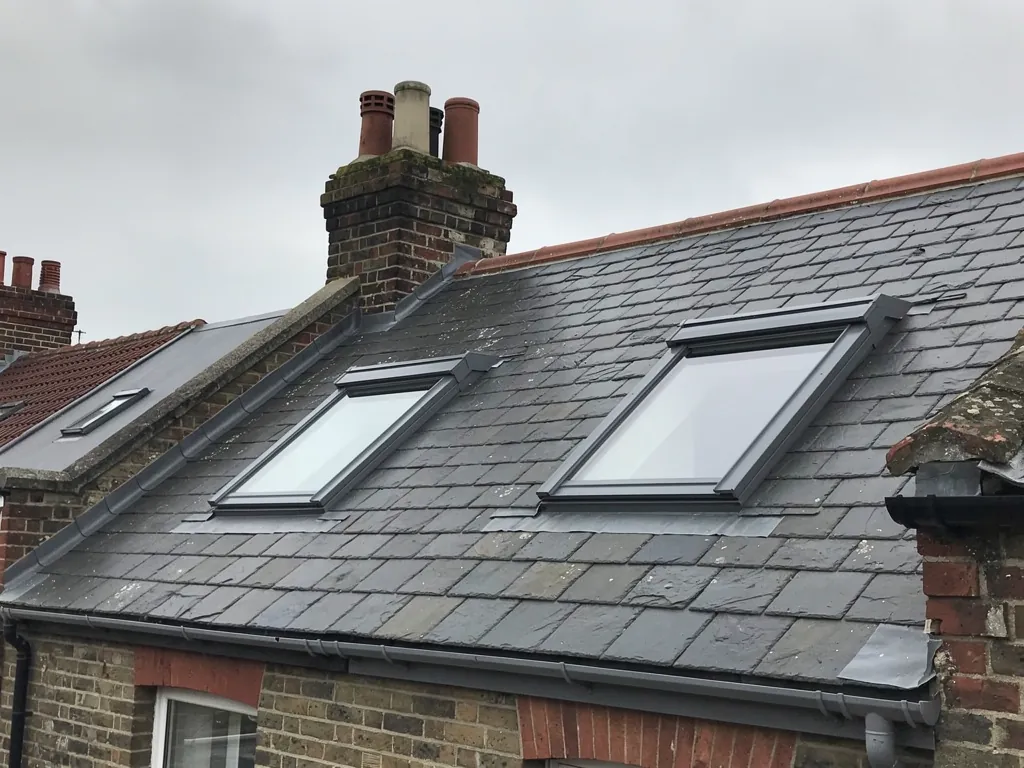
Think of a flashing as a collar. It is made of shaped aluminium, with a soft apron that sits over the tile courses below the window and side gutters that carry rainwater round the frame. Different roof coverings need different kits, because a flat concrete tile, a profiled tile, a plain clay tile and slate all sit at different thicknesses and shapes. Using the wrong kit leaves gaps that no sealant should be asked to fill. We check what is on your roof before we order anything, and we order the kit and the window together.
There is a second kit that matters in a warm roof. The insulation collar is a pre-cut foam surround that fits around the frame in the gap between the frame and the roof insulation. Without it the frame is surrounded by a ring of cold. With it the insulation carries on past the window, and the heat stays in. Our guide to VELUX flashing kits shows the options.
- Tile type and tile thickness noted on the survey, so the kit matches.
- Gap between window and neighbouring window or roof edge measured, because it decides whether one kit or a combined kit is used.
- Insulation collar ordered with the flashing, and not added later.
- A vapour control membrane taped to the frame, so warm room air cannot reach cold timber.
- Underlay dressed into the kit, so any water that gets under the tiles is sent back out.
06Warmth
Glazing for a window that does not chill the room
A roof window is mostly glass, so the glass sets how warm the room feels. Choose it for heat first, then for light, then for anything else the room needs.
A standard modern VELUX window is double glazed. That means two panes with a sealed gap between them, usually filled with argon gas, and a thin low-E coating on one pane that sends warmth back towards the room. A pane that has lost its heat to the cold air outside feels chilly on your face. A low-E pane stays closer to room temperature. The sealed unit is built with a warm-edge spacer around its rim. The old aluminium spacer was a thermal bridge, a path for heat to escape. A warm-edge spacer is made of a less conductive material, so the rim of the glass stays warmer and the glass is less likely to mist.
Triple glazing means a third pane of glass and another gas-filled space. It improves the U-value, the measure of how fast heat passes through, where lower is better. It also makes the window heavier and a little deeper. Some VELUX ranges offer it, and some do not, so it is worth asking early. Our answer on whether VELUX windows are triple glazed explains the options, and the page on double against triple glazing goes through when the third pane pays you back.
Laminated, toughened and what goes on the room side
Toughened glass is heat-treated so that when it breaks it crumbles into small blunt pieces. Laminated glass has a thin plastic interlayer between two sheets, so when it breaks the pieces stay stuck to the plastic and the pane stays in its frame. Over your head, laminated glass on the inner pane is a sensible choice, because a broken pane does not fall into the room. It is good practice, not a legal requirement, and we explain the difference plainly rather than leave you to guess. Some VELUX windows come with laminated inner glass as standard and some offer it as an option. Our answer on whether VELUX glass comes laminated covers each range.
Other glass options change what the window does rather than how it breaks. Some add a coating that reduces heat gain on a roof that faces the afternoon sun, which matters in a loft room that gets warm by mid-afternoon in summer. A coating that cuts heat gain also cuts a little daylight, so we only suggest it where the room needs it. A north-facing bedroom does not.
Laminated glass on the inner pane suits a bed, a cot or a desk. Toughened glass suits a landing or utility where nobody sits beneath the window, and we set glass room by room.
- 15 to 90degrees, the roof pitch range standard roof windows are made for
- 2panes in a standard sealed unit, with a low-E coating and gas gap
- 3panes in a triple unit, where the range offers one
- 10years guarantee covering our workmanship
For more on how glass heat loss is measured, read our guide to rooflight U-values. If the question on your mind is whether a roof window will make the room cold, our answer on whether skylights make a room cold is a good place to start.
07Blinds
Blinds that add warmth as well as shade
A roof window sheds heat at night and gains it on a bright afternoon. The right blind deals with both, and fits the frame so it moves smoothly.
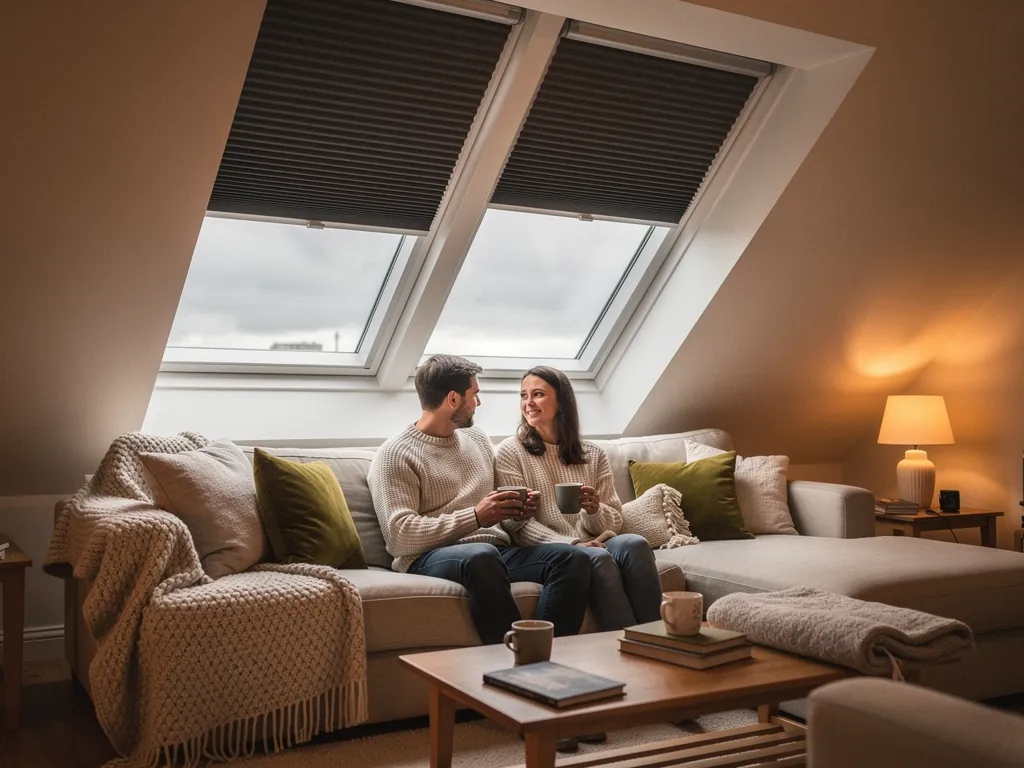
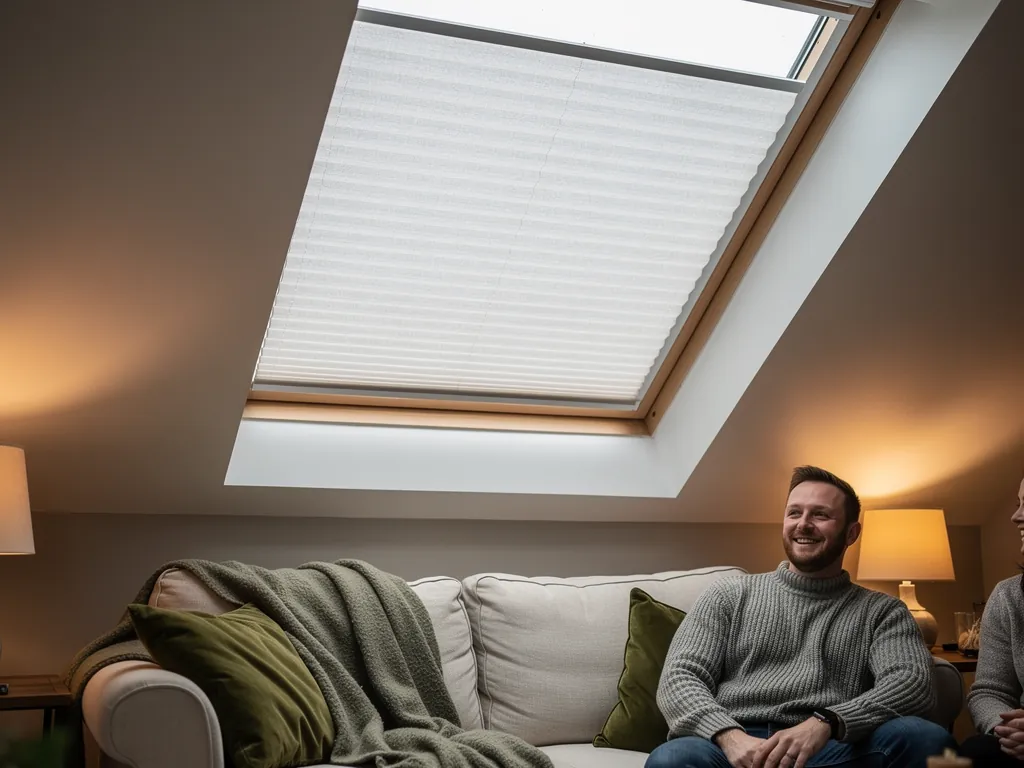
VELUX makes blinds that clip into guide rails on the window frame, so they hang flat against the glass rather than flapping in the room. The rails matter. A loose roller blind swings with the air movement and leaves gaps at the sides. A blind in side rails sits tight, and that is what gives it its performance. Three families cover most needs. Blackout blinds make a bedroom dark enough to sleep in during a light summer morning. Pleated blinds filter light and give a soft glow. Honeycomb or duo blinds have air pockets in the fabric, so they add a layer of still air across the glass on a winter night and keep the room warmer.
An outer awning blind or a roller shutter is a different device. It sits outside the glass and stops the sun from reaching the pane at all, which works better on a south or west roof than anything inside. Our guide to VELUX blinds for warmth and comfort goes through all of these, with the pros and cons for each room.
- Bedroom: a blackout or honeycomb blind in side rails.
- Loft office: a pleated blind to soften glare on a screen.
- Bathroom: a moisture-resistant blind, with the window in a white polyurethane frame.
- South or west slope: an outer blind or awning to stop heat reaching the glass.
Electric and solar blinds link to the same controls as electric windows. If you are fitting electric windows in a high spot you can reach with a remote, the blinds can follow.
08Insulation
Collars, lining and the join with your ceiling
The window is only as warm as the build-up around it. The collar, the roof insulation and the inside lining decide whether the frame is a warm edge or a cold one.
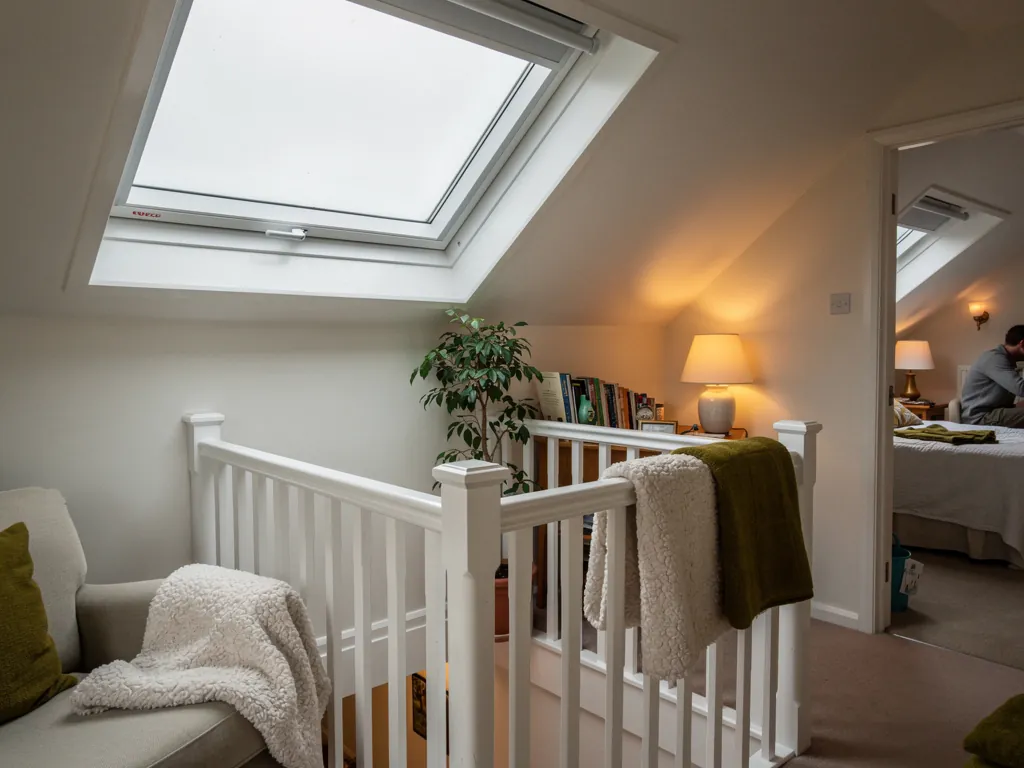
Inside, a roof window needs a lining. The lining is the board or plaster that closes the gap between the window frame and the ceiling or sloping wall. In a loft room the lining is normally four faces: a sill at the bottom, a head at the top and two sides, often angled outward so daylight spreads across the room. A square-cut lining is plainer and faster but spreads less light. The lining is where insulation and finish meet, so it is worth doing well. We cut and fit it from plasterboard and insulation board, seal it to the frame and leave it ready to paint.
Between the frame and the rafters sits the insulation collar. Around that, the roof insulation has to be cut to fit tightly, with no gap and no crushed boards. The vapour control layer is taped to the frame so warm, damp room air cannot get into the cold roof space. Skipping that tape is how condensation starts on timber where nobody can see it. We treat condensation as a symptom of lost heat. Fix the heat path and the symptom goes.
- Fit the insulation collar to the frame before it goes in the roof.
- Pack the gap between collar and rafters with insulation, tight and without crushing it.
- Tape the vapour control layer to the frame all round.
- Fix insulated lining boards to the reveal, angled or square as agreed.
- Seal the joint with a flexible filler and leave it ready for paint.
09Rules
Planning and Building Regulations for a VELUX window
Most roof windows on a house do not need planning permission. A whole-window replacement is notifiable under Building Regulations, and we handle that notification where it applies.
Planning first. Most roof windows on a house fall under permitted development, which is a national set of rights that let you do some work without applying. For a roof window the main conditions are about size and position: it can stand out from the plane of the roof slope by 150mm at most, and its top must stay below the roof's high point. A window in a side-facing slope has to be obscure-glazed, and any part of it that opens has to be more than 1.7m above the floor of the room. These rights apply to houses. They do not apply to flats or maisonettes. If your home is listed, you will need listed building consent whatever the size. A conservation area does not on its own remove permitted development, but an Article 4 direction can, so check with the council before you order. Our guide to skylight planning permission sets out each condition, and the page on roof windows and planning applies it to this product.
Now Building Regulations. Fitting a new roof window, or replacing a whole one (frame and glass), is work to a controlled fitting and falls under Part L, which covers the conservation of fuel and power. That makes it notifiable, so Building Control has to be told. We handle the notification for you. Replacing only a sealed glass unit in an existing frame is not notifiable. Cutting into the roof structure for a larger window also touches Part A, the structural part, and a bigger opening may need the new trimmer sized properly. Our page on whether rooflights need Building Regulations goes through the rest.
10Fitting day
What happens on the day a VELUX is fitted
One team, and your floors covered from the first minute. Here is how the day runs, with no surprises.
Before we start, we lay dust sheets and board across the floor from the front door to the work area, and cover furniture that cannot be moved. Access to the roof is by a ladder, a scaffold tower or a full scaffold, depending on the height and the job. Our page on fitting a roof window without scaffolding explains when each is used. Winter is not a barrier either, and our answer on fitting in winter covers the planning that goes into it.
On a swap, the old window comes out first and the opening is made good. On a new window, the tiles are lifted, the battens are cut and the rafter opening is framed. Either way the new frame is fixed, the insulation collar and flashing go on, the tiles are cut and laid back, and the sash is hung. That is the point at which the room is open to the air, so the work is planned to keep it that short. A simple swap is fast. A new opening with new lining takes longer, and a bigger opening takes longest. Our page on how long skylight fitting takes gives the sequence.
- Floors and furniture covered, and access set up.
- Tiles lifted and old window removed, or new opening framed.
- New frame fixed and insulation collar fitted.
- Flashing set and tiles laid back.
- Sash hung, blinds fitted and the window tested.
- Lining finished, the site swept and the Building Control notification handled.
11Cost
What moves the cost of a VELUX job
The window is one line in a quote. Access, roof covering, structural work and finish can move the total more than the glass does.
We give a written quote after a free survey, and we do not quote over the phone because the roof tells us things a photo cannot. Here are the factors that shape the figure. Size of the window comes first, and a larger frame costs more in glass and in the flashing kit. The range and the glass option come next, because a triple or laminated unit costs more than a basic one. Then the roof covering, because slate and handmade clay tiles take longer to lift and relay than a modern interlocking tile. Then access. A single-storey roof can be reached with a ladder, while a three-storey house needs a scaffold, which adds a line. Then the structural work. A like-for-like swap needs none, a new opening needs framing, and an upsize needs a new trimmer or a cut rafter.
Finishing counts too. Plastering and decorating the lining, fitting blinds and an electric opener each add to the job. Because every house differs, a fixed price from a list would be a guess. Our costs page gives broad market guidance, and a written quote after our survey gives you a figure for your own house.
- Window size and range chosen.
- Glass option, including laminated or triple where offered.
- Roof covering and pitch.
- Access, from a ladder to a full scaffold.
- New opening, upsize or like-for-like.
- Lining, decoration, blinds and electric operation.
12Afterwards
Looking after a new VELUX window
A new window needs very little, and the small habits below keep it opening easily and looking clear for years.
Clean the glass with warm water and a soft cloth, and turn the sash fully to reach the outside pane on a centre-pivot. Keep the seals clean, because grit under a seal is the most common reason for a sash that will not close fully. Clear leaves and moss from the roof around the flashing in autumn, as debris sitting against the frame holds moisture. Use the trickle vent at the top of the sash, which lets in a small amount of fresh air with the window shut, to keep moisture down in bathrooms and bedrooms. Our answer on how long rooflights last sets out what to expect from the glass and the frame.
Your 10-year workmanship guarantee covers our fitting. Our guarantee page explains what it includes. Keep the label code and your paperwork from the Building Control notification somewhere safe, because a buyer's solicitor may ask for the paperwork when you sell. If you decide to add another window later, the code on file makes the next order a short job.
When you are ready, ask for a free survey and a written quote. If you want to see how we choose glass and insulation across every job, our warm specification page sets it out. For the rest of the family of products, return to all our services, or look at energy efficient rooflights if you are weighing the glass options for a wider project.
Aftercare at a glance
- Glass
- Warm water and a soft cloth, inside and out
- Seals
- Wipe clean when you clean the glass
- Roof around the frame
- Clear leaves and moss each autumn
- Trickle vent
- Open it in bathrooms and bedrooms
- Paperwork
- Keep the window code and Building Control papers
Before you order a VELUX window
Do you only fit VELUX windows?
No. VELUX is the best-known name, but we also fit Keylite and Fakro roof windows. We choose the product with you, based on the roof, the room and the glass you want.
Can I keep my existing lining when you swap a window?
Sometimes. If the lining is sound and the new frame is the same size, it can stay. If the frame size changes, or the lining has no insulation behind it, it is cleaner to build a new one so the join is warm.
Will I need planning permission for a new roof window?
For most houses, no, because permitted development covers it if the window stays within 150mm of the slope and below the ridge. Flats, maisonettes and listed buildings are different, and an Article 4 direction can change things, so check with the council.
Is a swap notifiable under Building Regulations?
Replacing a whole window, frame and glass, is notifiable. Changing only the sealed unit is not. We handle the notification where it applies.
How do I find out what size my window is?
Look for the white label on the edge of the sash or the top of the frame. It gives a code such as MK04. If it is missing, we measure the frame at the free survey.
Do you protect my floors and furniture?
Yes. We cover floors from the door to the work area and protect furniture, and one team stays on the job from start to finish.