01Signs
How to tell an old rooflight has had its day
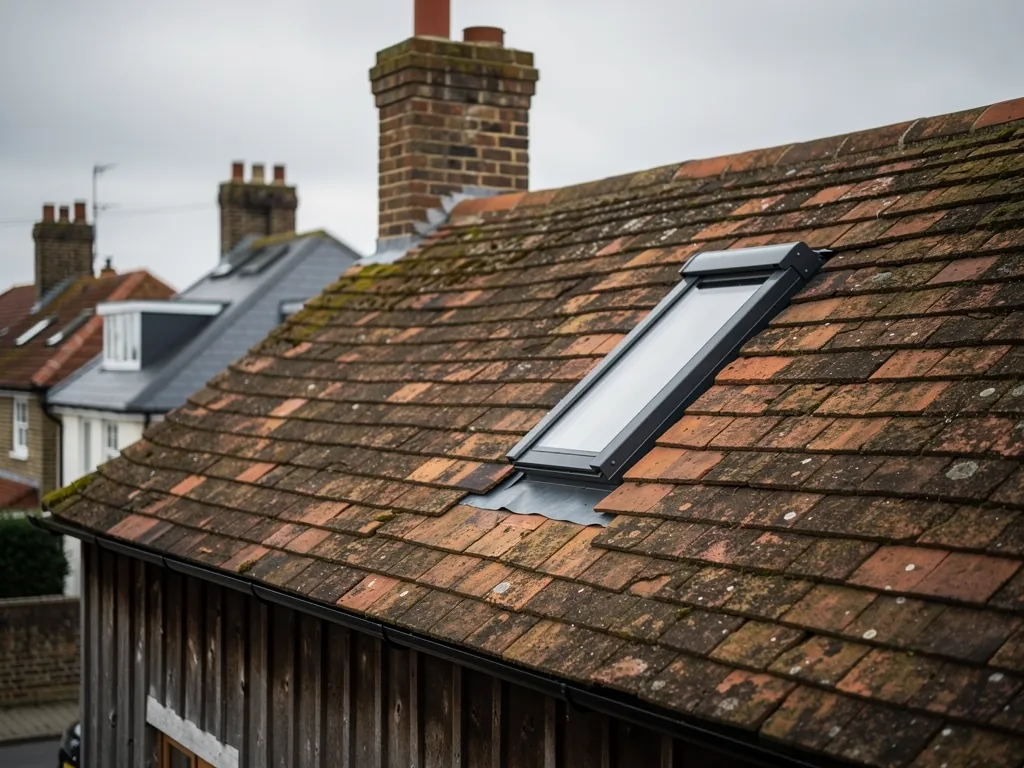
An ageing rooflight rarely fails all at once. It gets dimmer, colder and harder to live with, and a handful of signs tell you when replacing an old rooflight makes more sense than putting up with it.
Stand under it on a cold morning and pay attention. A tired skylight is the coldest surface in the room, and you can often feel the chill falling off it before you see anything wrong. That falling cold air is a draught you never asked for, and it is the heating working against the glass.
Then look up. Mist or a milky film trapped between the panes means the seal around the double glazed unit has failed. The gas that once slowed heat through the glass has escaped, and damp air has taken its place. Condensation on the inside face of the glass, dripping onto the floor below, points to a surface that is far colder than it should be.
The frame and the opening gear
The frame tells its own story. Timber that has gone soft or black at the bottom rail, paint that will not stay on, a hinge that grinds, a handle that no longer pulls the sash tight: each one is a sign the whole unit is ageing, not just the glass. On older flat roofs, look at the kerb too, the raised frame the rooflight sits on. Stains on the ceiling around it or a cold band of plaster next to it suggest the kerb is part of the problem.
Our guide to the signs a rooflight has failed covers each symptom in more depth.
- Mist or a white bloom between the two panes that never wipes away
- A cold downdraught you can feel with your hand under the glass
- Water running off the inside of the glass on winter mornings
- Soft, dark or flaking timber on the bottom of the frame
- A sash that sticks, rattles or no longer closes firmly
- A yellowed, cloudy or crazed plastic dome on a flat roof
- Marks or a cold strip on the ceiling around the opening
02Two routes
New glass in the old frame, or a whole new rooflight
There are two ways to replace a failing rooflight. Which one fits depends on the state of the frame, not on how bad the glass looks.
The sealed unit is the double or triple glazed glass pack: two or three panes bonded around a spacer bar, with the gap between them filled with dry air or an inert gas such as argon. It sits inside the sash or frame, held by beads or a clip system. When only the seal has gone and the frame around it is sound, a new sealed unit can go into the existing frame. It clears the mist and brings back the insulating gap.
Replacing the whole unit means taking out the frame, sash, glass and flashing, and fitting a complete new rooflight in the opening. It costs more, but it renews everything at once: the seals around the sash, the opening gear, the frame's own insulation and the way the window joins the roof.
The honest test is simple. If the frame is solid, the sash closes tight and the window is not unusually cold apart from the glass, a new sealed unit is a sensible buy. If the frame is tired or the window was poor for heat from the start, new glass in an old frame will leave the room barely warmer. Our comparison of a sealed unit or whole rooflight sets the two side by side in more detail.
Sealed unit only
Frame stays, glass changes. Suits a sound frame with a failed seal. Usually done from inside or from a ladder, with no roof covering disturbed. Not notifiable under Building Regulations.
Whole rooflight
Frame, sash, glass and flashing all renewed. Suits a worn frame, failing gear or a window that was cold from day one. Notifiable under Part L, so the new unit must meet current thermal standards.
03Part L
Why a whole-unit replacement is notifiable
Swapping a complete rooflight counts as fitting a controlled fitting under the Building Regulations, which brings a minimum standard for heat and a certificate at the end.
Part L of the Building Regulations covers the conservation of fuel and power. It treats windows, roof windows and rooflights as controlled fittings, so when you replace one completely, frame and glass together, the work is notifiable. The new unit must meet the limiting U-value set in Approved Document L for a replacement fitting in an existing home. A U-value is the rate at which heat travels through part of a building, counted in watts for every square metre and every degree of temperature gap across it, written W/m²K. Lower is warmer.
Notifiable does not mean a planning-style application. It means Building Control must be told, either by the council's team or a registered building control approver checking the work, or by an installer registered with a competent person scheme self-certifying it. On notifiable work, we handle the Building Control notification for you. You receive a completion certificate, which is worth filing with the house papers because a buyer's solicitor will ask for it.
Changing only the sealed unit falls outside the controlled fitting rules in Part L, so no notification is needed. Even so, it makes sense to choose a unit that performs well for heat, since it will be in the roof for many winters. A like-for-like replacement in the same opening rarely raises a planning question, but a larger or taller one is assessed like a new rooflight; our guide to skylight planning permission covers that side.
| Job | Notifiable under Part L? | Paperwork at the end |
|---|---|---|
| New sealed unit in an existing frame | No | Your invoice and glass details |
| Whole rooflight, same opening | Yes, controlled fitting | Building Control completion certificate |
| Whole rooflight, larger opening | Yes, plus structural work | Building Control completion certificate |
| Plastic dome swapped for a glass rooflight | Yes, controlled fitting | Building Control completion certificate |
04Warmth
Making the room warmer while the roof is open
A replacement is the cheapest moment to fix whatever made the old rooflight cold, because the opening, the kerb and the lining are all exposed for a day.
Glass is only part of the heat story. A modern unit with a low-emissivity coating, an argon fill and a warm-edge spacer will lose far less heat than a tired unit from decades ago. A low-emissivity coating is a metal oxide film, thinner than the eye can see, that bounces warmth back towards the room and still lets daylight pass. A warm-edge spacer is the bar that separates the panes, made from a low-conductivity material rather than plain aluminium, so the edge of the glass stays warmer and gathers less condensation.
The frame matters as much. A metal frame without a thermal break, a strip of insulating material between the inner and outer sections, carries the cold straight through to the inside. On a pitched roof window, an insulation collar fitted around the frame stops a cold gap forming between the window and the roof insulation. On a flat roof, an insulated kerb does the same job.
The lining around the opening
Then there is the bit you see from the room: the lining, the boarded or plastered sides of the opening between the ceiling and the frame. If it was never insulated behind, it stays cold and can show damp marks of its own. While the old unit is out, the lining can be insulated and reboarded so the whole opening, not just the glass, keeps the heat in. Our page on rooflight U-values explained shows how these parts add up.
What we look at for heat on a replacement
- Glass
- Low-emissivity coated, argon-filled double or triple glazing
- Spacer
- Warm-edge, as standard on every unit we supply
- Frame
- Thermally broken metal, uPVC or insulated timber core
- Junction
- Insulation collar on pitched roofs, insulated kerb on flat
- Lining
- Insulated behind the board, sealed against air leaks
05Domes
Old plastic domes on flat roofs
The domed plastic rooflight on a 1970s or 1980s extension was cheap and bright when new. Decades on, it is usually the coldest thing in the house.
Many flat-roofed extensions, garages and kitchens built in that era were given a bubble-shaped dome made of acrylic or polycarbonate. Some are a single skin of plastic, which does almost nothing to stop heat escaping. Twin and triple skin versions are better but still fall well short of a modern glass rooflight. Over time, sunlight breaks the plastic down. It yellows, goes cloudy, becomes brittle and can craze into fine cracks, so the room gets dimmer even while it stays cold.
Replacing a dome with a flat glass rooflight changes the room more than any other swap. You lose the cloudy bubble and gain clear, sealed double or triple glazing with a proper thermal performance, set on a kerb built to current standards. The opening size can often stay the same, which keeps the job simple, though a dome is also a good point to consider whether a slightly larger rooflight or a lantern would suit the room better.
Because a glass rooflight is heavier than a plastic dome, the surveyor checks the opening and the kerb can carry it. The roof covering that surrounds the kerb belongs in the same discussion. If it is nearly worn out, plan the two jobs as one.
06Kerb
The kerb decides how well the new rooflight performs
On a flat roof, the new rooflight is only as warm and dry as the kerb under it, so its condition shapes the whole job.
A kerb, also called an upstand, is the raised box around the opening that lifts the rooflight above the flat roof surface. It keeps rainwater running past the frame and gives the roof covering something to turn up against. Older kerbs were often built from plain timber with no insulation at all, and some were made too low to give the roof covering a proper upturn.
When the old rooflight comes off, the kerb is exposed and can be judged properly. A sound, dry timber kerb of the right size and height may be reused, with insulation added to its inner faces. A soft or rotten one, or one too low for the new unit's maker, is cut out and replaced with a new timber kerb or a factory-made insulated upstand. Many manufacturers specify a minimum kerb height above the finished roof surface, and the new unit must sit level or at the pitch the maker requires for water to run off.
The kerb also has to suit the new frame's size. Rooflights are made to fit specific kerb dimensions, so a replacement either matches the existing one or the kerb is rebuilt to match the new unit. Our guide to rooflight kerbs and upstands goes into heights, insulation and materials.
Put excellent glass on a cold, low timber kerb and you have bought a warm window sitting on a cold box.
07The day
What replacing a rooflight involves, from survey to sign-off
For a like-for-like swap in an existing opening, the fitting itself is normally done in a day, with the roof closed before the team leaves.
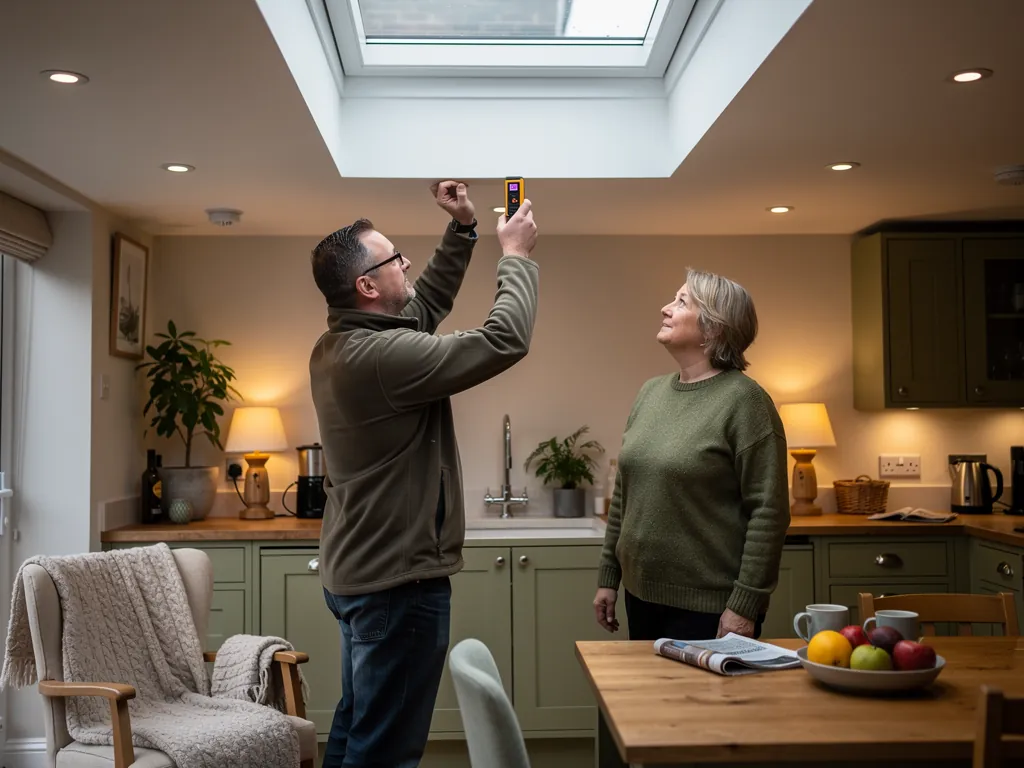
It starts with a free survey from Radiant Skylights. We measure the existing opening, identify the make and size of the old window where we can, check the frame, kerb and lining, and talk through how warm you want the room to be. On a pitched roof window, the maker's code on the identification plate often tells us the size straight away; our guide on how to find your VELUX window code shows where to look. You then get a written quote that says whether the job is a sealed unit or a whole rooflight, and what goes into it for heat.
On the day, floors and furniture under the opening are covered before anything comes out. One team handles the job from start to finish. Many pitched roof windows can be changed from inside the room, while flat roof units are worked on from the roof with safe access in place. Once the new rooflight is in, the junction with the roof is made good, the lining is finished, and any electric gear is tested.
Whole-unit work is notified to Building Control, and the completion certificate follows. Every installation carries our 10-year workmanship guarantee, explained on our guarantee page.
- Free survey: opening measured, frame, kerb and lining checked, and the old window identified.
- Written quote setting out sealed unit or whole rooflight, glazing spec and any kerb or lining work.
- Fitting day: floors and furniture protected, old unit removed, opening checked once it is bare.
- New rooflight fitted, insulated and flashed or sealed into the roof covering.
- Lining insulated and finished, the room cleaned, and the window shown working.
- Building Control notified on whole-unit work, with the certificate sent to you.
Questions about replacing an old skylight
Can I go bigger when I replace my rooflight?
Often, yes. A larger unit means trimming the rafters or rebuilding the kerb, which is structural work for Building Regulations, and a bigger or taller frame is judged against the planning rules like a new window. Our answer on replacing a VELUX with a bigger one covers the pitched roof case.
Will a new rooflight really make the room warmer?
If the old one had a failed seal, a cold frame or no insulation around it, yes. The gain comes from the whole opening: the glass, the spacer, the frame, the kerb or collar and the lining all working together.
Is there a lot of mess inside?
Some dust is unavoidable when an opening is exposed, so the area below is sheeted and protected before work starts and cleaned before we leave.
Does my old rooflight need to be the same brand as the new one?
No. A pitched roof window can be replaced with the same maker's current model, which often fits the existing opening exactly, or with an equivalent from another maker such as Keylite or Fakro. On flat roofs, the kerb is sized to suit whichever unit you choose.
Can I keep the opening as it is and just change a plastic dome for glass?
In many cases, yes. The surveyor checks that the kerb is sound, high enough and strong enough for the heavier glass unit, and insulates or rebuilds it where needed.