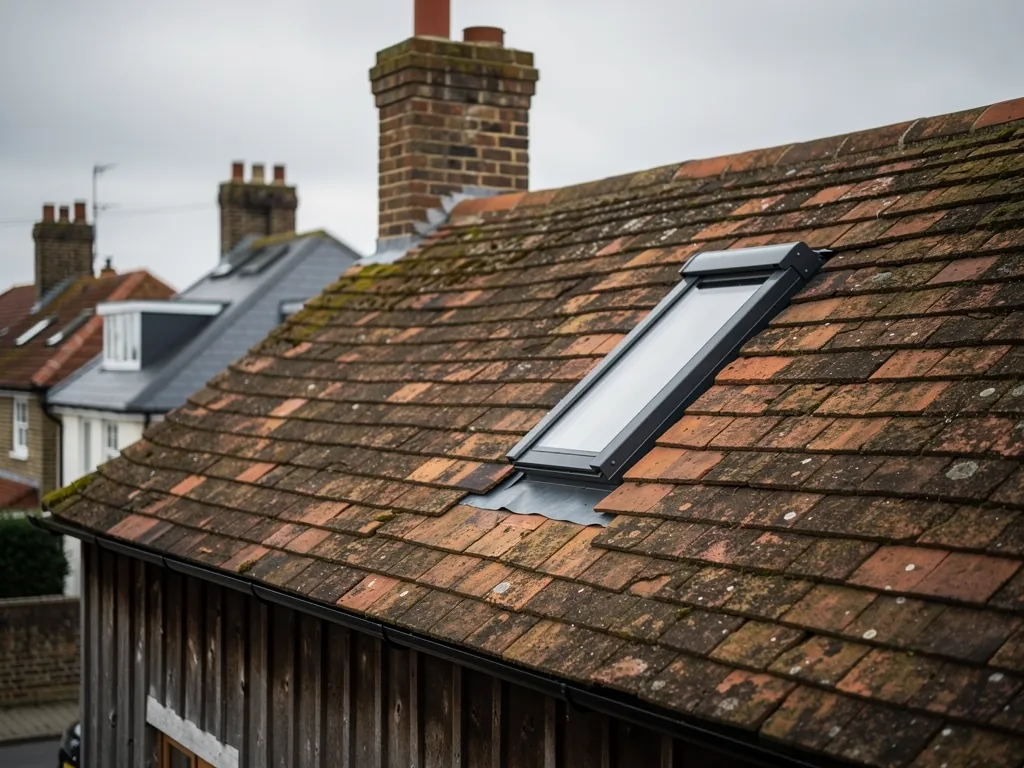
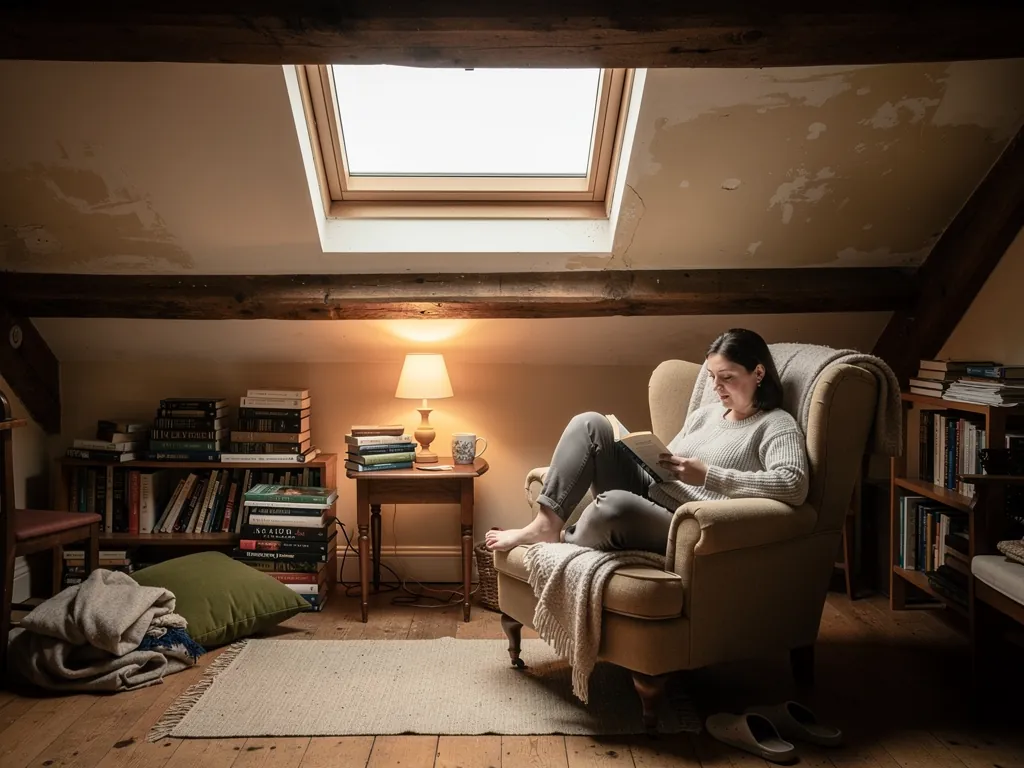
01The usual cause
Water on the glass is probably from your own room
A rooflight that drips in winter is most often shedding condensation, which is moisture from indoor air, not water coming in from outside.
Cold mornings bring the question to a lot of kitchens and landings. You look up and there are beads on the glass, a trickle down the frame, or a damp ring on the ceiling edge. It looks like the roof is letting water in. Very often it is not.
Indoor air carries invisible water vapour from cooking, showers, drying washing and simply breathing. Warm air holds more of it than cold air. When that air touches a surface cold enough, it cannot hold on to the moisture any more and the vapour turns to liquid. The temperature at which that happens is called the dew point. A rooflight is often the coldest thing in the room, so it is where the water appears first.
So a skylight with a rooflight dripping in winter is telling you something about heat: the surface it is dripping from is colder than it should be. That is useful, because it points at what to look at. The room is not the villain either. Everyday life makes vapour, and a well built opening copes with it.
Water on the glass is the room telling you which surface is losing heat.
02Where from
Four cold surfaces that make it drip
Look at where the water collects. The spot tells you which part of the build is the cold one.
Condensation gathers on the coldest part of the opening, so its position is a clue. Our guide to why rooflight glass mists covers the glass itself in more depth, but the four usual suspects are these.
| Where you see water | What it points to | What would cure it |
|---|---|---|
| Along the bottom edge of the pane | Cold glass edge, often an aluminium spacer bar | A unit with a warm-edge spacer |
| Across the whole pane | Old or single glazing, or a failed unit | Modern low-e double glazing |
| Down the frame | A frame that conducts cold straight through | A thermally broken or insulated frame |
| On the lining or reveal | Gap in the insulation around the opening | An insulated kerb and lining |
On a flat roof, the kerb or upstand (the raised collar the rooflight sits on) is a common culprit. If the insulation around it stops short, the inside face of the collar is cold, and moisture condenses on the plaster beside the glass. Our page on whether flat rooflights get condensation goes through that case, and the options for the collar are on rooflight kerbs and upstands.
03Checks
How to tell condensation from a water ingress problem
A few observations on a cold morning will usually settle it, and you do not need to go on the roof.
Condensation has a pattern. It appears when it is cold outside and warm and humid inside, it is worst first thing in the morning, and it eases through the day as the room warms and the vapour drops. It forms on the room side of the glass. Water coming in from outside behaves differently: it shows up during or just after rain, it stains in a trail that matches the roof, and it does not care how warm the room is.
- Is the water on the inside face of the pane, and does it wipe off completely?
- Does it come and go with the temperature, worst after cooking or showering?
- Is there a fine film of moisture all over, not a single run from one corner?
- Is it dry on a mild day when the heating has been on for hours?
- Is there mist or a dirty line between the panes? That points to a failed sealed unit.
- Is a stain growing in the same place after rain? That needs a proper look by someone on site.
If you tick the first four, it is almost certainly condensation. Mist between the panes means the seal in the unit has gone, which is a replacement job, as on our misted and failed rooflights page. A stain that follows rain is worth a survey, and we will look at how the opening meets the roof.
04Fixes
What stops the dripping for good
Warm the surface and the water stops forming. Drying the air helps on the margin, but the build decides.
You can lower the amount of vapour yourself. Run the extractor when you cook and shower, keep lids on pans, and avoid drying washing in the room under the glass. Trickle vents or a slightly open window give damp air somewhere to go. These are sensible habits, and they reduce the load on a cold surface without removing the cause.
Removing the cause means warming the cold part. That is why the specification matters so much. A modern double glazed unit with a low-e coating and argon fill keeps the inner pane warmer. A warm-edge spacer stops the cold band round the edge of the glass. An insulated kerb and a lining with a vapour control layer keep damp room air away from cold timber. Our answer on whether skylights make a room cold lays out how those layers combine, and our warm specification page lists what we fit.
A whole new rooflight is a controlled fitting under Part L, so it has to meet the current limit of 2.2 W/m²K, and we look after the Building Control notification. We begin with a survey at no charge and a quote in writing, so you learn whether the glass, the frame or the kerb is the cold part before you decide.
- Note where the water collects and at what time of day.
- Cut the vapour: extractor on, lids on, no washing drying below the glass.
- If it persists, book a survey so we can find the cold surface.
- Choose the fix that warms that surface: new unit, new frame or insulated kerb.
Drips, damp and what to do about them
Is a dripping skylight always condensation?
No, but it usually is when it happens on cold mornings and clears as the room warms. Water that follows rain is a different problem and deserves a survey of how the opening meets the roof.
Will a dehumidifier stop it?
It lowers the moisture in the air, so the dripping may ease, but the glass is still cold. Warming the cold surface is the lasting answer.
Does triple glazing stop condensation?
It keeps the inner pane warmer, so it helps, but the spacer, frame and kerb still count. Our page on warm-edge spacers and thermal breaks explains why the edge matters as much as the glass.