01The difference
Two ways a roof window can open
Both are skylights set into a sloping roof. They differ in where the hinge sits, and that one detail changes the view, the handle, the cleaning and the draught.
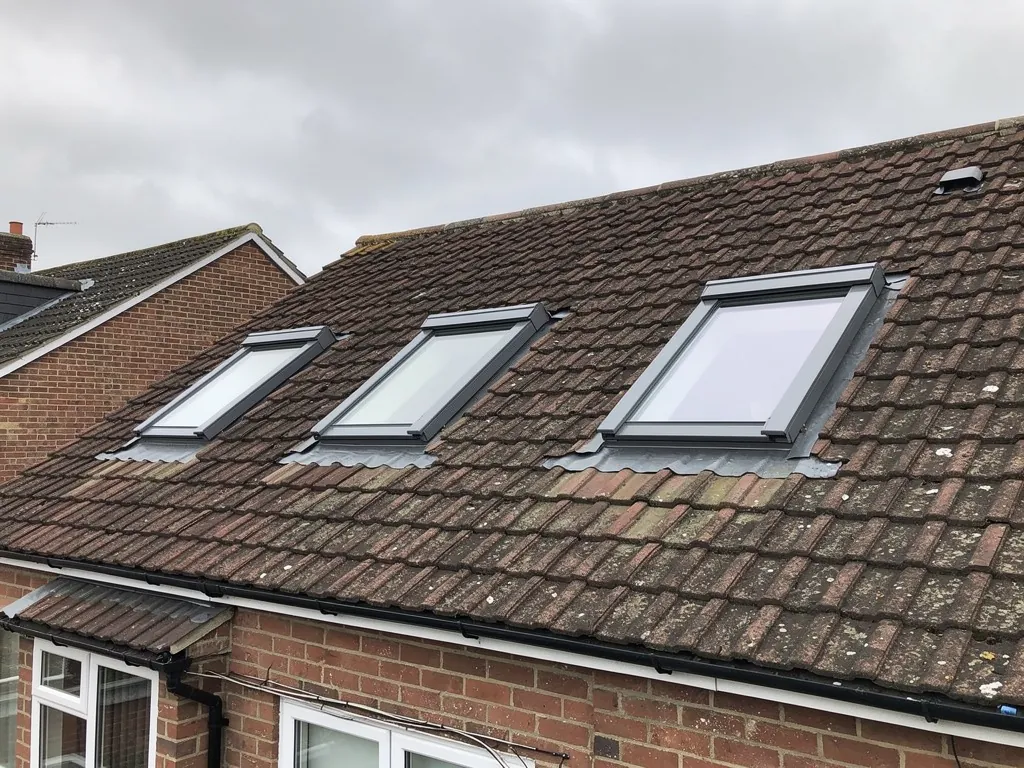
A centre-pivot roof window has its hinges at the middle of the sash, the moving part that holds the glass. You lift a handle along the top edge and the sash swings on its axis, so the lower half moves out and the upper half moves in. A top-hung roof window is hinged along the top edge. You pull a handle at the bottom and the sash swings outwards like a canopy, with the whole of the glass moving away from the room.
That sounds like a small distinction, and in a showroom it looks like one. In a south Essex loft bedroom, over a stair or in a bathroom with a sloping ceiling, it decides how comfortable the window is every day. The top hung vs centre pivot roof window choice is easier once you see what each style does well and where each one gets in the way. Our roof windows hub covers the wider range, and here we focus on this one choice.
Centre-pivot
Hinge in the middle, handle at the top. The sash can turn through a half circle, so the outer glass can be reached from inside. Usually set with the bottom edge at a comfortable standing height.
Top-hung
Hinge along the top, handle at the bottom. The sash swings out and up, leaving a clear opening below it. Suits lower positions where you want to look straight out.
02Reach and view
Handle position, reach and the view out
How high the window sits, and where the handle ends up, matters more day to day than the maker's name on it.
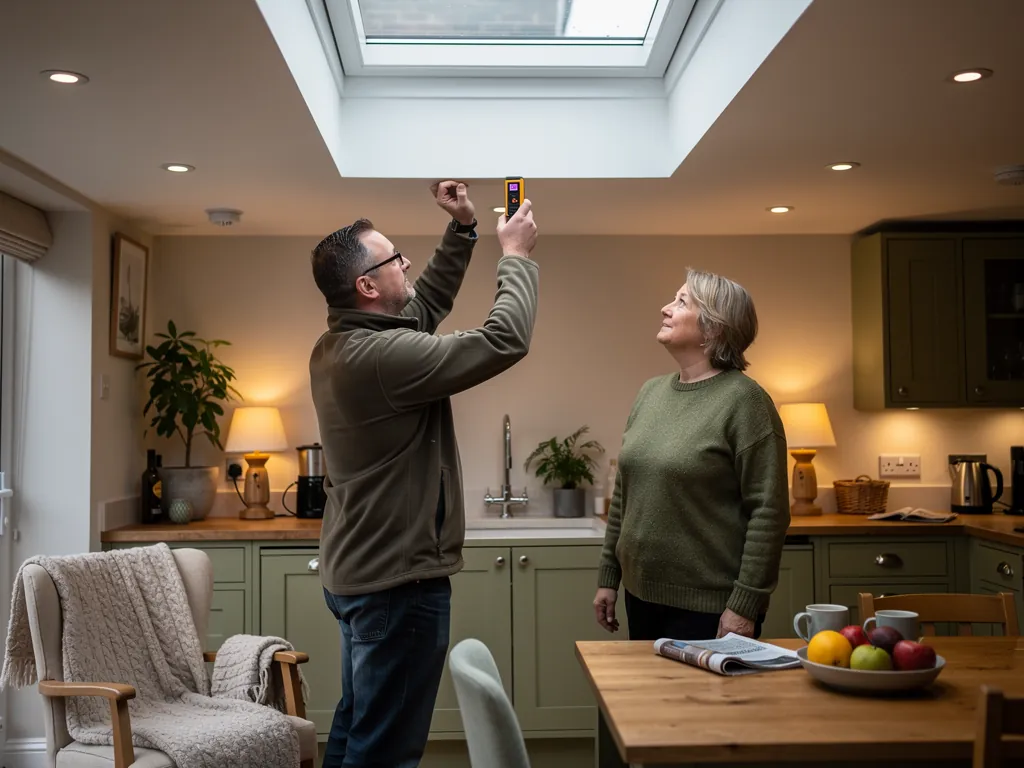
With a centre-pivot window, the handle is at the top of the sash. That suits a window set a little higher on the slope, because you reach up and the handle is right there. It also suits a room where the bottom of the glass sits near head height or above, such as over a bed or at the top of a stair.
A top-hung window puts the handle at the bottom. That is easier when the window is low on the slope, since you do not need to reach up at an awkward angle. It also gives a more open view while standing, because when the sash swings out there is nothing in front of your face. If you want to look out across the garden and the neighbouring roofs, top-hung is often the happier fit.
The two styles come with different ideas of the right height. For more on where each should sit, see our guide to roof window sizes and placement.
- Stand where you will use the window and reach for the spot where the handle would be.
- Think about children, older relatives and anyone shorter than you who will use the room.
- Check whether furniture, such as a wardrobe or desk, will sit under the opening.
- Imagine the sash open: where does it go, and does it meet your head or the room?
- Decide if the main purpose is a view, daylight or ventilation.
03Headroom
What the open sash does to the room
A pivot sash comes into the room when it opens, and a top-hung sash goes out. That changes the space under the window.
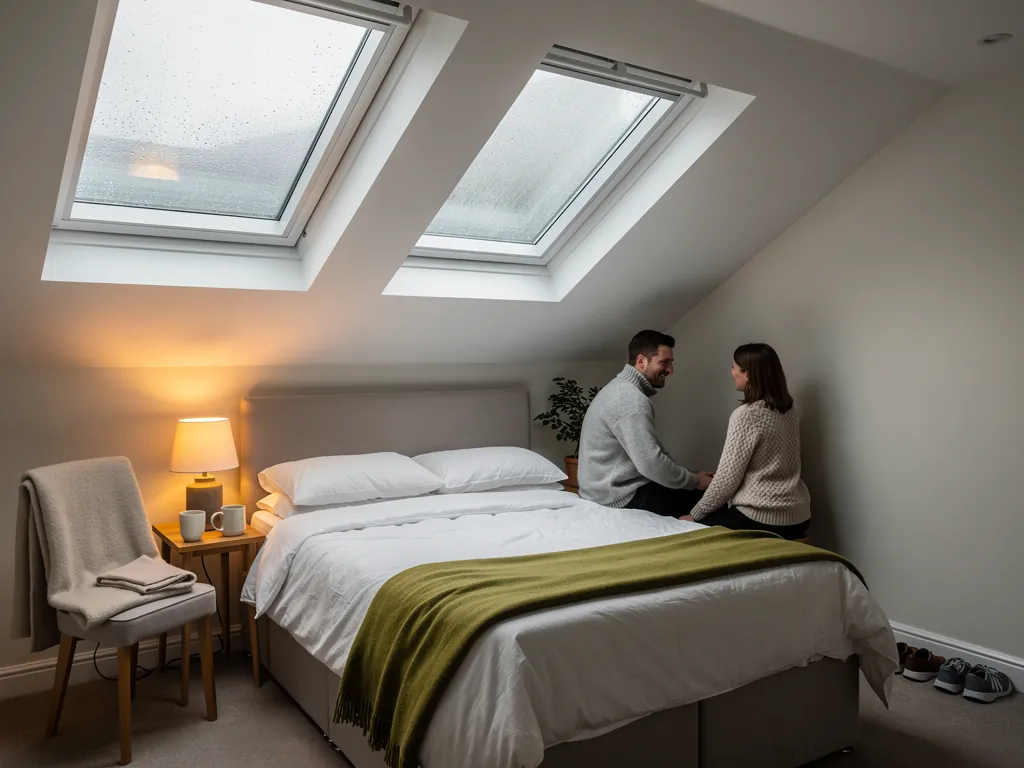
When you open a centre-pivot window, the top half of the sash swings inwards. In a loft room with a low sloping ceiling, that top half can sit above where you would stand, so it is rarely an issue. In a very low position, with the window starting close to the floor, it could catch a bed head, a chair or a head.
The top-hung window avoids this because its sash moves away from the room. That leaves the space under the opening clear. It is a good fit over a stair or landing, where you want to pass beneath without ducking, and in a bathroom where a basin or bath sits under the sloping ceiling.
Think about furniture as well. A bed, wardrobe or desk placed under a window changes what the open sash can do. We ask where the furniture will go before we settle the style, because moving a wardrobe is easy on paper and awkward once the roof is finished.
On the other hand, a top-hung sash in the open position can catch wind and may feel more exposed in a gusty spot. In practice a limiter holds it in a set position, and we talk through exposure at the survey.
04Cleaning
Cleaning the outside glass from inside
Roof windows are hard to reach from outside, so how you clean them is a real part of the decision.
This is where the centre-pivot window proves its worth. The sash can turn through a half circle, so the outer face of the glass comes inside the room and you can wipe it with your feet on the floor. Many people never climb a ladder to a pivot window. Our page on how to clean a roof lantern covers a different product, but the principle is the same: reach beats ladders.
A top-hung window does not turn over. The outer glass can be wiped only at arm's length from the open sash, and with the sash swung out the lower part is the hardest to reach. Some people use a long-handled tool, and some choose a self-cleaning coating to cut down on how often they need to do it.
If the window will be out of normal reach, such as above a stairwell, the cleaning story strongly favours a centre-pivot window. If it is low, in a room where you can lean out, a top-hung one is manageable.
Essex weather gives glass plenty to do. Rain carries dust and pollen, and the glass in a roof sits at an angle where dirt settles rather than runs off. A dirty roof window can cut the daylight a room gets, which is a shame when you have paid for the glass. Cleaning matters for the look, and it also keeps the light coming in.
A window you can clean from the floor is a window that stays clean.

05Warmth
Heat, draughts and the seal
Both styles can be warm. What matters is the glass, the spacer and how the frame is insulated into the roof.
A window opens and closes thousands of times, so the seal at the edge of the sash does a lot of work. Both styles use compression seals that press against the frame when shut. A good one keeps out draughts and holds in heat. The opening style does not make one inherently warmer than the other.
What changes the warmth of the room is the glazing and the fit. A double glazed unit with a warm-edge spacer, which is a thermally improved separator between the panes, loses less heat at the edge. The frame must be insulated into the roof so there is no cold path round it. Our page on warm-edge spacers and thermal breaks explains why. Warm-edge glazing is standard on our work.
Blinds make a difference to warmth as well. A blind that sits close to the glass traps a layer of air and slows heat loss on a winter night, and a blind on the outside keeps the summer sun off the pane. Both opening styles take blinds, though the way the sash moves changes which fixing works best, so mention blinds early. Our page on blinds for warmth goes into this.
One practical point on ventilation: a pivot window can be opened a small amount on a trickle vent or a ventilation flap to air the room without a full opening. A top-hung window can be set on a limiter or a catch for a small opening too. If a bedroom matters to you, choose a model with a secure night position, and read are opening rooflights secure.
- 1.3 to 1.4W/m²K, a typical U-value for a good double glazed roof window
- 180degrees, the turn a centre-pivot sash can make for cleaning
06Choosing
Top hung vs centre pivot roof window: a side-by-side guide
Pull the earlier chapters into one table and a pattern appears: height and room use decide it.
| Question | Centre-pivot | Top-hung |
|---|---|---|
| Best position | Mid to high on the slope | Lower on the slope |
| Handle | At the top | At the bottom |
| Cleaning | Sash turns, clean from inside | Wipe from arm's length |
| Space under the opening | Sash dips into the room | Stays clear |
| View when standing | Frame in view when open | More open view |
Cost and availability also vary by size and model, so the table above is a guide to the fit, not to price. We give you a written quote once we have seen the room.
Some rooms sit right on the line. A bedroom with a window high in the roof and a clear floor under it suits a pivot window. A landing with a view and a stair under it suits top-hung. A bathroom with a bath under the slope often favours top-hung for the open space it leaves.
07Rules and fitting
Regulations, escape and how we fit either style
The opening style does not change the paperwork, but it can change what the window may be used for.
A full roof window replacement, with frame and glazing, is a controlled fitting under Part L and needs notifying, which we do through Building Control on your behalf where it applies. If you are adding a window, planning is usually not needed for a house, but flats, maisonettes, listed homes and some conservation settings are different, so check with the council or read our page on roof window planning permission. The government's own Planning Portal has the national picture.
If a window must serve as a way out of a first-floor room in the roof, the opening size and sill height matter, and the style must meet them. We cover that in can a roof window be a fire escape. For a loft that is being converted, see roof windows for loft conversions.
- We visit, look at the room, the stair line and the slope, and ask how you use the space.
- You get a written quote that states the opening style, size, glazing and position.
- We protect floors and furniture, then cut the opening and fit the frame to the roof build-up.
- We insulate round the frame, line the reveal and make good inside.
- We show you how the window opens, cleans and locks before we leave.
One fitting team handles the job from start to finish, with a 10-year workmanship guarantee. Ready to talk it through? Ask for a free survey and written quote.
Which opening style suits your loft room?
Which is better, top-hung or centre-pivot?
Neither wins everywhere. Centre-pivot suits windows set higher on the slope and gives easy cleaning from inside. Top-hung suits lower positions and leaves clear space beneath the opening.
Can I swap a centre-pivot window for a top-hung one?
Often yes, but the opening style, size and position all interact, so we check the frame size and the roof build-up first. A like-for-like frame size makes the swap simpler.
Which opens wider?
It depends on the model. A top-hung sash swings out to a set angle on a limiter, while a pivot sash can turn right over for cleaning. Ask us for the figures for the specific window you are considering.
Are both styles equally warm?
The opening style does not decide warmth. The glazing, the warm-edge spacer, the seals and how the frame is insulated into the roof do.
Does a skylight need to open at all?
No. A fixed rooflight gives light only and is simpler. If you want fresh air, a view or an exit from a loft room, you need an opening roof window, and then the style choice applies.