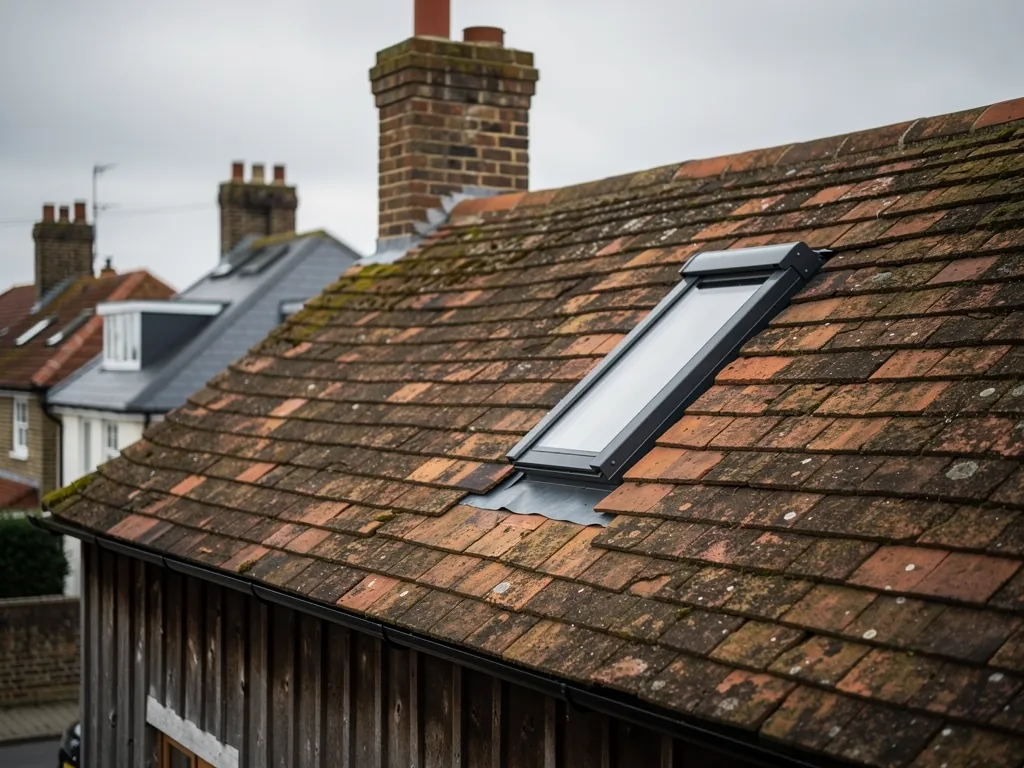
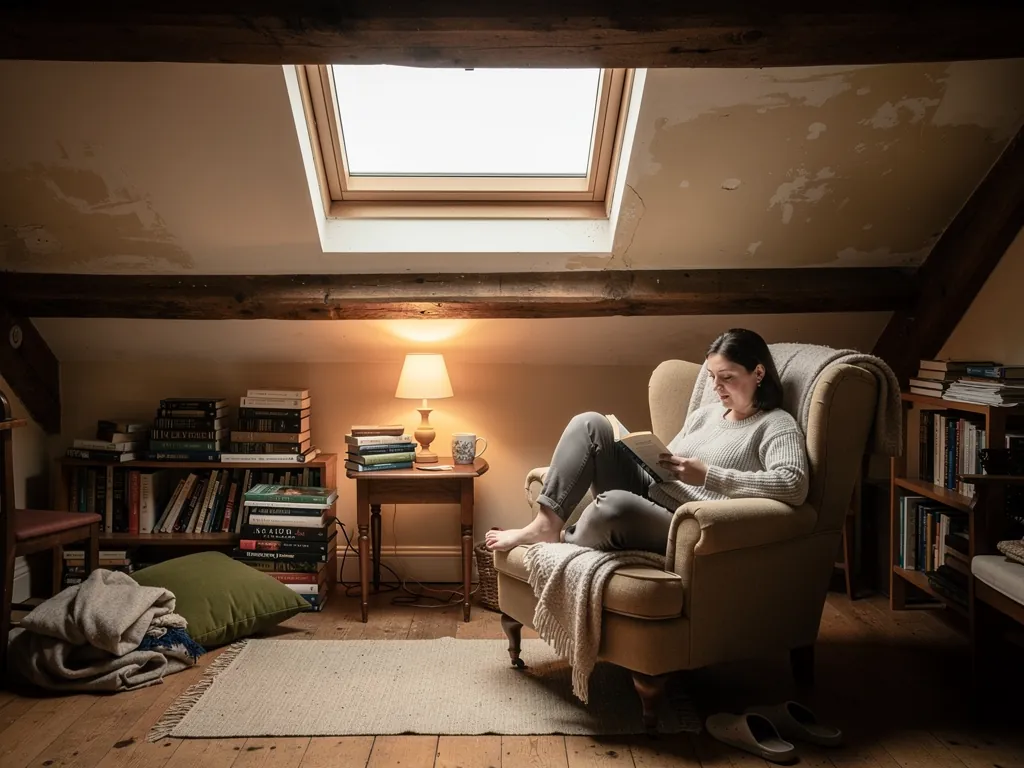
01Compared
A roof window against a wall window
Per square metre of glass, a window in the roof lets in more daylight than one in the wall, and it spreads that light further.
A wall window looks sideways. It sees a slice of the garden, the fence and the neighbour's house. A roof window looks up, and what is overhead is the brightest, most open part of the view. It is also not shaded by walls, hedges or the eaves of the building across the road. That is why a small roof window can brighten a room that a bigger wall window never quite lights.
We will not put a number on "how much more", because it changes with every roof and every room, and a made-up figure helps nobody. What we can say is that the direction of the gain is reliable and the size of the gain is something we judge on site.
Wall window
Light comes in low and sideways, brightens the strip nearest the glass, and fades toward the back of the room.
Roof window
Light drops in from above, reaches the middle of the floor, and lights the room more evenly from front to back.
02What decides it
Five things that change the amount of light
Size gets all the attention, but the other four can matter just as much.
- Glass size: a larger pane admits more, though only up to a point the room can use.
- Roof angle: a steeper slope faces more toward the garden side, a shallower one looks more directly overhead.
- Glazing type: low-e coatings and extra panes trim a little light as they hold heat in.
- Obstructions: trees, chimneys, a neighbouring gable or a dormer can shade the glass.
- Inside finish: pale walls and a splayed, light-coloured lining carry the light further.
Position on the roof counts as well. A window on the slope facing the garden gets different light through the day from one on the street side, and a window near the ridge, the top line of the roof, drops light further into the room than one low down by the eaves. Where the room has a choice, we talk through the options with you before marking anything out.
The glazing point deserves a straight answer, since it is the one that worries people who want a warm room. Modern double glazing with a low-e coating does let through slightly less daylight than plain clear glass. In return it keeps the heat in, so the room is comfortable to sit under and not just bright. Triple glazing trims light a little further and is warmer again. For almost every home the trade is a good one, and the room still feels bright on a grey Essex afternoon.
03Which room
How much glass a room needs
More is not always better. The aim is a room that is bright all day and not hot, glary or cold at night.
There is no single formula that suits every room, and we do not want to sell you more glass than the room needs. A good start is to look at what the room is short of. A dark landing in a post-war house needs only a modest roof window or a sun tunnel to change it. A loft bedroom with a low sloping ceiling often wants a pair to light both sides. A kitchen-diner with an extension roof may suit a larger rooflight or a lantern, which is a glazed roof feature that lights the middle of an open-plan space.
| Room | What the light has to do | Likely choice |
|---|---|---|
| Landing or hall | Lift a dark middle of the house | One small window or a sun tunnel |
| Loft bedroom | Light a low, sloped room | One or two roof windows |
| Kitchen-diner | Work light and daylight over a table | Large rooflight or lantern |
| Bathroom | Bright, with some privacy | One roof window, frosted if needed |
Our page on roof window sizes and placement goes into this, and the sun tunnel page on how much light a sun tunnel gives covers the smaller alternative for a hall or landing.
04Warm and bright
Getting the light without losing the heat
Daylight is half the job. The other half is making sure the room under the glass is not the coldest one in the house.
This is where our fitting differs from simply swapping in a window. We use warm-edge glazing as standard, and we look at how the frame meets the roof insulation and the lining so there is no chilly band around the opening. A bright room that sheds heat through the glass is not a good result, so we plan for both.
A good roof window should feel the same temperature as the ceiling beside it.
If you want the thermal side in more detail, see do skylights make a room cold. And if the area you are lighting is a loft room, roof windows for loft conversions shows how the pieces fit together. The full range is on the roof windows page.
Will a roof window be bright enough, and warm enough?
Is a roof window always brighter than a wall window?
For the same glass size it usually is, because it faces the open, bright part of the view. Heavy shade from trees or a neighbouring gable can reduce the gain, so we check what is around the roof at the survey.
Will a roof window make the room too hot in summer?
It can if there is no way to shade or vent it. A blind and an opening sash both help. A rooflight and skylight that can open lets warm air out.
Does tinted or low-e glass make the room dark?
Low-e glass lets through slightly less light than plain clear glass, but the difference is small in a room that is otherwise well lit. Its job is to keep the heat in.
Can I add more than one roof window?
Yes. Two smaller windows can light a room more evenly than one big one, and they suit a sloping loft ceiling well. We measure and suggest a layout on the free survey.