Southminster
Southminster roofs, from cottage to barn
How older cottages, post-war bungalows and converted farm buildings around Southminster each take a rooflight, and what keeps them warm.
01Place
Why Southminster roofs ask for a different plan
Southminster is the last stop on the line and the start of the Dengie. Its houses are scattered across old village streets and open lanes, so rooflight installation in Southminster is never one standard job.
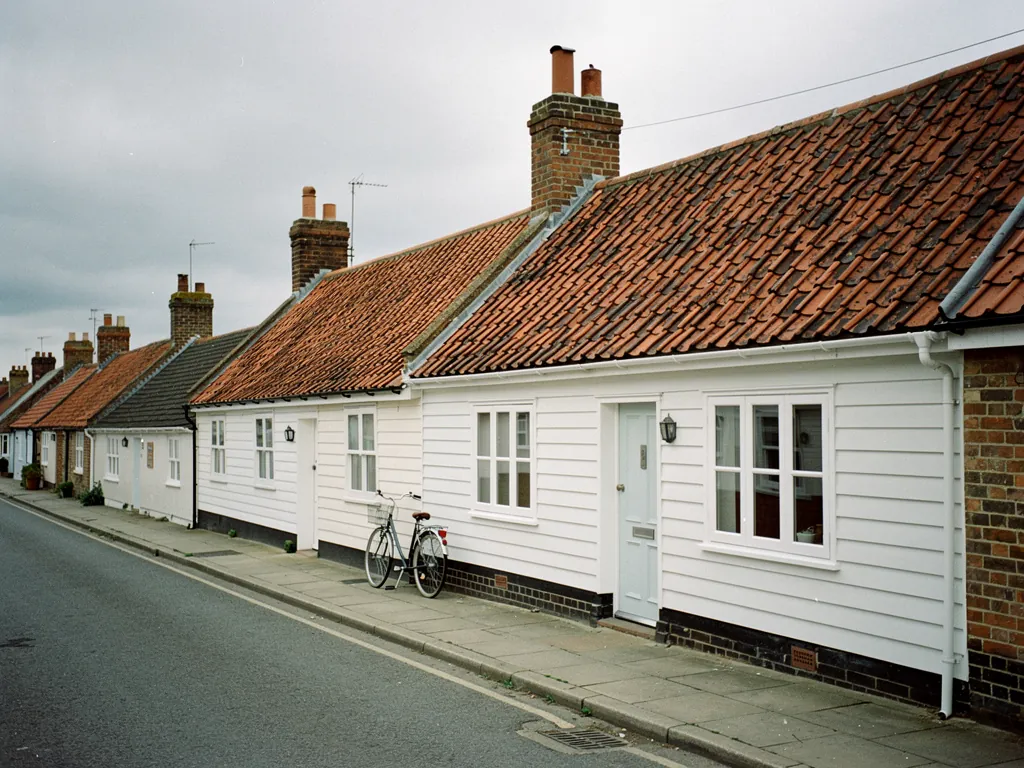
The village core has older cottages and small terraces, some with low ceilings and small windows. Around it are post-war houses and bungalows, then newer infill, then lanes that run out into fields. Farm buildings, some of them converted to homes, sit at the edges. Almost everything here is either low and wide or old and thick-walled.
The railway matters too. Southminster station is the terminus of the Crouch Valley line, so plenty of households here have one person heading to Wickford or Shenfield and a change for London every morning. Homes are lived in, not left, and nobody wants a building site in the middle of a working week. We plan around that, and we say in the quote how long each stage will take.
Those buildings share one problem. Daylight reaches the front and back walls but not the middle, and heat leaves quickly through roofs that were built long before today's insulation standards. A skylight fixes the first problem. How it is fitted decides whether it makes the second one worse.
| Building | The usual gap | The rooflight that fits |
|---|---|---|
| Older cottage | Dim upstairs rooms | Small roof window in the rear slope |
| Post-war bungalow | A hallway with no daylight | Fixed or opening flat rooflight |
| Rear extension | Bright but cold | Lantern or flat rooflight on an insulated kerb |
| Converted barn | A tall space that loses heat | Several modest roof windows, triple glazed |
02Cottages
Low ceilings and thick walls in the older streets
A cottage bedroom under the eaves can be charming and still too dark to dress in without the light on.
Older houses in a village like this tend to have small windows set deep into thick walls, so little daylight gets far into the room. The roof is the answer, because it is the one part of the house with no wall in the way. A roof window in a rear slope brings in light from above, and it can be sized to suit a modest bedroom rather than dominate it.
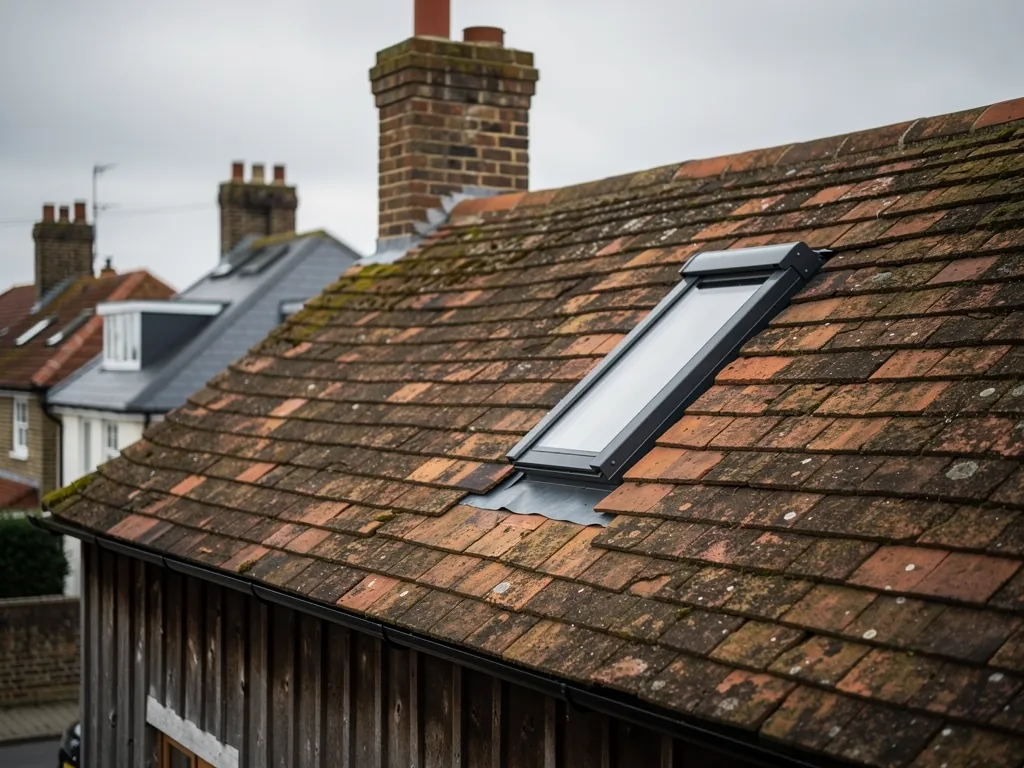
The rafters in an old roof are not always where you would expect, and they are not always the same depth. We measure and look into the roof before we quote, so that the frame is fitted into the insulation line and the opening is closed up with insulated lining. A window that sits proud of the insulation is a window that drips cold air.
Cottage roofs are often clay tile or slate, and sometimes both over the years as parts were redone. A roof window made to match the covering, with flashing to suit the tile profile, sits neatly and looks as if it belongs. We discuss the covering at survey so the frame and flashing kit are chosen before the day, not improvised on it.
03Council
Maldon District Council and the older centre
Southminster comes under Maldon District Council, which holds the planning answers for older streets, listed buildings and any restrictions on a particular house.
For most ordinary houses the starting point is our skylight planning permission guide, which explains the general position in one place. We keep it off this page on purpose, so that nobody reads an out-of-date summary here.
Some Southminster properties are older or have a history of their own. If your home is listed, listed building consent is always needed. If it stands in a conservation area, that alone does not remove permitted development, but a direction can, so we ask you to check the position with Maldon District Council. The same applies to a converted barn, which may have lost some permitted development when it changed use. Ring the council with your address and ask the specific question, then tell us the answer.
- Is the house listed, or close to a listed building?
- Is it inside a conservation area, and is there a direction removing rights?
- Was the building a barn or outbuilding that was converted to a home?
- Which slope will the window sit on, and can it be seen from the lane?
04Bungalows
Bungalows with a hallway that never sees daylight
A long internal hall is the classic dull corner of a bungalow, and the cheapest light is the light that comes through the roof.
Many bungalows in and around the village have bedrooms along one side and a hall with no window in the middle. You switch on the light at noon. A small flat roof rooflight or a roof window over that space changes how the whole house feels, and an opening version helps with fresh air in a bathroom or kitchen too.
Bungalows lose heat through the ceiling more than houses do, because there is nothing above. So the work is not just cutting a hole and fitting glass. We check the insulation above the ceiling, build an insulated shaft or lining up to the glass, and use a warm-edge sealed unit so the shaft does not become a cold column in the middle of your hall.
It is worth thinking about what the light does once it arrives. A pale ceiling and pale walls bounce it further along the hall, and a glossy floor throws it back up. Dark paint soaks it up. We cannot choose your colours, but we can tell you where the bright spot will fall at different times of day, so you place a door or a bookcase with that in mind.
A bungalow hall rooflight, as we usually specify it
- Size
- Matched to the hall width, not made as big as the roof allows
- Glazing
- Double glazing, with a warm-edge spacer between the panes
- Shaft
- Insulated lining from the glass down to the ceiling
- Opening
- Fixed for a plain hall, opening for a bathroom or kitchen
05Barns
Converted barns and farm-edge buildings
A tall farm building turned into a home has a lot of roof, and a big roof is a big place to lose heat.
Where the Dengie meets the village, some older farm buildings have been turned into homes. They have high ceilings, long roof slopes and often thin insulation. A set of modest roof windows or a long roof lantern can transform a dark living space, but too much glass will cost you warmth. The smart move is to balance the two.
Conversions also tend to have bigger spans and deeper roof build-ups than ordinary houses, which means more room for insulation around each opening and more chance to do the lining properly. We measure the rafter or purlin positions before choosing sizes, because a window that lines up with the existing structure is cheaper to fit and far less disruptive than one that does not.
A row of roof windows
Spreads daylight along a long room, lets us place each window against a rafter spacing, and keeps each opening small enough to insulate well.
A single big lantern
Gives a single bright focal point over a table or seating area, but it needs a properly insulated upstand and a glazing choice made with heat loss in mind.
06Heat
Warm glass for a damp, open part of Essex
Out on the Dengie there is little to break the wind, so a house here needs glass that keeps its heat.
Most of the fields and gardens here run flat towards the estuary, and a cold snap crosses them with little to slow it. A single-glazed or tired old unit in that setting gives up its warmth quickly. That is why we replace the whole assembly where it is failing, and why we choose the spacer and the kerb as carefully as the glass.
The key figure is the U-value, measured in W/m²K. It shows the heat that gets through a square metre of glazing, and the lower the figure, the warmer the room. Our energy-efficient rooflights page goes through how glass, spacer and frame combine, and the warm specification page shows what we put in every job.
- 2.2W/m²K, the Part L maximum for a rooflight added to a house that is already built
- 1.4W/m²K, roughly the level of a well made double glazed rooflight
07Booking
Getting a survey and a fitting out to Southminster
We are 24 road miles from Southminster, so we plan the trip out and do the survey properly in one visit.
The same team that surveys your roof comes back to fit it. We lay protection down on floors and furniture and keep the work tidy. Some jobs have to be notified, for instance a whole rooflight swapped out or a fresh opening cut, and for those we send the Building Control notification ourselves. Our Building Regulations answer sets out how the process runs.
We cover the towns across the Dengie too, including Burnham-on-Crouch down the line, Maldon and Mayland. For skylight installation or a replacement window in Southminster, the steps are the same.
- Request a free survey through the quote form or WhatsApp, with your address.
- We visit, look inside and outside, and check the insulation.
- You receive a written quote setting out glazing, kerb or flashing, and lining.
- We fit, with one team and protected floors, then close up the lining.
- Our workmanship guarantee runs for 10 years and comes to you in writing.
Southminster householders on rooflights: your questions
Can you fit a rooflight in an old cottage?
Yes, usually in the rear slope. We measure the rafters first and fit the frame into the insulation line. If the house is listed, listed building consent is needed, and Maldon District Council can tell you more.
Is a barn conversion treated differently for planning?
It can be, because a change of use may have affected permitted development. Check with Maldon District Council, and see our planning guide for the general rules.
I commute from Southminster station. Can you work around my week?
Yes. Plenty of households here have someone leaving for Wickford or Shenfield every morning, and nobody wants a building site in a working week. We plan the survey and the fitting days around when the house is empty, and floors and furniture are covered throughout.
Do you travel to Southminster from Basildon?
Yes, it is about 24 road miles. The survey and the quote in writing cost nothing, and we fit the visit around the journey.
How do I get started?
Give us your address and a few photos of the roof and the room, either on the quote form or in a WhatsApp chat, and we will arrange the Southminster visit.