01The labels
Three labels that get mixed up
Conservation area, Article 4 direction and listed building are three different things. Knowing which one applies to your house is the first job before anyone orders glass.
If you want a rooflight or skylight in a house in south Essex, someone will probably tell you the house is "in a conservation area" or "listed". Those phrases get used loosely, and they lead to very different paperwork. So let us pull them apart.
A conservation area is a place, not a building. The local council draws a line around a street, a village centre or a stretch of waterfront because the whole group is considered worth looking after. Towns across the area we cover, such as Billericay, Maldon, Leigh-on-Sea (the Old Leigh end), Rochford, Brentwood and Chelmsford, all have conservation areas of one kind or another. We are not going to tell you where any boundary runs, because the council holds the map and it can change.
An Article 4 direction is a council order that takes away some of the usual permitted development rights in a defined area. It sits on top of a conservation area in some places and does not exist at all in others. It is the piece most people have never heard of, and it is the one that can turn a simple roof job into one that needs an application.
A listed building is protected individually, because of its age, design or history. Listing is a national designation, and it comes with its own consent system, separate from ordinary planning permission.
| Label | What it covers | Who decides |
|---|---|---|
| Conservation area | A defined place, with extra care over how it looks | The local planning authority |
| Article 4 direction | Removes named permitted development rights in an area | The local planning authority |
| Listed building | One building, inside and out | Listed building consent, through the council |
Your home can sit under one, two or all three. A listed cottage in a conservation area with an Article 4 direction is perfectly possible. A 1930s semi on a road with none of them is far more common. Our conservation rooflights page explains the product side once you know where you stand.
02Your council
Finding out which council decides
Several councils cover the south Essex part of our area, and each keeps its own records. The postcode on your council tax bill tells you which one is yours.
South Essex is a mix of authorities. Basildon sits under Basildon Borough Council, but cross the boundary and you may be dealing with someone else entirely. A house in Billericay or Brentwood is in a different authority from one in Southend or Maldon. Roads that feel like the same neighbourhood can sit on either side of a line.
- Basildon Borough Council, for Basildon, Billericay, Laindon, Langdon Hills and Wickford.
- Thurrock Council, for Grays, Stanford-le-Hope, Corringham and Tilbury.
- Castle Point Borough Council, for Canvey Island, Benfleet and Hadleigh.
- Chelmsford City Council, for the city and the villages around it.
- Southend-on-Sea City Council, for Southend, Leigh-on-Sea and Westcliff.
- Maldon District Council, for Maldon and the Dengie side of the county.
- Rochford District Council, for Rochford, Hockley and the land around them.
- Brentwood Borough Council, for Brentwood and the villages towards the M25.
Ask each council the same two plain questions. Is my property in a conservation area? Is there an Article 4 direction that covers rooflights or roof alterations on my road? Many councils publish a map online, and a planning team will usually answer a short email. Keep the reply, and send it to us with your survey request. It is useful when we survey and useful if you ever sell.
If you are not sure which authority covers your address, the Planning Portal has a search that points you at the right one.

03Permitted rights
Why a conservation area does not always mean an application
Living in a conservation area does not by itself ban a rooflight. What matters is whether your usual permitted development rights are still intact.
Ordinary houses can often fit a rooflight without applying for planning permission, under what is called permitted development. We set out the conditions properly in our skylight planning permission guide, so we will not repeat the list here. The point for this page is how the labels interact with that right.
A conservation area does not remove those rights on its own. That surprises people. A house in a conservation area may still be able to take a rooflight on a back slope without an application. But an Article 4 direction, where one exists, can take that right away for a named type of work. Flats and maisonettes never had the right to begin with, wherever they stand.
Conservation area, no Article 4
Permitted development may still apply to a house. The council has not removed it. You would still check the conditions on the roof slope and projection, and ask the council if you have any doubt.
Conservation area with Article 4
The direction may require a planning application for work that would otherwise be allowed. The wording of each direction is different, so read the council's notice for your road or ask them to confirm.
Which of these applies to your street is the council's call. The council holds the records, and the answer can change when a direction is made or withdrawn. What we can do is tell you what to ask, and design the job so that it holds up whichever answer comes back.
04Listed homes
Listed building consent, and why it is stricter
A listed building needs listed building consent for work that changes its character, and a roof opening will do exactly that. There is no permitted development shortcut.
Listed building consent is a separate application from planning permission. It is made to the same council, but it looks at different things. Planning permission asks whether a development is acceptable on the site. Listed building consent asks what the work does to the building itself, including the roof structure, the covering and the way the roofline reads from outside.
Listing covers the whole building, not just the front. Inside matters. Rafters, purlins, ceilings and plaster can all be part of what is protected. So a rooflight that looks small from the garden can still cut through something the council cares about. Carrying out work without consent on a listed building is an offence, and it can mean being asked to put things back as they were.
Listed homes in our area range widely. Farmhouses and barn conversions on the edge of Basildon, timber-framed houses in the older streets of Maldon and Chelmsford, and a few cottages in Rochford and Leigh-on-Sea are all the kind of thing that may be listed. None of that is a promise about a particular address. The national list is searchable, and your council can confirm.
- Check whether your house is listed, and at what grade. The council or the national list will tell you.
- Speak to the conservation officer at the council before you spend money on drawings. A short chat tells you what they are likely to accept.
- Choose the position, size and style of rooflight with that advice in hand.
- Submit the listed building consent application with drawings and a short statement of what is changing.
- Wait for the decision in writing before any work starts.
05What gets asked
What a council tends to look at on a rooflight
Whether the application is for planning permission or listed building consent, the questions come back to the same few things: where, how big, how it looks and what it replaces.
Councils differ, and we are not going to quote any policy. But the questions are predictable because they follow from what the designation is for. A conservation area is about the look of the whole street. So the rooflight's visibility from the road, its size against the roof slope and its style are what get weighed.
Position
The back slope, away from the public view, is the easiest case. A front slope facing the street is the hardest. A slope that can be seen from a lane or a footpath sits somewhere between. Where you can, planning the room around a rear or side opening makes the conversation simpler.
Size and spacing
Large panes in a small roof look like a hole. Smaller panes, set in line with each other or with the rafters, look like part of the roof. Our companion guide on conservation rooflight glazing bars and sizes goes through what that means in millimetres.
Profile
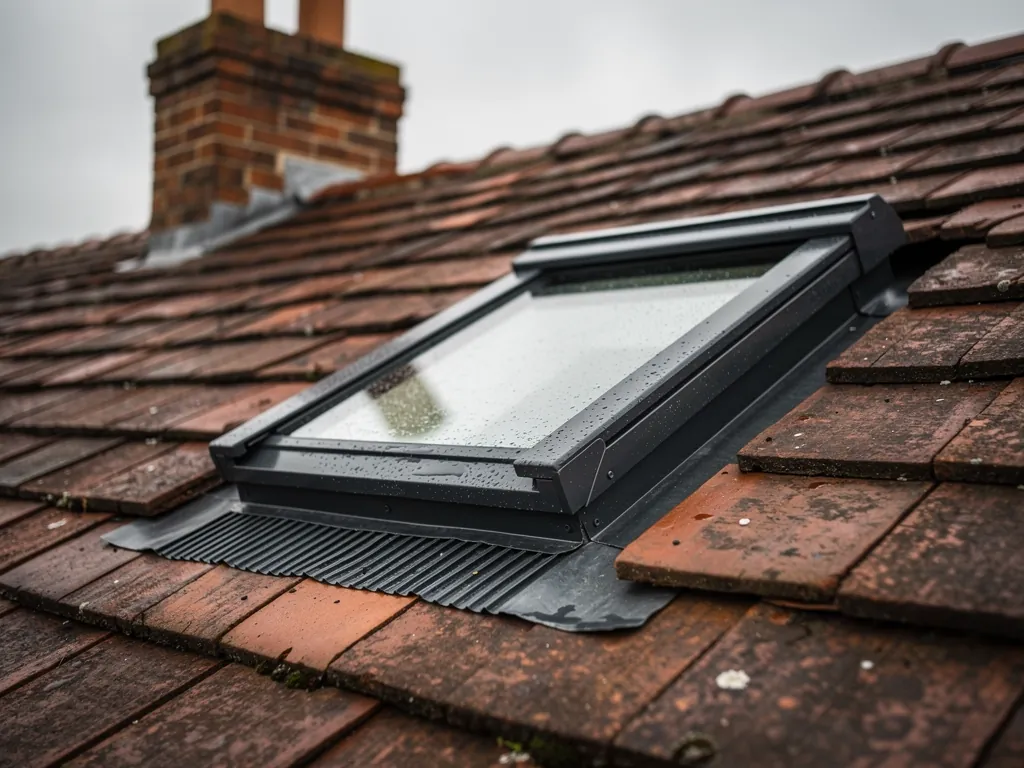
The usual advice is a low-profile rooflight that sits close to the slope, rather than a dome or a raised box. It is also the kind that stays within the projection limits when permitted development is in play.
- Is it on a slope that can be seen from a road, path or neighbouring land?
- Does it sit flush, or close to flush, with the roof covering?
- Do the glazing bars and frame colour suit the existing windows and roof?
- Is it replacing an existing opening, or making a new one?
- Are any rafters or roof timbers being cut, and is that acceptable?
06Warmth
Keeping the room warm inside a protected roof
Heritage rules are about appearance. Heat is about the glass, the seal and the insulation around the opening, and you can have both.
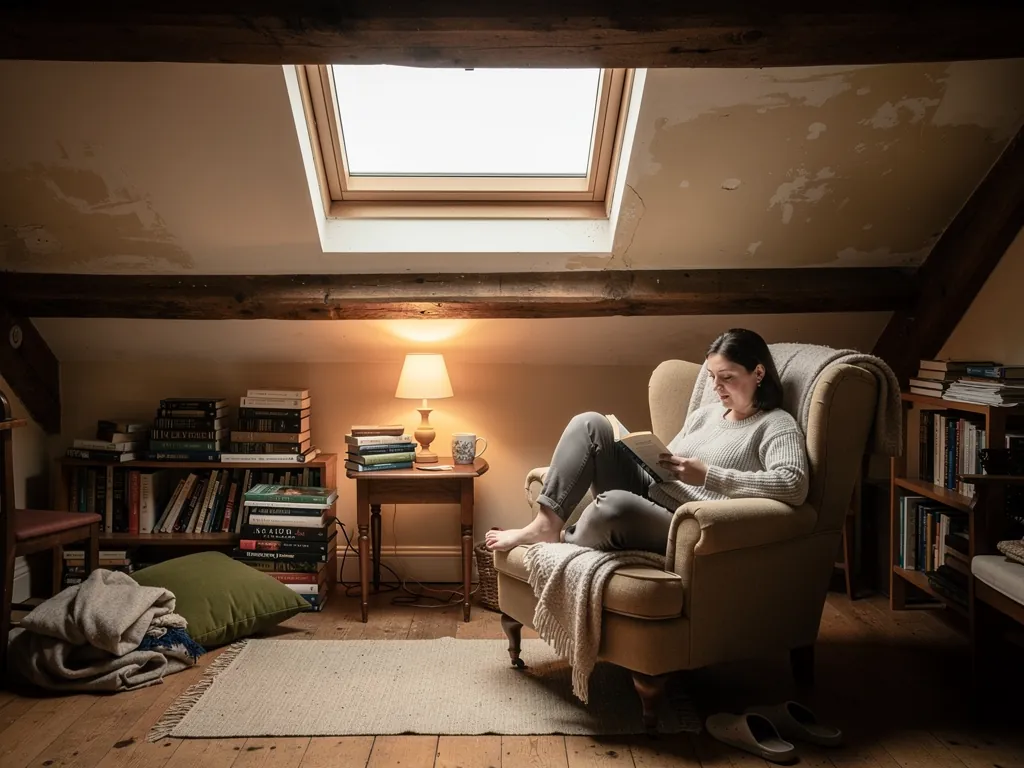
This is where our angle matters. A conservation-style rooflight can look slim and traditional on the outside and still keep heat in, because the look comes from the frame and bars, and the warmth comes from the glazing and the way it is fitted.
Warm-edge glazing is our standard. That means the spacer bar between the panes, the part at the very edge of a sealed unit, is made of a material that carries far less cold than old-style metal spacers. It reduces the chilly strip around the glass edge, which is also where condensation tends to appear first. Double glazing with a low-emissivity coating and an inert gas fill brings the whole unit's U-value down. The U-value measures how fast heat escapes through a material, in watts per square metre per degree of temperature difference, and a lower number is better.
Where the roof allows it, the insulation tucked around the rooflight lining matters as much as the glass. A well-glazed unit set in a cold, uninsulated reveal still loses heat at the edges. On a listed building the insulation may also be part of what you agree with the council, so it is worth raising early. Our guide on whether conservation rooflights are energy efficient goes into the numbers.
What we aim for in a protected roof
- Glazing
- Double glazed sealed unit, low-emissivity coating, warm-edge spacer
- Frame
- Slim profile, colour matched to the existing roof and windows
- Reveal
- Insulated lining around the opening, so no chilly band round the edge
- Notification
- Building Control notified where the work is notifiable
07Getting started
How to plan the job from here
You do not need to become a planning expert. You need three answers and one survey, in that order.
Start with the answers. Is the house listed? Is it in a conservation area? Is there an Article 4 direction? Ask the council in writing, because it gives you a record. Then decide what you want the room to do. A brighter landing, a warmer loft room and a lighter kitchen each point to a different size and position.
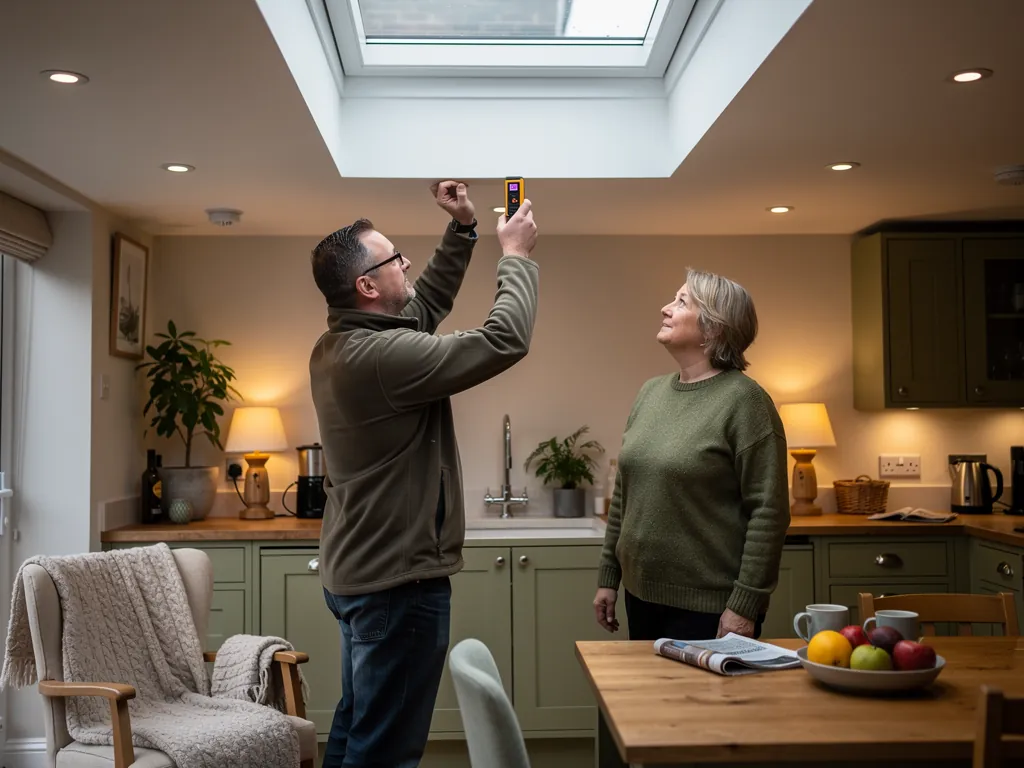
Then book a survey. We offer a free survey and a written quote, and one fitting team looks after the job from the first visit to the last. We measure the roof, look at the timbers and the existing covering, and talk through position and size with you. If an application is needed, we can talk through what the application needs, and you will have the written quote and product specification to hand to the council or to whoever prepares your application.
On the fitting day, floors and furniture are protected. The work is carried out to current Building Regulations, and where the work is notifiable we handle the Building Control notification. A complete replacement of rooflight, frame and glass together is a controlled fitting; swapping only the sealed unit is not. All our installation and replacement work carries a 10-year workmanship guarantee.
If you are still working out whether this is what you need, our guide to conservation rooflights explained starts from the basics. If you want a straight answer to a narrower question, rooflights in a conservation area covers it briefly.
Before you ring the council about a period roof
Can I fit a rooflight in a conservation area in Essex?
Often you can, but it depends on your house and your council. A conservation area does not by itself remove permitted development, but an Article 4 direction can. Check with your local planning authority before you order anything.
What is an Article 4 direction in plain terms?
It is an order made by the council that removes certain permitted development rights in a set area. Work you could normally do without an application then needs one. Each direction names exactly what it covers, so ask the council for the wording that applies to your road.
Do I need listed building consent for a rooflight on a listed house?
Yes, for a listed building you should assume consent is needed for a new rooflight or for changing an existing one. Listed building consent is separate from planning permission, and you wait for the written decision before work starts.
Who do I ask in Basildon, Chelmsford or Southend?
Ask the planning team at your own council: Basildon Borough Council, Chelmsford City Council, Southend-on-Sea City Council, Maldon District Council, Rochford District Council, Brentwood Borough Council, Thurrock Council or Castle Point Borough Council. Which one applies depends on your address, not on the town name.
Will you apply to the council for me?
We survey, measure and give you a written quote and a product specification you can pass to whoever prepares your application. The application itself is yours to make, or your agent's. We then fit to the consent once it is granted.
Will a conservation rooflight keep my room warm?
It can. Warm-edge double glazing, a low-emissivity coating and an insulated reveal keep heat in, and a slim traditional frame can still carry all of that.