01Trade-off
What the third pane buys you, and what it takes
Triple glazing is a real step up in warmth. It is also a step up in weight and cost, so it is a trade, not a free gain.
So, is triple glazing worth it on a rooflight? A triple glazed rooflight has three sheets of glass with two gaps between them, each normally filled with argon and each with low-e coating on a face or two. The extra layer slows heat leaving through the glass, so the U-value (the rate heat passes through, where lower is warmer) drops. A good triple unit can get below 1.0 W/m²K, where a good double sits a little above that.
There are three costs. The unit is more expensive to buy. It is heavier, which affects the frame, the kerb and sometimes the motor on an opening one. And it lets slightly less daylight through, because each extra pane of glass takes a little light with it. The loss is small, but it is real.
Double glazed
Lower cost and lighter. Plenty warm when well specified, with low-e coating, argon and a warm-edge spacer. A little more daylight comes through the glass.
Triple glazed
Lower U-value and a warmer inside pane. Heavier, dearer, and a little less light. Best where the glass is large or you spend long hours under it.
02Where it pays
Rooms where the extra pane makes sense
The longer you sit under the glass in cold months, the more a warmer pane is worth to you.
Think about how the room is used rather than the glass on its own. A rooflight over a landing is something you walk under for seconds. The inner pane of a good double unit is already close to the temperature of the room, so a third layer adds little you will notice there.
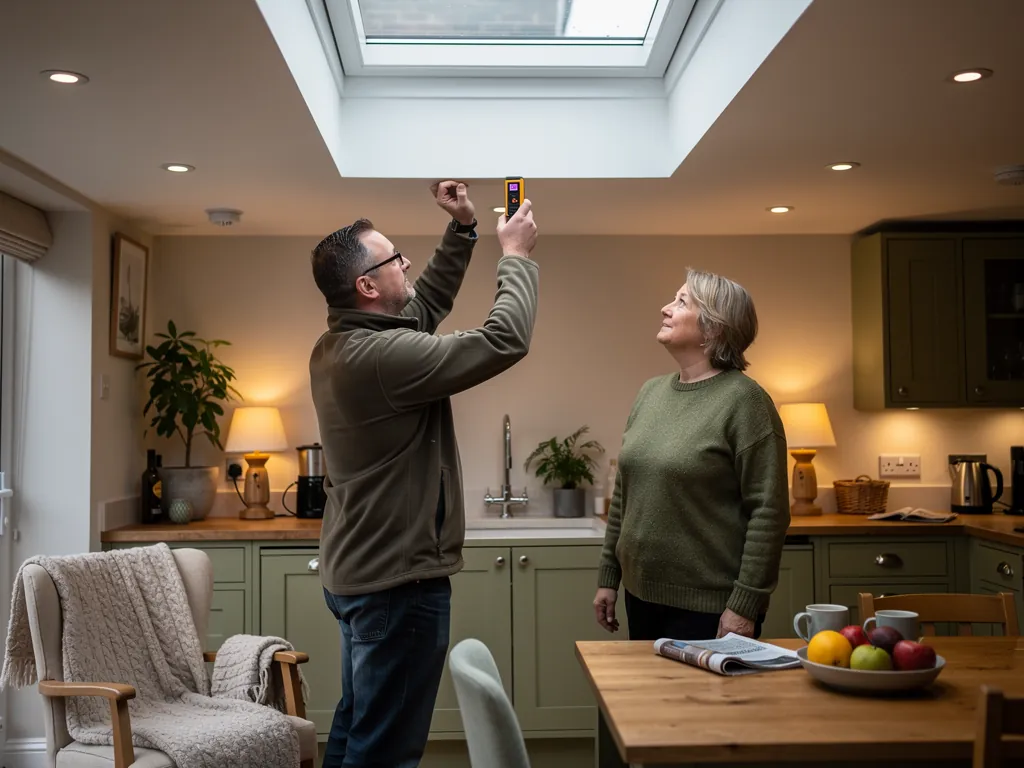
A kitchen-diner is different. You eat, work and sit under the glass for hours on a dark evening, and a large lantern holds a lot of glass over your head. A loft bedroom with a roof window above the bed is another one, as is a home office where you want no cold spot on your shoulders. In those rooms a triple glazed unit keeps the glass surface warmer, so the room feels more even and you are less tempted to turn up the heating.
North-facing roofs get no winter sun to help, so they gain more from the extra layer than a south-facing one does. If the frame is also heavy, such as a big lantern, check the structure before you decide, because three panes weigh more than two.
- Kitchen-diners and family rooms used for long evenings
- Loft bedrooms and home offices with a roof window above where you sit or sleep
- Large lanterns and wide sliding or fixed units
- North-facing roofs that never catch a winter sun
03Where it does not
When double glazing does the job
A well made double unit is warm enough for plenty of rooms, and the money saved can go on a better kerb or lining.
Triple glazing cannot rescue a poorly built rooflight. If the spacer is aluminium, the frame is a plain metal section or the kerb is not insulated, the glass is not the weak link. A good double unit with a warm-edge spacer, a thermally broken or timber frame and a properly insulated kerb will often feel warmer than a triple one with a cold edge.
So for halls, landings, bathrooms and small windows in a pitched roof, a quality double glazed unit is a sensible and honest choice. Spend the difference where the heat actually escapes. Our guide on double against triple glazed rooflights sets the two side by side, and are VELUX windows triple glazed covers what that maker offers.
04Deciding
How to decide for your own roof
Four questions settle it, and you can answer most of them before anyone visits.
- How many hours a day, in winter, will someone sit or sleep under this glass?
- How big is the opening, and does the roof structure suit a heavier unit?
- Which way does the roof face, and does the room get any winter sun?
- Is the kerb, lining and frame being made as warm as the glass?
Whichever way you go, the unit must meet the Part L limit of 2.2 W/m²K for a replacement in an existing home, and both options clear it comfortably when well specified. Replacing a whole rooflight is notified to Building Control, and we handle that for you. Compare quotes on whole-unit figures, as described in what U-value should a rooflight have, and see the wider energy efficient rooflights page for the options.
Our free survey and written quote will price a double and a triple glazed unit side by side for your roof, so you can see the difference before you choose. Details of our approach are on the warm specification page.
Triple glazing pays back over the rooms you live in, not the ones you pass through.
Is a third pane worth paying for here?
Is a triple glazed skylight much heavier?
Yes, three panes weigh noticeably more than two. That affects the frame, the kerb and the lifting on the day. For an electric opening unit, the motor has to be suited to the extra weight, so check it with the supplier.
Will triple glazing stop condensation?
It helps, because the inner pane stays warmer. But condensation is mainly a sign of heat escaping at the edge, so the spacer and frame matter just as much. Warm-edge spacers come with every unit we fit.
Does triple glazing let in less light?
Slightly, because each pane and coating absorbs a little. In most rooms you would not notice the difference, but on a dim north roof it is worth thinking about.
Can any rooflight be made triple glazed?
Not always. The frame and structure must take the thicker, heavier unit. Ask for it at survey stage, and we will tell you what suits your roof.