01Two words
Are a skylight and a rooflight the same thing?
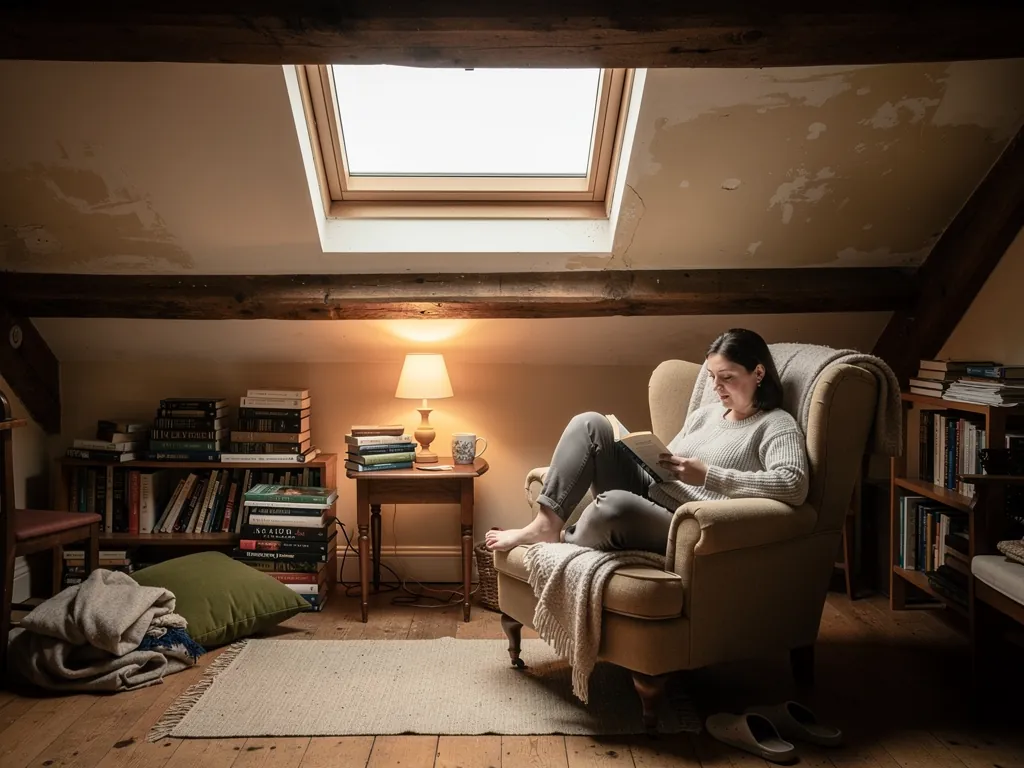
Mostly yes, and the difference is in who is talking. This chapter sorts out the vocabulary so that when a quote lands you know what is being offered.
Ask five people in south Essex what the window in a roof is called and you will get "skylight" from most of them. It is the everyday word, the one on estate agent listings and in conversation over the garden fence. "Rooflight" is the word the building trade prefers, and it is the one you will see on drawings, in Building Regulations guidance and on manufacturers' technical sheets.
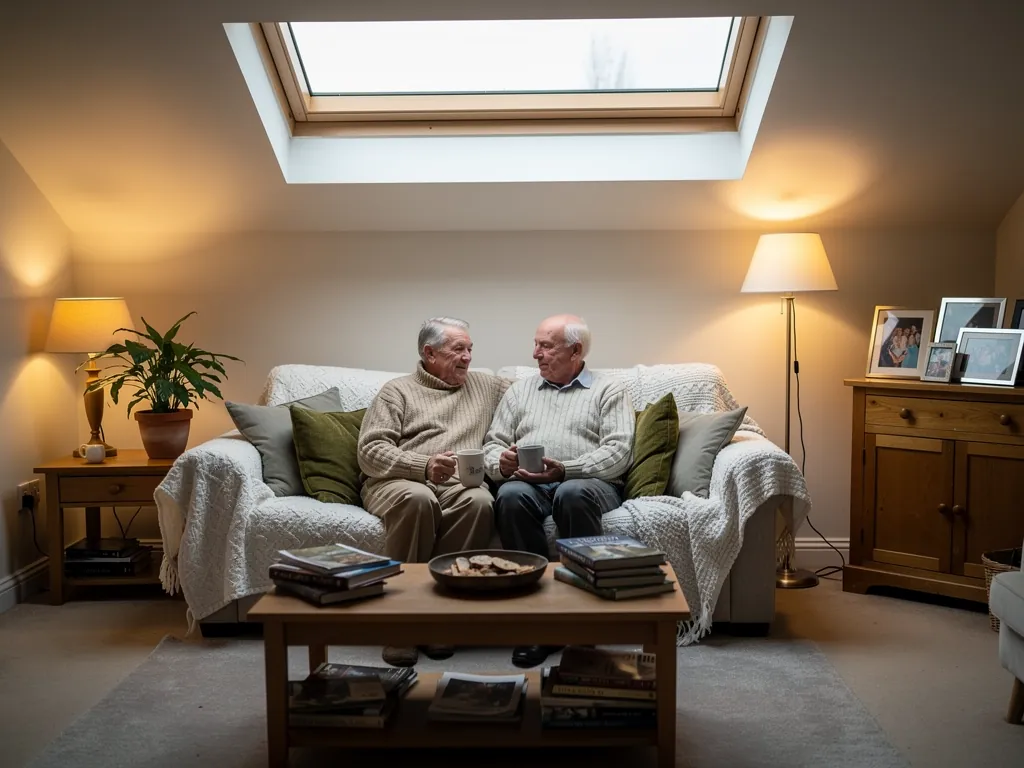
The skylight vs rooflight question sounds like a choice, but the two overlap almost completely. Both mean glazing set into a roof to let daylight into the room below. Where they part company is in habit, not in physics. Builders and architects tend to say rooflight for flat-roof units: the glass panels, domes, lanterns and walk-on glass that sit on a kerb or upstand. They say roof window for the pitched kind that sits in the slope of a tiled roof and usually opens, which is what most people picture when they say a VELUX.
We use both words on this site because you will meet both. What matters is the product behind the label, and that is what the rest of this guide helps you choose.
- Skylightthe everyday word for any glazing in a roof
- Rooflightthe trade word, often flat-roof units
- Roof windowa pitched-roof unit that usually opens
- Sun tunnela dome joined to a diffuser by a tube
02Roof first
Start with the roof, because it narrows the field
Before you think about size, glass or price, the shape of your roof removes half the options. Do this first and the choice gets short.
Roofs come in three broad kinds, and each one points to a different family of product. A flat roof, such as the one on a rear extension or garage, takes a flat rooflight or a roof lantern. A pitched roof, such as the tiled roof of a 1930s semi or a Basildon new-town house, takes a roof window. A room with no roof directly over it, because another storey or a loft sits above, may suit a sun tunnel.
There is a grey zone: the low-pitched roof of a dormer or a lean-to. Pitch decides whether a roof window can go in or whether a flat-style rooflight is the better fit, and the answer depends on the exact angle. We measure it at the survey rather than guess.
| Your roof | Likely product | Service page |
|---|---|---|
| Flat, on an extension | Flat rooflight or lantern | Flat roof rooflights |
| Tiled or slated slope | Roof window | Roof windows |
| Loft above the room | Sun tunnel | Sun tunnels |
| Large flat extension | Roof lantern | Roof lanterns |
03By room
Matching the product to the room you are brightening
Different rooms ask for different things from a roof opening. Here is the plain version, room by room.
Kitchen extensions and garden rooms
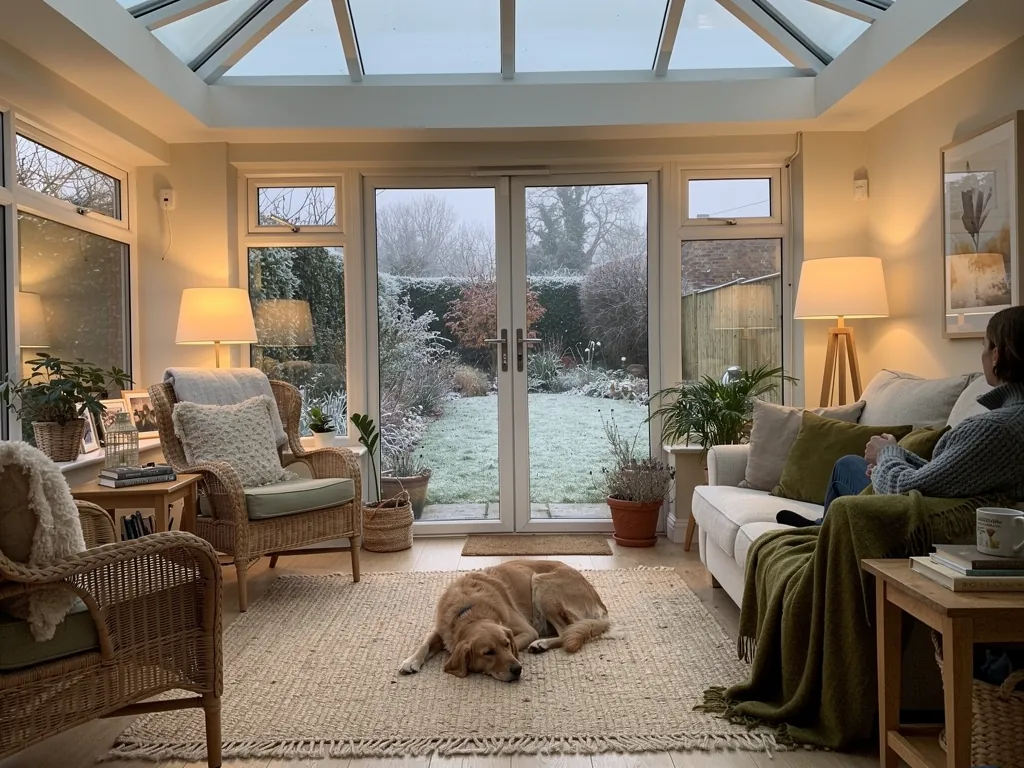
A kitchen-diner built out into the garden has a flat roof and usually wants a lot of daylight. This is the home ground of the roof lantern, the raised, pitched glass roof that gives height as well as light, and of large fixed flat rooflights. If the room gets hot in summer, an opening version lets the warm air out. See our roof lantern service for the full picture.
Lofts and top-floor bedrooms
Converting a loft means cutting a window into a slope. A roof window brings a view of the sky and opens for ventilation, while escape from the new storey is by a protected stair. Look at VELUX windows if you want a known brand name, or roof windows from other makers such as Keylite and Fakro.
Hallways, landings and bathrooms
These are the rooms where a window cannot go, and the sun tunnel is the product that fits the gap. It gives daylight but no view.
Period homes and conservation areas
Older houses and some protected streets call for a slim, flush-fitting unit with a metal frame that does not stand proud of the roof slope. That is the job of conservation rooflights.
04Fixed or open
Fixed, manual or electric: does it need to open?
Whatever you call it, a roof opening either opens or it does not. That decision affects how comfortable the room is in July more than it affects how it looks.
A fixed unit is a pane of glass in a frame. It is the simplest, the cheapest to run and, because it has fewer moving parts, the easiest to make well insulated. It is the right choice for a dining area with plenty of other windows, or a hallway that only needs light.
An opening unit lets out hot air, which rises. In a kitchen, a bathroom or an extension that catches the sun, an opening rooflight can cut the heat build-up without anyone reaching for a fan. Manual opening is fine where you can reach the handle. Where the unit is high or large, an electric motor with a rain sensor is easier to live with, and our electric opening rooflights page covers how that works.
Choose fixed when
You have other ventilation, the room is not prone to overheating, or the unit is out of reach. You get the cleanest, best-sealed result.
Choose opening when
The room is a kitchen, bathroom or sun-facing extension, or you want stale air to leave through the top of the house on warm days.
05Warmth
Why the word matters less than the specification
Two products with the same label can behave very differently. What decides comfort is the build, not the name.
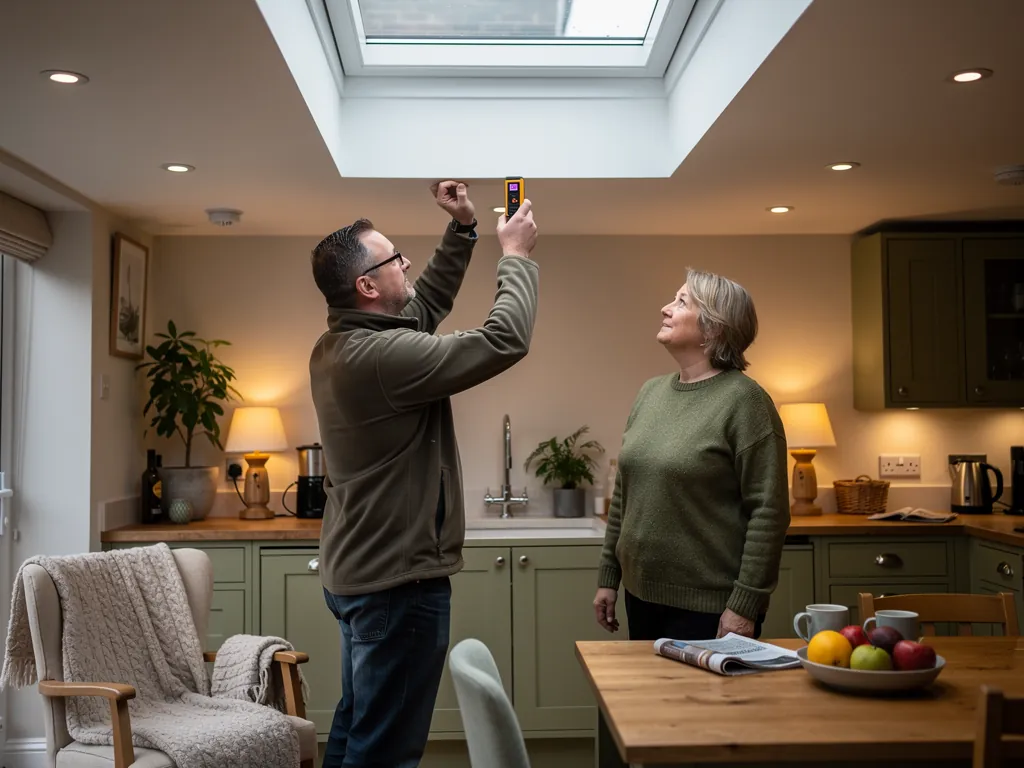
Glass loses heat faster than a wall or an insulated roof, so a rooflight is a weak point unless it is specified carefully. Four things make the difference: the glazing build-up, the spacer at the edge of the glass, the frame material and the insulated kerb or flashing the unit sits on. A double-glazed unit with a warm-edge spacer is our standard. The U-value, which measures heat loss in watts per square metre per degree (W/m²K), is the number to compare: lower means warmer.
The way the unit meets the roof matters as much as the unit itself. A well-insulated kerb or upstand, with the lining of the opening finished neatly, stops cold spots forming round the edge where condensation likes to collect. That is true of a roof window on a pitched roof and a lantern on a flat one.
Comparing two quotes by their name for the product tells you nothing. Compare the U-value, the glass and the kerb.
If you are worried that new glazing will make the room colder, read do skylights make a room cold before you decide. It explains why a well-specified rooflight need not.
06Rules
Do the rules treat a skylight and a rooflight differently?
No. The law cares what you are building and where, not what you call it. Here is a brief summary of what applies.
On a house, most rooflights and roof windows are permitted development as long as they stand proud of the roof slope by 150mm at most and do not rise above the ridge or top of the roof. Flats and maisonettes do not have that right, listed buildings always need consent, and a conservation area or Article 4 direction can change the position, so check with the council. Our guide to skylight planning permission sets this out in full.
On the building side, swapping the entire rooflight, frame and glass in one go, is notifiable under Part L of the Building Regulations because it is a controlled fitting, whereas changing just the sealed glass unit is not. We handle the Building Control notification where it applies. For general information you can also read the government guidance at the Planning Portal.
- Say what the building is: house, flat, listed or in a conservation area.
- Say what you are doing: a new opening, or replacing an existing unit.
- Check the planning position with the council where your property is protected.
- Leave the Building Control notification to us where the work is notifiable.
07Walking on it
The odd ones out: walk-on glass and lanterns
Two products sit apart from the usual window-in-a-roof idea. If one of them is what you are after, the vocabulary changes.
Walk-on rooflights are thick, laminated glass set flush into a floor, patio or roof terrace so that light drops into a basement or room below. They are a rooflight by the trade definition, though nobody would call them a skylight in conversation. Our walk-on rooflights page explains the glass and the loads.
Roof lanterns are the other outlier. They are larger, taller and more architectural than a flat pane, and they are sold as a feature of the room as much as a light source. People call them lanterns, skylights or rooflights interchangeably, and all three are right.
- For a floor or terrace you walk across, you want walk-on glass, not a standard fixed unit.
- For a feature ceiling with height in an extension, you want a roof lantern.
- For a plain flat opening that lets in light, a fixed flat rooflight does the job.
- For a pitched slope with a view and ventilation, you want a roof window.
08Next step
How to ask for what you want, whatever it is called
The labels will not trip you up if you describe the room instead. Here is how to get a useful quote without knowing the jargon.
When you contact us, tell us the room, which way it faces, the roof type above it and what bothers you most: too dark, too hot in summer, too cold in winter. We will do a free survey, look at the roof and the build-up, and put a written quote in your hand. One team handles the work from start to finish, with floors and furniture protected, and the installation is backed by a 10-year workmanship guarantee.
If you are not sure whether you need a new opening or a replacement for an old one, the same applies. Describe what you have and we will say what it is and what it needs. Back at our home page you can see every kind of rooflight we fit.
Is it a skylight or a rooflight, and does it matter?
Is a rooflight just a posh word for a skylight?
Close to it. Rooflight is the trade term and skylight is the everyday one, and both describe glazing set into a roof. Builders tend to use rooflight for flat-roof units and roof window for pitched ones that open.
What is the difference between a roof window and a rooflight?
A roof window sits in a pitched slope and usually opens, so you can look out of it. A rooflight in the trade sense often means a fixed or opening unit on a flat roof, set on a kerb. The jobs overlap, so the roof shape is the easiest guide.
Will a skylight make my room colder in winter?
Not if it is specified for warmth. Warm-edge double glazing, an insulated kerb or upstand and a neat lining keep heat loss low, and the U-value is the number to compare between quotes.
Which is better for a kitchen extension, a roof lantern or a flat rooflight?
A lantern adds height and a feature to the ceiling, while a flat rooflight is plainer and often simpler. Both can be made warm. It comes down to the look you want and the ceiling height you have.
Can I fit a rooflight in a room with no roof above it?
A normal window cannot reach, but a sun tunnel can bring daylight through a loft by way of a tube. It gives light without a view.