Chingford
Chingford roofs, semi by semi
How the town's interwar semis, older terraces, forest-edge houses and extensions each take a rooflight, and what keeps each one warm.
01Streets
Chingford's three kinds of street, and the rooflight each wants
Chingford sits at the top of Waltham Forest with the forest on one side and the reservoirs on the other. Rooflight installation in Chingford depends on which street you are on.
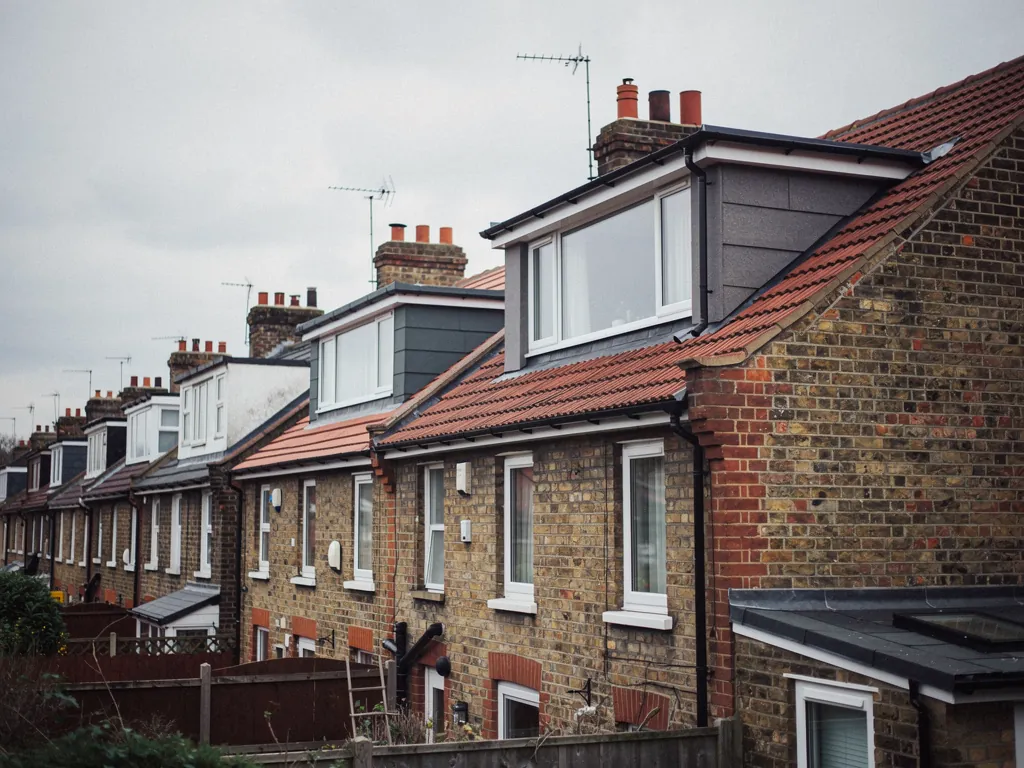
The housing here falls into a few clear groups. Near the station and the old village centre there are Victorian and Edwardian terraces and villas. Spreading out from them are the big interwar estates of 1930s semis with bay windows, tiled roofs and long back gardens. Closer to the forest edge sit larger detached houses on generous plots. Mixed in everywhere are post-war blocks, bungalows and later infill.
That variety means no single rooflight suits the whole town. A 1930s semi with a hipped roof and a loft is a roof window job. A house with a rear extension is a flat rooflight or lantern job. A bungalow with no upstairs at all may want a sun tunnel into the hall. We look at the roof first and the glass second.
The age of the house matters as much as its shape. Interwar roofs were built with rafters and tiles that suit modern roof windows well, while older terraces have tighter timbers that need more care when we cut an opening. Roofs that were re-covered or extended later may hide surprises, which is why the survey includes a look inside the loft and not only a glance from the pavement.
The table is our starting point at a free survey. It changes once we are up in the loft.
| Chingford home | Where the glass goes | Heat to watch |
|---|---|---|
| 1930s semi with a hipped roof | Rear slope, roof window into the loft room | Thin rafter insulation behind the lining |
| Victorian or Edwardian terrace | Back bedroom or stairwell slope | Shallow rafters and draughty old gaps |
| Detached house near the forest | Rear extension roof, lantern or flat rooflight | Big glass area on a long, cold span |
| Bungalow or post-war flat | Sun tunnel or fixed rooflight over the hall | An uninsulated loft hatch beside the opening |
02Forest edge
Living beside Epping Forest: shade, leaves and long afternoons
Roads close to the forest have tall trees, and the trees change how much daylight a roof gets.
Epping Forest runs along the eastern side of Chingford, and many homes near it sit under mature trees. In summer, that canopy gives welcome shade. In winter, with the leaves down, it lets more daylight through. A skylight on a shaded slope has less brightness to work with than one on an open roof, so the size and position matter more than they would on an open estate.
One useful habit is to stand in the room at three times of day and note where the brightest spot falls. Mid-morning, early afternoon and late afternoon will tell you more than a plan can. On a street of tall oaks and beeches the answer often changes with the season, and it is worth thinking about both a dull February and a bright June before the glass is ordered.
It also means a tidy fitting. Leaves and twigs collect in gutters and on flat roofs, so we set the rooflight and its kerb where debris will not pile against the glass. We talk this through at the survey, because the right position on a tree-lined plot is often a few feet from where people first expect.
03Planning
Waltham Forest, forest-edge streets and checking your address
The London Borough of Waltham Forest is the planning authority for Chingford, and some streets near the forest and old village centre may carry extra controls.
For most houses the answer about whether you need an application is in our skylight planning permission guide, and we do not repeat it here. What is specific to Chingford is that part of the town sits next to protected forest land and older streets that the borough may have given special status. We do not guess which. Only Waltham Forest can say whether your address is affected, and it takes a short call or an online search to find out.
Flats and maisonettes are treated differently from houses, so if you own one, ask before you plan. A listed building needs listed building consent for any new rooflight. Bring whatever the council tells you to the survey and we will price to suit it.
It helps to go in with the right questions. A planning officer deals with these calls all day, and a clear question gets a clear answer. Write down your full address and a one-line description of the job before you ring or search online, so that the reply is about your house and not about the borough in general.
- Does any special control apply to roof alterations on my street?
- Is my home a house, or a flat or maisonette?
- Is the building listed, or close to a listed building?
- Is the rooflight going on the front slope, the rear slope or an extension roof?
- Has a previous extension at this address come with conditions I should know about?
Answers to those five questions take most of the guesswork out of the survey, and they mean the quote you get from us matches what the council will accept.
04Semis
The 1930s semi: loft rooms, hipped roofs and cold edges
Interwar semis fill much of the town, and their roofs are well suited to a loft room with proper daylight.
A typical semi has a generous loft, a main ridge with a hip at the end, and rafters that were never meant to be lived under. Plenty of owners have turned that space into a bedroom or office. The question is how to light it without turning it into a cold box in winter.
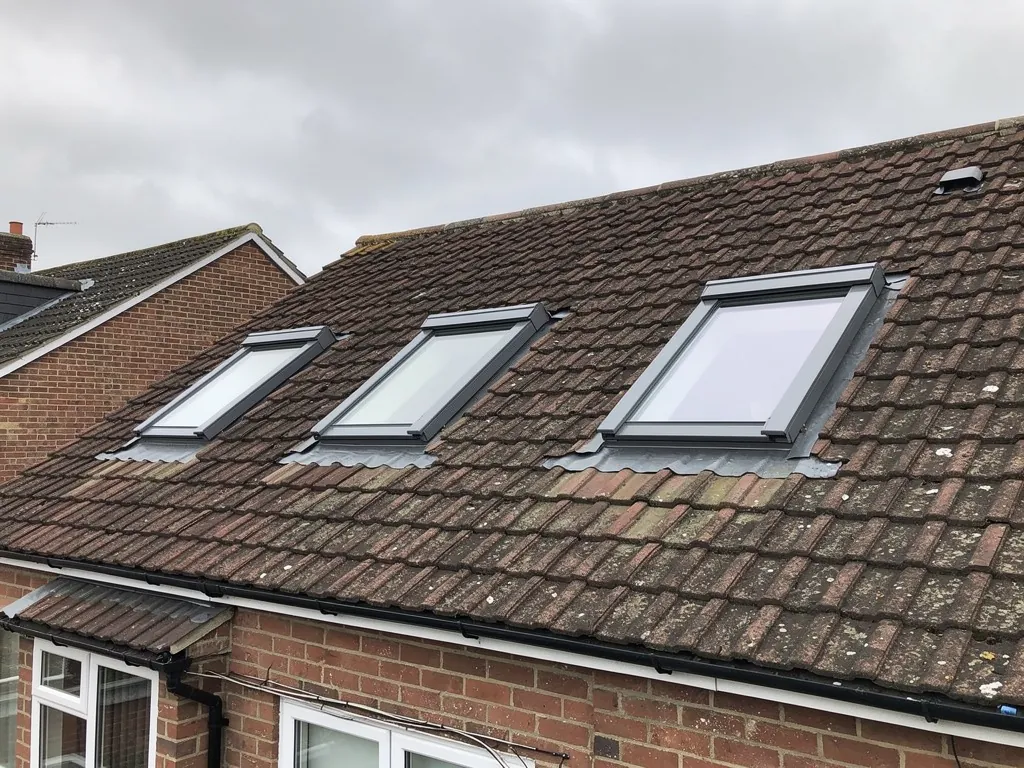
A roof window in the rear slope lights the room and opens for air in summer. The cold comes from the surround. If the insulation stops short of the frame or the lining leaves a void, you get a chilly stripe around the window. We fit the frame with its insulated collar, then take the room's insulation right up to it. Our roof windows page shows the types; sizing is covered in the same section.
One large roof window
One opening, one frame, one set of seals. Good for a small loft room where a single bright point is enough.
Two windows side by side
Spreads light across a longer room and gives two places to open. It means two openings to insulate well.
05Extensions
Back-garden extensions on larger Chingford plots
Longer gardens make it easy to extend, and a big new roof is a big place to lose heat.
Chingford's longer plots have encouraged generous rear extensions, with open-plan kitchens and dining rooms. A flat roof over that much floor can be dark in the middle, so a roof lantern or a run of flat rooflights is the natural fix. Because the opening is large, the glass spec matters. A cheap, thin-framed unit can leave you with a cold zone over the table and condensation on the inside of the frame.
We specify the lantern or rooflight for heat first, then choose the style. Read more in our roof lanterns service page, and see the answer on lanterns in winter if that is your concern.
Planning a lantern over a Chingford kitchen-diner
- Frame
- Thermally broken aluminium or a good uPVC, chosen for the span
- Glass
- Double glazed sealed units with a warm-edge spacer
- Upstand
- Insulated, taller than the roof covering needs
- Ventilation
- An opening panel or vents, to keep the room fresh
- Permission
- Follows the extension's own approval
06Warmth
Why a Chingford room can feel cold under glass
Frost on a forest-edge morning shows up every weak spot in a roof.
Chingford is at the northern edge of London, close to open land, and its mornings in winter can be sharp. A room with a skylight tells you straight away if the heat is leaking. You get a cold column of air sinking from the glass, or a damp ring on the plaster.
A Chingford terrace near the station and a 1930s semi near the forest need different glass, and only the roof tells you which.
We avoid that by looking at the glass, the frame and the join to the roof as one system. The answer on whether skylights make a room cold goes into the physics, and our energy efficient rooflights page covers the glass options.
07Booking
From a free survey to a finished room in Chingford
We come to you, we explain the options in plain words, and we do the work with one team.
Our Basildon base is 29 road miles from Chingford, so we book each visit ahead and never turn up unannounced. Chingford is easy to reach from the A406 and the main roads into the borough, and we agree a start time with you that avoids the school run. We will look at the roof from outside and inside, measure the opening and talk through the room's use. We protect floors and furniture before we start and take rubbish away when we finish.
- Free survey and written quote, with the glass and kerb or surround listed.
- Agree the position, the size and any opening mechanism.
- We notify Building Control where the work is notifiable.
- One team fits the frame, closes the roof and finishes the lining.
- Final walk-round, with the 10-year workmanship guarantee confirmed.
See also how long skylight fitting takes. We also work in Walthamstow, Loughton and Woodford Green.
Asked about rooflights in Chingford
Does living near Epping Forest affect what I can fit?
It may. Waltham Forest Council decides whether any special controls apply to your street, so check your address with them before the survey.
Will tall trees make a skylight pointless?
No, but they change where the glass should go. We look at which slope gets the best light at the times you use the room.
Can a loft room in a 1930s semi be made warm?
Yes. The glass, frame and insulated collar are chosen for heat, and the lining is taken tight to the frame so there is no cold edge.
What is the difference between a skylight and a rooflight?
In everyday use, very little. Our skylight or rooflight page explains where the two words come from.
Do you notify Building Control?
Yes, where the work is notifiable. The Building Regulations answer explains when that applies.