01The choice
Two frames, two different ideas
Both materials hold glass over your room. They get there in opposite ways, and that explains almost every difference you will see.
A roof lantern is a raised glass roof, and its frame is the skeleton: a ridge along the top, hips running down the corners, glazing bars between the panes and a base frame that sits on the kerb. Strip away the marketing and you are choosing between two materials for that skeleton. Aluminium is a strong metal that conducts heat very well. uPVC is a plastic that conducts heat poorly but is soft and needs help to carry load.
That one contrast drives the rest. Aluminium needs a deliberate fix to stop it carrying cold indoors, and in return it can be shaped into slim, long-spanning bars. uPVC is naturally warm to the touch, but it needs bulk, and usually a hidden metal core, to do the same job. Neither is simply better. The right one depends on your room, your budget and what you want the glass to look like from the sofa.
Throughout this guide we use the word rooflight for the whole glazed unit and skylight for the everyday name people give it. A lantern is a rooflight with height, and the aluminium vs upvc roof lantern choice is the first one to settle. If you want the wider decision, our roof lantern buying guide sets this choice alongside size, glass and upstand.
- Aluminium: strong, slim bars, wide colour range, needs a good thermal break
- uPVC: warm frame by nature, chunkier bars, narrower colour range
- Both: only as warm as the glass, the seal and the kerb allow
- Both: should be quoted with a whole-unit U-value, not just a glass figure
02Heat
Which frame keeps the heat in?
On a frosty morning, the frame is where you feel the difference. Here is how each material deals with heat, and what to ask for.
Thermal conductivity is how readily a material passes heat. Aluminium passes it freely. A plain aluminium bar would behave like a cold bridge, with the outside temperature running straight through to the inner face. That is why every sound aluminium lantern has a thermal break: a strip of low-conducting material, usually polyamide, locked between the inner and outer halves of each bar. The metal on the room side then stays close to room temperature.
uPVC does not need that trick. The plastic itself resists heat flow, and the hollow chambers inside the profile trap still air. The catch is that uPVC bars are thick, and many lantern systems add an aluminium or steel reinforcing core to stop them flexing. If that core touches both faces of the bar without a break, you can lose some of the advantage.
The honest answer is that a well-made thermally broken aluminium lantern and a well-made uPVC lantern can land close together. The frame is a smaller share of the unit than the glass, so the glazing spec and edge seal usually matter more. Our guide to warm-edge spacers and thermal breaks explains both parts in detail.
03Slimness
Bars, spans and how much glass you get
Slimmer bars mean more glass and less frame in view. That is aluminium's strongest card, and it comes from strength rather than looks.
Aluminium is stiff for its weight. A bar that is only a few tens of millimetres across the face can still carry a large pane of glass and the load of snow and wind on it. That lets makers build lanterns with long runs between supports and a light, fine-boned look from inside.
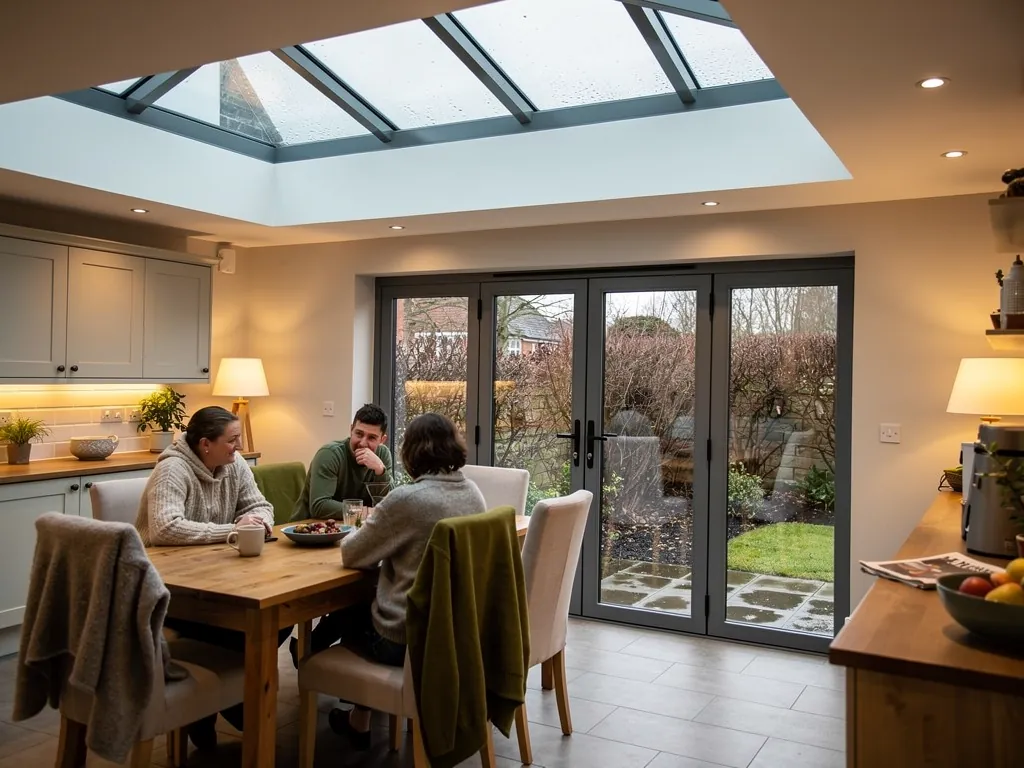
uPVC is less stiff. To reach the same span the section has to be deeper and wider, or it needs a steel core, or the glass panes have to be smaller with more bars. Look up from the kitchen table and you see that as heavier lines across the ceiling. On a small lantern in a compact room it may not bother you at all. On a big, long lantern it usually shows.
If you want to know how the glass area interacts with size, our roof lantern sizes guide covers proportion and the border around the glass.
| Feature | Aluminium | uPVC |
|---|---|---|
| Bar thickness | Slim, fine lines | Chunkier, more visible |
| Long spans | Strong, suits large lanterns | Needs reinforcing |
| Glass share | More glass, less frame | Slightly less glass |
| Frame feel | Warm if thermally broken | Warm by nature |
04Finish
Colour, texture and how the finish ages
You will see the frame every day, so colour and surface matter, and so does how they look in ten years.
Aluminium takes a powder coating, a baked-on dry paint that is tough and sold in a huge range of colours. It is common to have one colour outside to match your windows and another inside to match your ceiling. Fine texture finishes and darker anthracite greys are easy to get, and they sit well with modern bi-fold doors. A good coating lasts a long time and can be washed with water and a soft cloth.
uPVC is typically offered in white, a few greys and black, often as a foil laminate over white plastic. White uPVC suits many 1930s and post-war houses around Basildon, where windows are already white. Cheap white plastic can yellow with age, and foil finishes can fade or lift at the edges in very hot spots, though good modern profiles are better than the older ones.
Matching matters more than people expect. If your windows and doors are grey aluminium, a white uPVC lantern will look like an add-on. If your house has white uPVC windows, a slim black aluminium frame can look sharp, but it will not match the rest of the elevation, and that is a choice to make deliberately.
Aluminium finish
Wide colour range, dual colour inside and out, slim profile. Needs a clean now and then with water and a soft cloth, and a poor coating is the thing to ask about before you buy.
uPVC finish
Fewer colour options, usually white or foil. Easy to wipe down. Quality of the plastic and of any foil decides whether it keeps its colour well.
05Lifespan
How long each one lasts and what it asks of you
Frames outlive glass seals and sealants, so what matters is how the whole unit ages and what looking after it involves.
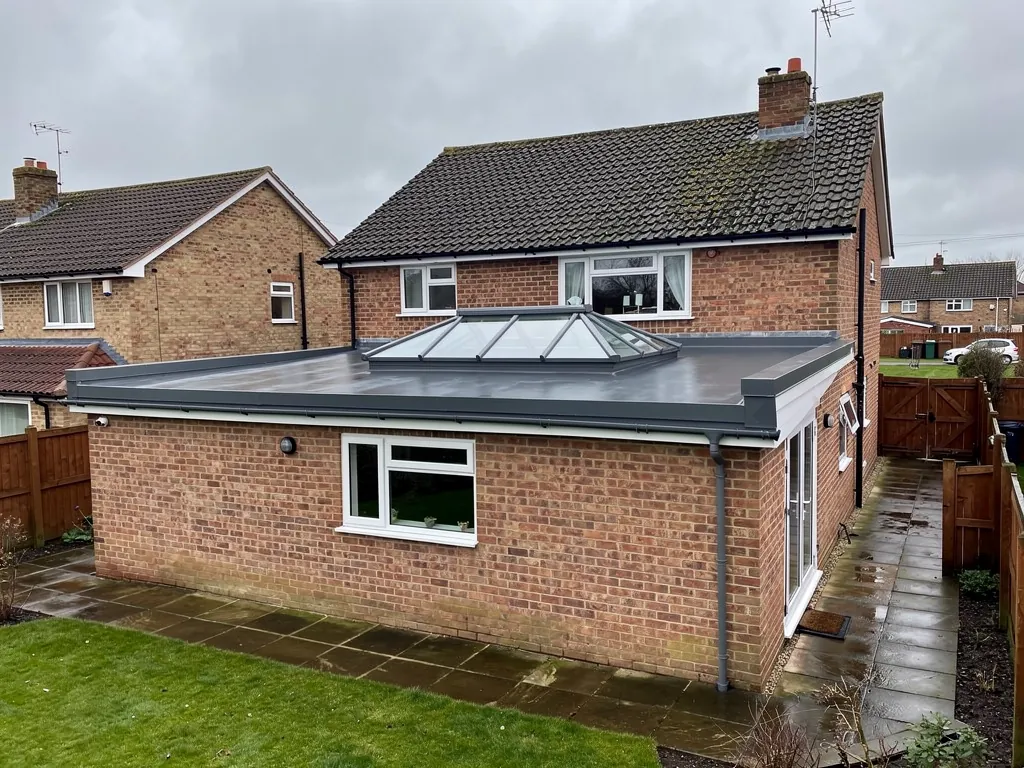
Aluminium does not rot, swell or warp. The coating protects it, and a thermally broken profile is built from parts that do not degrade quickly. The areas that age first are the rubber gaskets and seals, not the metal. Plan on a clean of the glass and frame once or twice a year, and have a look at the seals when you do. Our short guide on cleaning a roof lantern shows how.
uPVC does not rot either, and it needs even less attention. It can discolour slowly in strong light, and the plastic can become brittle over a very long time. Steel cores inside need protecting from moisture, which is why the quality of the system matters.
Think about replacement too. We fit new lanterns and replace old ones, and the old ones we see being replaced are usually ageing for a reason that has nothing to do with the colour of the frame: the glass seal has failed, the old unit was never well insulated, or the upstand under it lets heat out. Choosing a frame is one decision in a chain, and our warm specification page shows the rest of it.
- 1.0 to 1.6W/m²K, the usual whole-unit U-value territory for a good double glazed lantern in either material
- 25 to 45degrees, the usual pitch range for a roof lantern frame
- 10years of workmanship guarantee on every fitting
06Cost
What the choice does to the price
Frame material is one of several things that move the figure. It is rarely the biggest one.
As a general market pattern, thermally broken aluminium lanterns typically cost more than uPVC ones of the same footprint, and the gap depends on the size, the colour, the glass spec and the maker. The glass, the kerb and the structural work often outweigh the frame. A cheap frame with a poor kerb will cost you in heating bills for years, while a good one costs a bit more once.
Ask for the whole job priced the same way each time: frame, glass, kerb, trimming, plaster lining, Building Control notification and clearing up. Then compare like with like. Our costs guide goes through what drives the total, with broad UK ranges.
When you compare quotes, check that each lists the whole-unit U-value, the glass build-up and the frame system by name. If one quote lists a glass figure and another lists the whole unit, they are not the same measurement and you cannot rank them.
Price the whole warm roof, not just the frame, because the frame is only one link in the chain that keeps the heat in.
07Deciding
Which frame suits which room
A few simple questions usually settle it. Here is how we talk it through at a survey.
- Look at your doors and windows. Match the lantern to the dominant colour and material, or choose a deliberate contrast.
- Measure the lantern. Over about 2.5 metres, aluminium's strength and slim bars usually look and work better.
- Think about the room. A bright kitchen-diner with bi-fold doors suits slim aluminium. A modest utility or side return can be happy with uPVC.
- Decide how much you want to see the frame. If you want glass and little else, aluminium. If a sturdier look is fine, uPVC.
- Compare the whole-unit U-value, glass build-up and kerb, not just the frame, from each written quote.
For most south Essex extensions, whether a 1970s kitchen extension in Laindon or a new rear room in Wickford, the frame choice follows the doors. If you are not sure, we can bring samples to the survey so you can hold both.
08Rules
Building Regulations and planning, whichever you choose
The frame material does not change the rules. Both must meet the same energy limits and follow the same permission route.
Replacing a whole roof lantern, frame and glass together, is notifiable as a controlled fitting under Part L of the Building Regulations. The new unit has to meet the current limits for heat loss, and that is where a thermally broken aluminium or a well-made uPVC system proves its figures. We handle the Building Control notification where the work is notifiable, and fit to current Building Regulations. For the details, see Building Regulations for rooflights.
Planning follows the extension, not the frame. Our page on planning permission for roof lanterns explains the usual position, and the council has the final say. Listed buildings always need consent.
To see both frames in your own room, ask for a free survey and written quote. Our full roof lantern installation page shows how a fitting runs, with one team from start to finish, floors and furniture protected.
- Ask for the whole-unit U-value in writing for the frame you prefer
- Ask what the thermal break is made of and how thick it is
- Ask for the finish warranty on the coating or foil
- Ask what the glass build-up and spacer are, and whether they are warm-edge
Which frame will still look good, and stay warm, in ten years?
Is aluminium colder than uPVC?
Plain aluminium conducts heat far better than plastic, so a bare aluminium frame would be cold. A thermally broken frame has an insulating strip between inner and outer halves, which keeps the inside face warm. Ask for the whole-unit U-value to compare properly.
Will a uPVC roof lantern yellow?
Cheap white plastic can yellow over time, and foil finishes can fade. Good modern uPVC profiles are much better, but ask about the finish and any warranty on the colour before you choose.
Which one is stronger?
Aluminium is stiffer for its size, which is why large lanterns usually use it. uPVC can work well on smaller lanterns and often hides a steel or aluminium core for strength.
Can I have different colours inside and out?
Usually yes with aluminium, since the powder coating is applied to each side separately. That lets you match grey windows outside and a white ceiling inside. uPVC is more limited, though some foil systems offer a choice.
Does the frame affect planning permission?
No. Planning depends on the extension and the roof, not on whether the frame is aluminium or uPVC. Check with the council if you have a listed building or an Article 4 direction.