Loughton
What each kind of Loughton roof wants from a skylight
How villas, post-war Debden homes and extended semis each take a rooflight, and what keeps the room warm after it goes in.
01Edge of the forest
A town built along the forest edge, and what that does to a roof
Loughton has Epping Forest on one side and the London boundary on the other, and the houses between them were built in several very different waves.
That is the first thing to understand about rooflight installation in Loughton. Nobody here is working with a single kind of roof. Walk down from the forest and you can pass a tall Victorian villa, a run of Edwardian terraces, a 1930s semi with a hipped roof and a post-war block of flats within a few minutes. The railway made all of that possible, from 1856 onwards, because it turned a forest village into a place people could live and still reach the City.
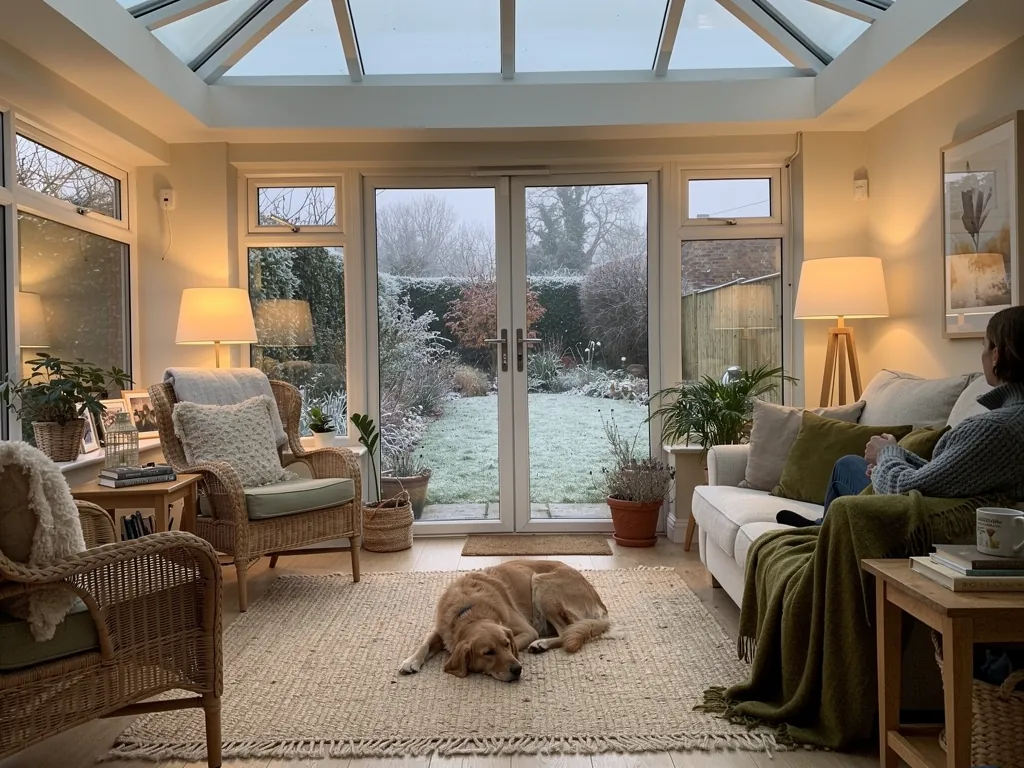
Trees matter as well. Plenty of Loughton gardens back onto woodland or carry mature oaks and beeches of their own. That is lovely in July and a real nuisance in January, when a back bedroom or a rear extension can sit in shade for most of the day. A rooflight lets daylight in from above the branches, which is why skylight installation suits this town so well.
The table is how we start thinking at the survey. We change it once we have seen the actual roof.
Flats deserve a mention too. Loughton has purpose-built blocks and converted houses, and the top-floor homes in them are some of the hottest in summer and the coldest in winter. A rooflight there is a shared-roof question first and a glazing question second, so we start with who owns what.
| Loughton home | Where the glass goes | What we check first |
|---|---|---|
| Large Victorian villa | Rear or side slope, roof window or loft room glazing | Rafter depth and old insulation |
| Edwardian terrace | Back slope over a dark landing | Whether the loft is already converted |
| 1930s semi, hipped roof | Rear extension roof or loft slope | Existing flat roof build-up |
| Flat or maisonette | Communal roof or top-floor ceiling, by agreement | Who owns the roof |
02Planning
Epping Forest District Council and your address
Loughton sits in Epping Forest District, so Epping Forest District Council is the planning authority, and a town this close to protected woodland deserves a proper check before anything is ordered.
For many ordinary houses a rooflight is a permitted development matter. We explain the general rules once, properly, in our skylight planning permission guide, and we would rather send you there than repeat them on a town page.
What belongs here is the local position. Loughton has older roads where the council may have taken extra steps to protect the look of the street, and it has flats and maisonettes, which do not get the same permitted development rights as a house. We do not guess which category your address falls in. Ask Epping Forest District Council, with your full address, and bring the answer to us.
None of this should put you off. It simply means the quote comes after the check, so you never pay for glass the council then asks you to move to the other slope.
03Villas
Victorian and Edwardian houses with tall, cold roof spaces
The older houses in Loughton have generous roofs, and generous roofs have a lot of surface to lose heat through.
Many of these houses have a second floor or a loft room under a steep pitch. The rooms can be charming, but the ceilings follow the rafters, the insulation is whatever was squeezed in at the last refit, and the windows are often small dormers or none at all. A well-placed roof window brings daylight to the middle of the floor, and it gives the room somewhere to ventilate that does not rely on a tiny side window.
Older roofs ask for care at the frame. The window must sit in the line of the insulation, with a collar round it and a lining that is closed tight to the ceiling. Otherwise you get a cold edge around the glass that you notice every winter morning.
Where a house is protected or sits on a sensitive road, our conservation rooflights have a flush, slim profile that keeps the roof looking right while still using modern warm-edge glazing.
Rear slope window
Hidden from the road, easier to agree with a council, and usually the best place for a bedroom or study. It also tends to get the light the room lacks.
Front slope window
More visible, so it is the one the council cares about. Sometimes the only practical place, and then the frame profile and glazing bars matter much more.
04Debden and post-war
Debden and the post-war estates
Loughton includes a large post-war neighbourhood in Debden, built after the Second World War, and the homes there have their own light and heat story.
Houses from that era were built efficiently, with modest windows, plain roofs and a landing or hallway that never gets much light. Many have since gained porches, loft rooms or small rear extensions, and some are now bought by people who want to modernise them properly.
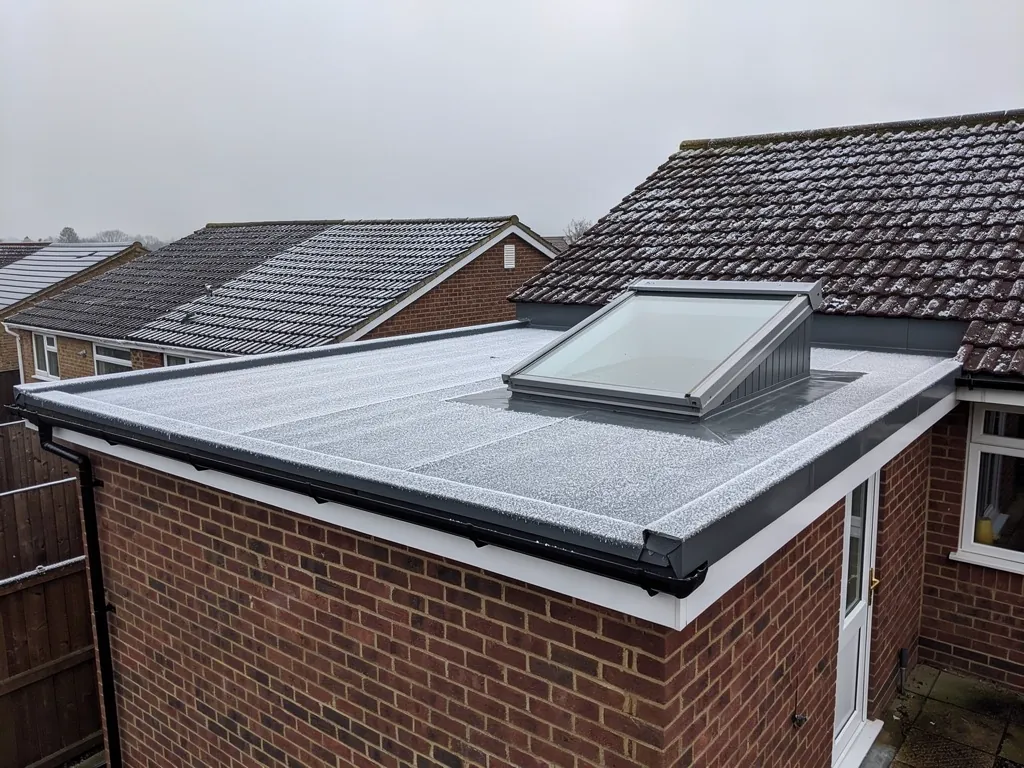
A simple, well-placed skylight can do a great deal in a house like that. Over a stairwell it lights two floors at once. In a flat-roofed single-storey extension it can turn a gloomy kitchen into a bright one. The main risk is a thin roof build-up under the new glass, which is why we check the insulation level before we pick the kerb height.
Because these houses share a similar footprint along a road, a neighbour may already have done the work. It is worth a look at what they chose and how it has weathered the first winter, and we are happy to talk it through with you.
- Look up at the landing and ask whether it needs daylight more than it needs a lamp.
- Ask whether the flat roof at the back has been re-covered since it was built.
- Check how the ceiling meets the wall where a window would go.
- Think about which room you stand in longest on a grey winter afternoon.
- Keep in mind that a council tenant or a leaseholder will need permission from the landlord first.
05Extensions
Extended semis and the cold kitchen-diner
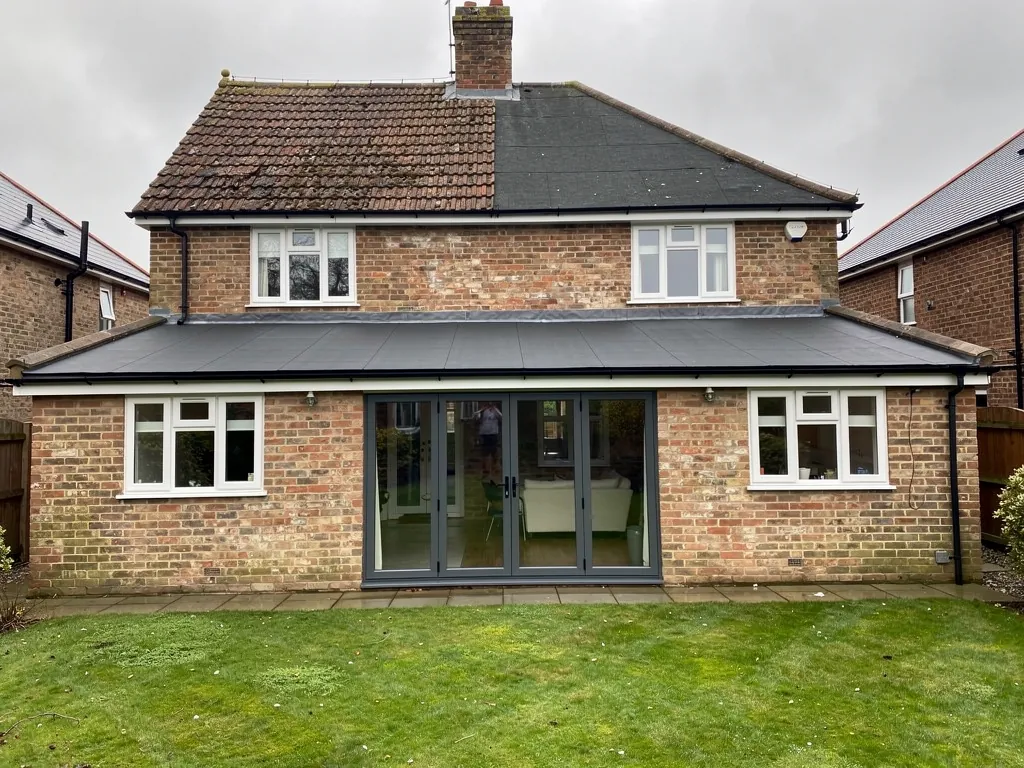
Loughton's 1930s semis and detached houses have often been pushed out at the back, and the new room is where glass makes the biggest difference.
A deep extension is a lovely thing, but it leaves the old rear wall far from the garden and puts a wide flat roof overhead. Daylight from the patio doors reaches only so far. A roof lantern or a flat roof rooflight carries it deeper into the room, and with trees overhead in the garden it keeps working when the side windows are in shade.
The heat question is the same every time: how well is the glass joined to the roof? A kerb is the raised frame the unit sits on, and if it is not insulated all the way round, the cold finds it. Our energy-efficient rooflights page goes through how the glazing, the spacer and the upstand add up.
In practice we match the unit to the room. A long thin kitchen takes a long thin rooflight. A square dining area takes a lantern. We would rather fit one well-sized unit than three small ones that each need their own kerb and their own seal.
Where oaks and beeches shade a Loughton garden, the extension roof is the one part of the back of the house that still sees the sky.
06Warm glass
The numbers that keep a Loughton room comfortable
A rooflight is judged on how much heat it lets out, and there are a few honest figures worth knowing before you buy.
The measure is the U-value, in W/m²K. It counts the heat that crosses one square metre of the window for every degree of difference between the two sides. Lower is warmer. The figures below are standard ones, not a promise about one product.
- 2.2W/m²K, the figure Part L sets as the limit when a rooflight is added to a house that already exists
- 1.4W/m²K, close to a good double glazed rooflight
- 1.0W/m²K or less, where triple glazing can sit
- 10years guarantee on the workmanship of our fitting
Our warm specification page lays out what we choose for the frame, the seal and the lining, and why.
07Getting here
Fitting in Loughton from our Basildon base
Loughton is 23 road miles from Basildon, so we plan the day around you, not around the drive.
Parking can be tight on older residential roads, and some streets near the High Road have limited space, so we sort out deliveries and access ahead of time. The same team that surveys the roof comes back to fit it, and we cover the floors and furniture before anything is opened up.
A complete new rooflight, frame and glass, counts as building work that must be notified, and we look after the Building Control side. Our Building Regulations answer explains when that applies. We also cover Chigwell, Epping and Waltham Abbey close by.
- A free survey at the house, looking at the roof from inside and up top.
- A written quote that spells out the glazing, the kerb or collar, and the lining.
- You check anything the council needs to confirm for your address.
- Fitting day, with one team and protected floors.
- Finishing, notification where it is needed, and a written 10-year guarantee.
What people in Loughton want to know before fitting
Do I need to ask Epping Forest District Council before fitting a rooflight?
Often a house does not, but it depends on the property, so check your address with them. Our planning guide covers how the rules work.
Will trees at the back of the house stop a skylight working?
No. Glass in the roof sits above most of the shade a garden throws on the lower windows, so it often brings in more light than a side window can.
Can you fit a rooflight in a post-war house in Debden?
Yes, if the roof allows it. We look at the build-up first, and for flats or rented homes the landlord must agree before we quote.
Which glazing is best for a bedroom under the roof?
A warm-edge double or triple glazed roof window with an insulation collar and a closed lining. We recommend one at survey, once we have seen the room.
What is the quickest way to get a Loughton survey booked?
Use the quote form or WhatsApp. There is no charge for the survey, and none for the written quote.