01Verdict
A fibreglass roof suits a rooflight, with one condition
GRP is hard, jointless and easy to shape around a kerb. The condition is that the new laminate is bonded into the old one properly, in dry weather, by someone who knows the system.
GRP stands for glass-reinforced plastic, and most people just call it fibreglass. A GRP roof is made by laying resin and glass-fibre matting over a timber deck, then finishing it with a coloured topcoat. It sets into one continuous, rigid skin, which is why it is common on flat-roofed extensions, porches, dormer cheeks and garage roofs around Basildon, Pitsea and Laindon.
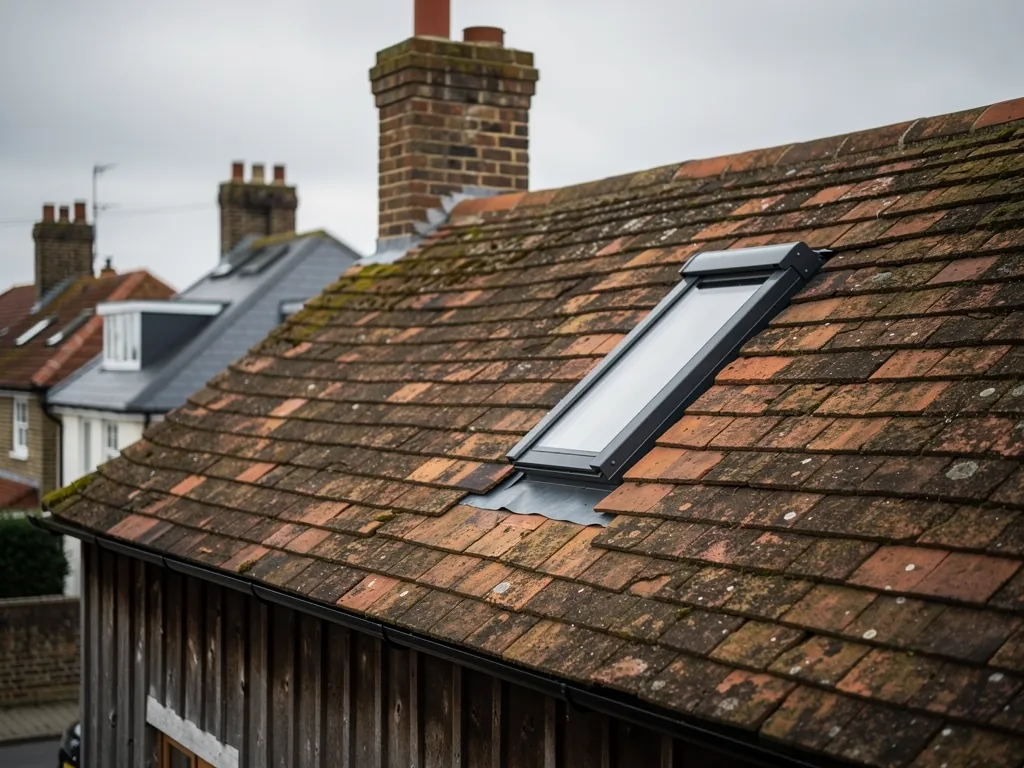
So can a rooflight go on a GRP roof? Yes. We build a kerb (the raised collar that holds the glass clear of the roof surface) around the opening, and the fibreglass is carried up the outside of it as a single piece. Where the new work meets the old, the surfaces are prepared so that fresh resin bonds to cured resin. Your skylight is then a feature of the roof, not an afterthought stuck onto it.
With fibreglass there is no joint to trust at the kerb, because the roof and the kerb become one skin.
02Rigid versus rubber
Why the material changes the method
A GRP roof behaves differently from a rubber or felt one, and that decides how we cut, fix and finish around an opening.
Rubber flexes. Fibreglass does not. That gives GRP a tidy, durable surface, but it means the deck underneath needs to be stiff and stable, because movement in the boards is what can crack a rigid skin. Before we cut, we check that the deck is sound, fully fixed and properly supported, and that the new opening will be framed so the roof keeps its strength. If you are planning a wide opening, our page on how big a flat rooflight can be covers what limits the size.
Fibreglass also cures chemically, so the weather matters. Resin needs dry, reasonably mild conditions to set well, so laminating is planned for a settled spell and not forced on a damp morning. That can shift a start date by a day or two, and we would rather tell you so up front than rush it.
Fibreglass (GRP)
Rigid, one continuous skin. The kerb is laminated in and topcoated, with no taped seams. Needs a stiff deck and dry weather.
Rubber (EPDM)
Flexible sheet. The kerb is wrapped and bonded with adhesives and tapes. Copes with a little movement, but has joints to get right. Our EPDM rooflight page has the detail.
03On site
What happens on the day
The work follows a fixed order, and the finishing coats are the last thing you will see.
First we protect the floors and furniture below, because cutting a deck makes dust. Then the opening is marked out, cut and framed, and the new kerb is built and insulated. After that comes the fibreglass: the existing surface is abraded so the new resin can grip it, matting is laid over the kerb and out onto the old roof, and the whole lot is topcoated. Once it has cured, the rooflight is set on the kerb and fixed down, and we finish the lining inside.
There is a smell while the resin works, and it clears once cured. It is worth opening a window nearby if you can. The rooflight itself can be a lantern or a low flat unit, and our types of flat roof rooflight page lays the choices side by side.
- Check the deck, the fall and the condition of the existing GRP.
- Cut and frame the opening, then build the insulated kerb.
- Prepare the old surface, then laminate the new skin up and over the kerb.
- Topcoat, allow to cure, and fit the rooflight.
- Line the opening inside and clear up.
04Colour and warmth
Matching the finish and keeping the heat in
Two things people ask about fibreglass: will the new work show, and will the room stay warm.
The topcoat is pigmented, and an old roof that has weathered for years will not be exactly the shade of a fresh coat. If the join near the kerb bothers you, we can talk through topcoating the roof or a larger area so the finish looks even. The roof around the kerb matters more for weather than for looks, so we do not cut corners there.
On warmth, the fibreglass skin keeps rain out but does very little for heat, so the insulation under it and in the kerb does the work. We insulate the kerb, tie it into the roof insulation and fit warm-edge glazing as standard. The reasons are set out on our warm specification page. A rooflight whose frame and kerb are warm brings in light without a chilly halo of condensation round the ceiling opening.
You may also want to know about permission. A rooflight on an extension follows the extension's own permission, and a listed building always needs listed building consent. Our planning guide goes through the rules.
Cracks, colour match and cure time: the fibreglass worries
Can new fibreglass bond to old fibreglass?
Yes, when the old surface is clean, sound and abraded, and the work is done in suitable weather. A tired, cracked or flaking roof is the exception, and we will say so on the survey.
Will the roof crack around the opening?
A stiff, well fixed deck and a properly framed opening keep the skin stable, so movement is unlikely. Where a deck is soft or flexing, it gets put right first.
Do I need Building Control for a new rooflight?
A complete replacement rooflight is a controlled fitting under Part L, and cutting a new opening in a roof can call for structural checks as well. We handle the notification where the work is notifiable, and our Building Regulations guide explains when.
Is a fixed or opening rooflight better on fibreglass?
Either works on the kerb. It comes down to whether you want ventilation, which is covered on our page about fixed versus opening flat rooflights. Back to flat roof rooflight installation for the full range.