01The idea
Daylight sent down a pipe
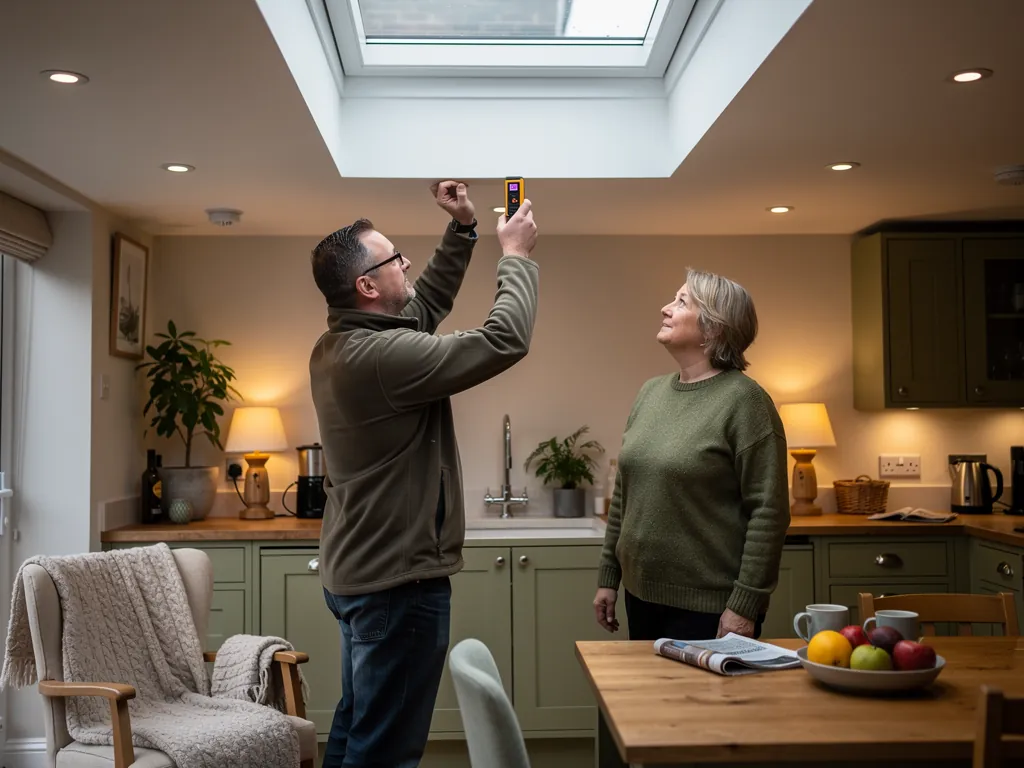
A sun tunnel moves daylight from a roof you can reach to a room you cannot. This chapter explains the trick in plain terms before we take the parts apart.
Picture a torch beam travelling down a polished pipe. The beam does not fade the moment it leaves the bulb, because the walls of the pipe keep bouncing it forward. A sun tunnel does the same job with daylight. A small clear dome on the roof gathers it, a mirror-lined tube carries it, and a panel in the ceiling lets it out into the room.
So how do sun tunnels work in practice? That is the whole principle, and it is why this kind of skylight suits rooms that an ordinary rooflight cannot serve. A rooflight needs its glass to sit directly above the room, with a framed opening cut through the ceiling and roof. A sun tunnel only needs a narrow, round route. The roof can be a few metres away, off to one side, with a loft in between.
You will hear the same product called a tubular rooflight, a light tube, a solar tube or a daylight pipe. They are all one idea. If you want the installed result and the choices around it, our sun tunnel installation page for Basildon covers the whole job. This guide stays on one question: what is physically happening between the roof and the ceiling, and what does it mean for the warmth of the house?
02Collecting
The dome: where the light gets in
The dome is the only part that touches the outdoors, so it has to catch light from a low sun and a high one and keep its shape for years.
The dome is a clear cap moulded from acrylic or polycarbonate, two plastics chosen because they are strong, light and very clear. It sits proud of the roof covering, and its curve means that light arrives at a useful angle whatever the height of the sun. In a south Essex winter the sun is low and weak. In June it is high. A flat pane would favour one and waste the other, while a dome takes both.
Many domes carry a prismatic lens (a moulded pattern of tiny prisms, rather like the ridges on a lighthouse lens) that bends the brightest overhead light downward and spreads it. That cuts glare at midday and helps the tube collect more when the sun is low.
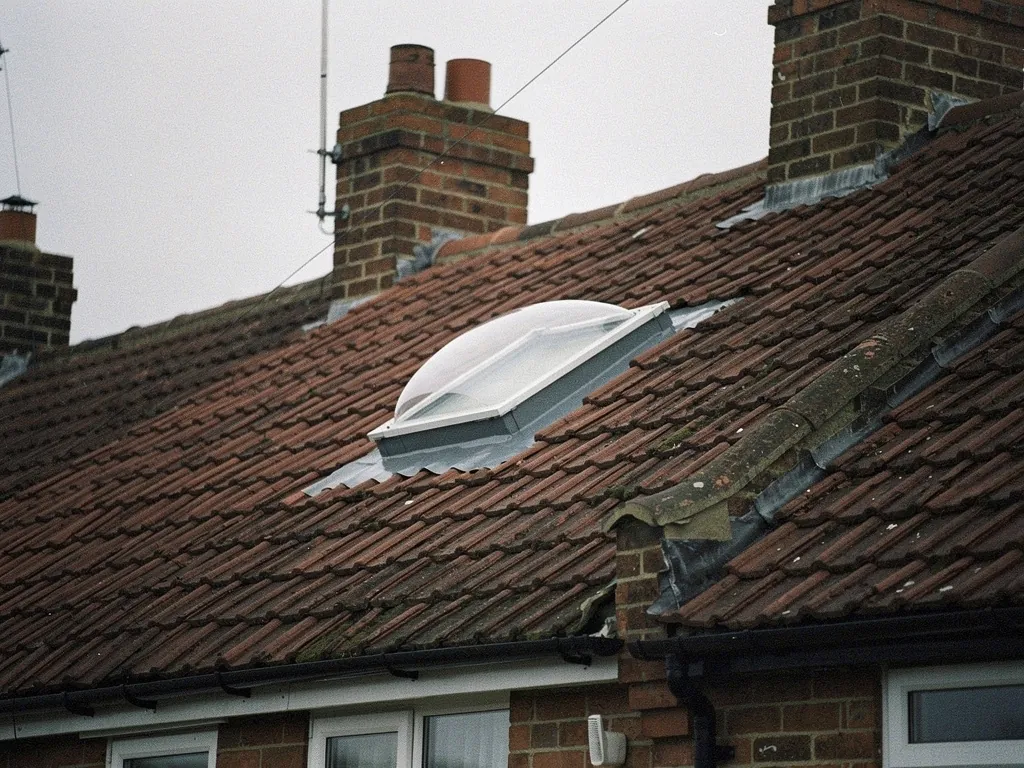
Below the dome sits a flashing, the skirt that joins it to your tiles, slates or flat roof membrane. We fit a flashing made for your roof covering, not a universal one, because the join between dome and roof is where care counts. On a flat roof the dome also stands on a raised collar, a short insulated upstand, so the opening is held clear of any standing water.
What the roof end is made of
- Dome
- Clear acrylic or polycarbonate, sometimes with a prismatic lens
- Flashing
- Matched to tile, slate or flat membrane
- Raised collar
- Lifts the opening above the surface of a flat roof
- Top seal
- Closes the gap between dome and tube top
03Carrying
The tube: how a bright pipe keeps light moving
Light does not simply fall down a tube. It bounces, and every bounce costs a little, which is why the route matters as much as the width.
Inside, the tube is lined with a mirror-bright finish. Good ones reflect nearly all the light that strikes them, but not quite all, and that small loss matters because a beam meets the wall many times on its way down. A short, straight tube gives light few chances to lose anything. A long one with bends gives it plenty.
This leads to three plain rules that explain most of what installers do. A wider tube carries more light because it has a bigger opening at the top and fewer wall strikes per metre of travel. A shorter run beats a longer one. And a straight run beats a bent one, since each elbow throws the beam sideways and it has to find its way again.
Tubes are sold in common diameters of roughly 250mm, 350mm and 530mm. We cover how those sizes suit different rooms on our page about how much light a sun tunnel gives, so here we only note that diameter is the lever you control most easily.
Every metre the light travels and every bend it meets takes a little brightness, so the best tube is the shortest, straightest and widest the roof allows.
The tube comes in two builds. A rigid tube is made of smooth aluminium sections that join end to end. A flexible tube is a ribbed, stretchy liner that bends around obstacles. Each has a place, and we compare them properly in rigid vs flexible sun tunnels.
04Releasing
The diffuser: turning a beam into room light
The ceiling panel decides whether the room gets a hot spot or an even glow, and it is the part that talks to your heating bill.
A beam that arrives at the bottom of a tube would, if left alone, make a hard bright spot on the floor. The diffuser prevents that. It is a frosted or prismatic panel that scatters the light in all directions, so the whole room brightens rather than one circle of carpet.
It has a second job that gets less attention. The diffuser is a piece of your ceiling, and it separates a heated room from a cold loft. A single layer of thin plastic is a poor barrier. A double glazed diffuser, with two layers and a sealed gap of trapped air between them, holds the room side of the panel nearer to room temperature. You feel the difference as the absence of a cold spot overhead on a frosty morning.
Some diffusers also take a light kit, so the same ceiling opening can show a lamp after dark, or a vent kit for a bathroom. Those are extras to discuss with us at the survey rather than part of the basic principle. Our page on fitting a light to a sun tunnel goes into that.
- A double glazed diffuser keeps the ceiling panel closer to room temperature than a single layer does.
- A sealed, gasketed fit stops warm air slipping up into the loft around the edge.
- A trim ring hides the join between panel and plasterboard so the ceiling looks finished.
- A frosted or prismatic surface spreads light evenly instead of dazzling one spot.

05Heat
Where the warmth goes, and how we stop it going
Any hole in a roof is a path for heat. A sun tunnel is a narrow hole with a metal pipe through it, so it deserves a plan for warmth.
Metal carries heat well. A bare aluminium tube standing in a cold loft behaves like a cold pipe dropping toward your room, and any warm moist air that reaches it can condense on the surface. That is the thermal weak point of the whole system, and it is also very fixable.
The fix is insulation around the tube through the loft. We jacket the tube so that the metal never meets cold air directly, and we seal the joints so warm air from the room cannot slip in and meet a chilled surface. Where the tube passes through the ceiling, the diffuser is sealed to the plasterboard and the loft insulation is brought tight around the tube instead of being stuffed in or left with gaps.
On a flat roof the picture is shorter, because the tube is a stubby section through the roof build-up. There the insulation is the roof's own, and the raised collar is insulated too. We make sure the insulating layer is continuous around it so that the sun tunnel does not become a cold spot in an otherwise warm ceiling.
If you have wondered whether a sun tunnel will make a room colder, it depends on the build, which is why do sun tunnels make rooms cold has its own page. In short, a wrapped tube with a double glazed diffuser behaves like a small, well-insulated window, not like an open pipe.
A bare tube in a cold loft
Metal walls chill, warm air from the room can reach them, and a damp ring can appear around the ceiling panel. The room loses heat to a surface it cannot see.
A wrapped, sealed tube
Insulation keeps the tube surface warmer than the air around it, the joints are taped, and the loft insulation sits snug around it. The ceiling panel stays near room temperature.
06Through the day
What you actually see from morning to evening
A sun tunnel follows the daylight outside. It brightens when the day does, and it is honest about a dull one.
Because the dome collects whatever daylight there is, the glow in the room tracks the day. At dawn the ceiling lifts gently. Around noon, if the sun is out, it is at its strongest. In the late afternoon it softens. On a heavy grey day you get a pale, even light rather than a dramatic one, but you get it without touching the switch.
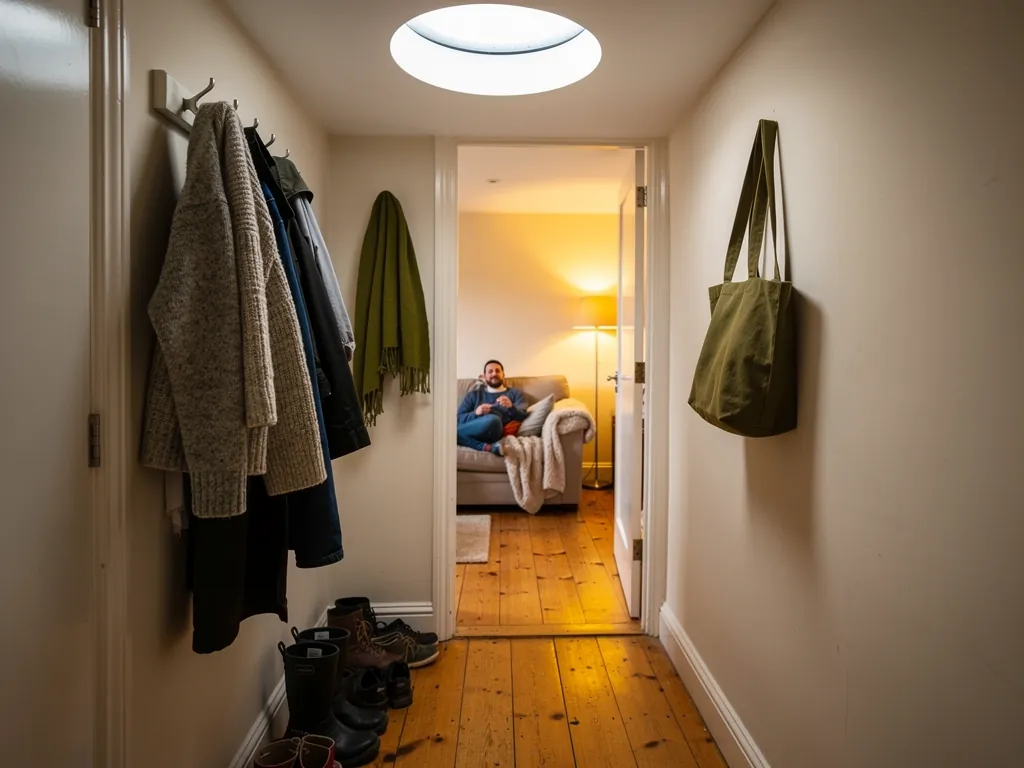
It also behaves differently from a window. A window shows you the outside and throws a bar of sun across the floor. A sun tunnel gives you the daylight without the picture. For a landing, hallway or bathroom that is exactly what you want, because the point is brightness rather than something to look out of.
| Time and conditions | What the room tends to show |
|---|---|
| Early morning | A soft, cool-toned lift on the ceiling |
| Midday, clear | The brightest, most even light of the day |
| Midday, overcast | A pale, steady glow, still better than a bare ceiling |
| Late afternoon | Warmer and dimmer, fading with the sun |
| After dark | Nothing, unless a light kit is fitted in the diffuser |
07The route
Whether your house has a path for one
The principle is simple. Fitting it depends on what sits between your ceiling and your roof.
Every sun tunnel needs a clear run from ceiling to roof, wide enough for the tube and short enough to carry light. In a typical house with a loft, the route goes up through the ceiling, across the joists and out through the tiles. If there is a bedroom above the room you want to light, there is no route, and we would tell you so at the free survey rather than force it.
Pitched roofs give a tube room to angle. A flat roof gives a short, straight drop. The loft's contents matter too. Water tanks, chimney breasts, ducting and timbers all affect where the tube can run and whether it needs an elbow. We cover the loft question in detail in can a sun tunnel go through a loft, and the rooms that benefit most in sun tunnels for hallways and bathrooms.
One team does the whole job. They mark the route, cut the roof, run and wrap the tube, seal the diffuser to the ceiling and finish the plasterwork. Floors and furniture stay covered all the way through, and if the work is notifiable we also sort out the Building Control notice. Everything is fitted to current Building Regulations and backed by our 10-year workmanship guarantee.
- We look from below at the room and from above in the loft, and trace the straightest route.
- The roof opening is cut and the flashing and raised collar are fitted to your roof covering.
- The tube is run from the dome down to the ceiling, with as few joints and bends as the loft allows.
- The tube is wrapped in insulation and its joints are taped, and the loft insulation is closed around it.
- The diffuser is sealed to the ceiling and trimmed, and the room is cleared and tidied.
Worries about light, heat and the loft before you start
Does a sun tunnel work on a cloudy day?
Yes, though it gives less. The dome collects diffuse daylight as well as direct sun, so a grey day still produces a soft glow in the room. It will not match a bright June morning, and it is not meant to replace a lamp at night unless you add a light kit.
Is a sun tunnel the same as a skylight?
It is a relative. A skylight or rooflight is a framed pane of glass directly above the room. A sun tunnel is a small dome and a mirror tube that carries daylight to a room that has no roof overhead. Both bring in daylight through the roof, and they suit different rooms.
Can the tube get cold and cause condensation?
A bare metal tube in a cold loft can, because warm moist air from the room condenses on cold surfaces. We wrap the tube in insulation and seal the joints and the ceiling panel, which keeps the metal warm and the air in the room where it belongs.
How big a hole does a sun tunnel need?
Far smaller than a framed rooflight. The roof opening is round and only as wide as the tube, so a pitched roof usually needs no big structural change. We confirm the exact size once the diameter is chosen at the survey.
Do I need permission to fit one?
Sun tunnels are generally treated like other rooflights under permitted development, but flats, listed buildings and some conservation areas differ. Our skylight planning permission guide explains the rules, and we advise at the free survey.