01The choice
Two ways to build the middle of a sun tunnel
The dome and the diffuser look alike whichever you buy. The tube between them is where the two builds part company, and it is the choice that most affects brightness and warmth.
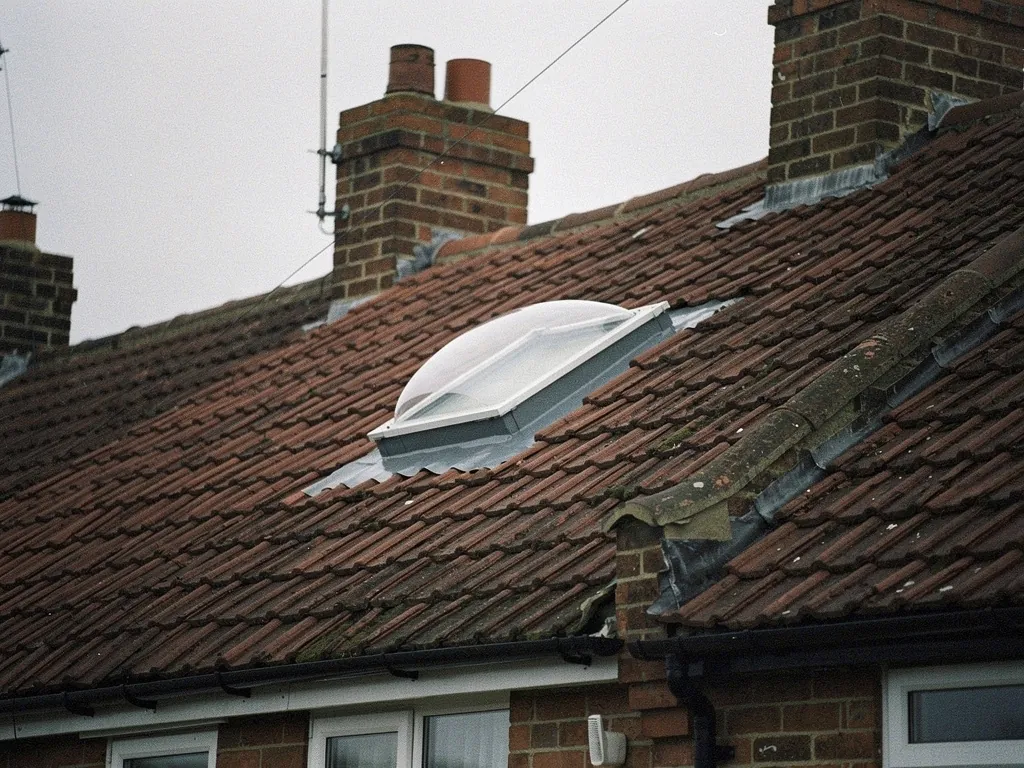
Every sun tunnel, which is a round skylight for rooms without a roof overhead, and a cousin of the framed rooflight, has the same three parts: a dome on the roof, a tube through the loft and a diffuser in the ceiling. Makers offer the tube in two forms. A rigid tube is made of straight aluminium lengths with a smooth mirror finish, joined by elbows where the route must turn. A flexible tube is a ribbed, collapsible liner, rather like the hose on a tumble dryer, that you stretch from the roof to the ceiling and bend around whatever is in the way.
If you are weighing up rigid vs flexible sun tunnels for a landing, hallway or bathroom in south Essex, in brief: Rigid gives more light and holds its line. Flexible gives more freedom when the loft is cramped. Neither is better in every house, and a good installer will say which suits yours after looking at the roof space. For the wider picture of how the parts work, start with how sun tunnels work.
Rigid tube
Smooth, polished aluminium in fixed sections. The light runs down it with the fewest knocks, and the tube stays exactly where it was fitted. Best when there is a straight or gently angled route.
Flexible tube
A ribbed liner that bends around joists, tanks and pipework. It is quick to place and forgiving of awkward lofts, but every rib scatters a little light and every sag adds distance.
02Brightness
Why a smooth wall carries more light
The brightness gap between the two tubes comes from how light behaves on a mirror versus a corrugation.
Light travels down a tube by reflection. On a smooth mirror the beam strikes the surface at a shallow angle and glides on. On a ribbed wall the beam hits the sides of tiny ridges, and some of it is thrown back up the tube or off in odd directions. Over a short run you will barely notice. Over a long one the losses add up.
Stretching also matters. A flexible tube pulled tight is a straighter, shorter path than one left to sag in loops. Slack gives the light a longer way to go and more ribs to bounce off. That is why a flexible tube works best as a short link, stretched firm, and not as the entire route through a big loft.
We are not going to quote you a figure for the difference, because it depends on the model, the diameter, the length and the number of bends, and honest numbers for your loft only come from looking at it. What we can say is the order of preference: a short rigid run first, a rigid run with one or two elbows next, and a flexible section only where the loft leaves no other way. Our answer page on how much light a sun tunnel gives explains how length and width trade off.
A flexible tube is a good way round an obstacle and a poor way to cover a long distance.
03Warmth
Keeping the heat in: insulating each tube
A metal tube in a cold loft is a heat path. How easily we can wrap it differs between the two builds.
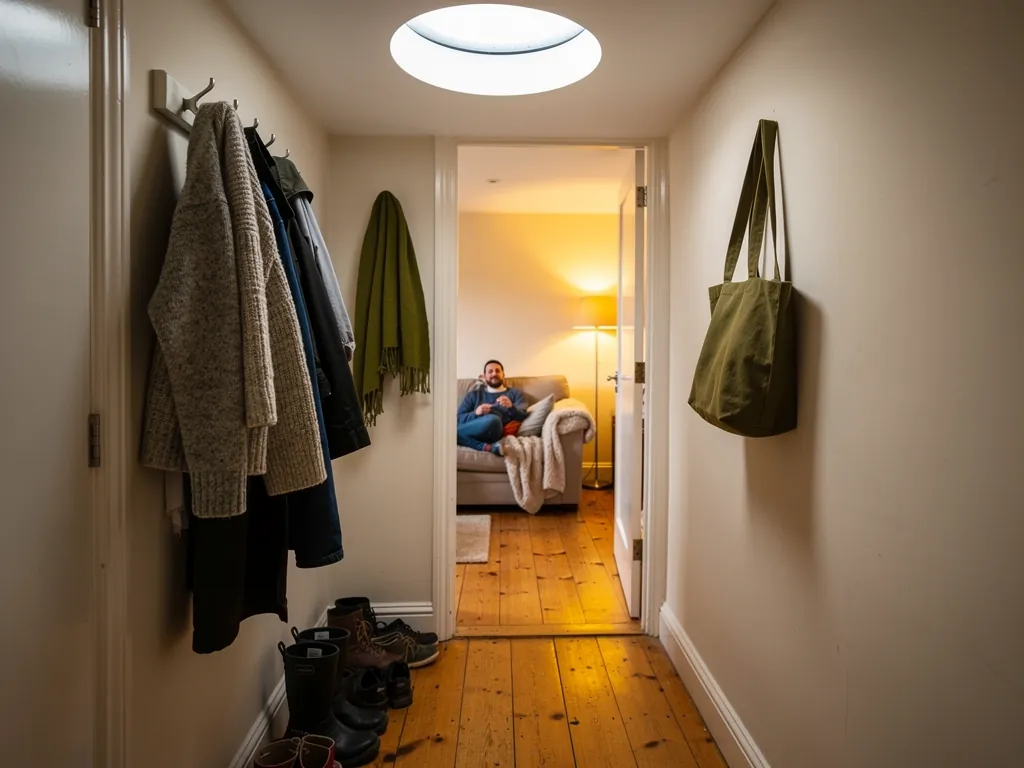
Any tube that runs through an unheated loft must be insulated, because bare metal chills to the loft's temperature and carries cold toward the room. Our tubes are wrapped so the metal does not meet cold air, the joints are taped and the loft insulation is brought snug around the whole run.
A rigid tube is the easier one to wrap. It is a clean cylinder with few joints, so a jacket fits neatly, and the straight sections give a continuous layer of insulation with no folds. It also keeps its shape, so the loft insulation you lay around it stays where you put it.
A flexible tube is trickier. The ribs make a bumpy surface, and the tube can shift or sag after fitting, which opens gaps in a wrap that was tight on the day. Some flexible liners come with an insulated sleeve already around them, which helps. If one is used, we check the sleeve is complete, joined end to end and not squashed against a joist.
- Wrap the whole tube where it crosses the cold loft, from the roof collar down to the ceiling.
- Tape every joint so warm room air cannot reach cold metal and condense.
- Support a flexible tube along its length so it cannot sag and flatten the insulation.
- Bring the loft insulation right up to the tube with no voids at the ceiling line.
- Seal the diffuser to the plasterboard so warm air does not rise past it into the loft.
04Obstacles
When the loft decides for you
Some lofts allow a clean rigid run. Others force a bend or two. Here is how we think it through.
The houses we see across Basildon, Billericay, Wickford and Rayleigh have lofts of every kind. A 1930s semi may have a roomy roof space with a long straight route. A post-war terrace may have a shallower pitch and a ceiling close to the tiles, which gives a short run. A chalet bungalow may have a boarded storage floor and a water tank sitting exactly where you want the tube. A loft converted years ago may have no free route at all.
The first question is whether a straight line exists from the ceiling opening to a spot on the roof that gets daylight. When it does, rigid is the obvious pick. When something sits in the way, we look at whether a single angled elbow clears it, because a rigid elbow keeps the smooth finish. Only when the route needs a tight jog around a chimney breast, a steel or a run of pipework do we bring in a short flexible link.
- Mark where the ceiling opening will go, then find the roof position straight above or near it.
- Look for tanks, ducts, wiring, chimney breasts and roof timbers in that line.
- Try a straight rigid run first, then one with angled rigid elbows.
- Add a short flexible link only where the obstacle cannot be avoided, and keep it taut.
- Confirm the finished route, diameter and insulation wrap with you before work begins.
Our guide to whether a sun tunnel can go through a loft goes deeper on what loft contents affect the route.

05Condensation
Damp, drips and the cold tube problem
A tube that is colder than the room can collect moisture. How the two builds cope differs, and so does what you can see from below.
Warm air holds moisture. When it touches a cold surface, some of that moisture turns to water. In a bathroom, where steam is routine, a cold tube or a cold diffuser is exactly the surface that collects it. Condensation is a symptom of heat loss: the surface is cold because the heat is leaking out, and the water is what you see.
Both tubes can condense if they are left bare and the room air reaches them. Rigid tubes have fewer joints and a smoother skin, so water is less likely to find a place to sit and track. Flexible tubes have deep ribs and many folds that can hold droplets and slow their evaporation. In both cases the cure is the same: insulation round the tube, taped joints and a double glazed diffuser, so no surface in the chain falls below the temperature where moisture drops out.
We deal with the wider question in do sun tunnels make rooms cold.
06Side by side
The two builds compared across the points that matter
A single table to hold the main differences, so you can see where each build wins.
| Point | Rigid | Flexible |
|---|---|---|
| Brightness over distance | Better, smooth walls | Lower, ribs scatter light |
| Awkward lofts | Needs a clear route | Bends around obstacles |
| Wrapping in insulation | Neat and continuous | Harder, can shift |
| Holds its shape | Yes | Needs support |
| Fitting speed | More joints to make | Quick to place |
Read the table as a starting point, not a rule. A short flexible tube with a good wrap can beat a long, bent rigid one with a poor wrap. What matters is the fitted result in your own loft.
07Where each fits
Which build suits which room
The right tube follows the room, the roof and the route. These are the pairings we would reach for.
Landings and hallways
A landing in a two-storey house has a loft above it and often a fairly direct route. Rigid is usually the choice here, because the route is short and straight and the light reaches a long, narrow space. Our page on sun tunnels for hallways and bathrooms covers these rooms in more detail.
Bathrooms and utility rooms
Bathrooms add steam, so the airtight, insulated finish matters most. A rigid run keeps the wrap neat. A flexible link is acceptable where a tank or pipe stands in the way, as long as it is supported and fully sleeved.
Chalet bungalows and loft rooms
Here the tube may run through a sloping ceiling void, with a more angled route. A rigid elbow can follow the slope. Where the void is too tight, a short flexible section lets the tube follow the angle without cutting into the structure.
Flat-roofed extensions
With a flat roof the run is short, so the choice matters less. A short rigid tube is typical, set through an insulated raised collar so the roof build-up stays continuous around it.
Typical pairing by situation
- Straight run to a pitched roof
- Rigid, wrapped in insulation
- One obstacle in the way
- Rigid with an angled elbow
- Tight jog round a tank or flue
- Rigid with a short flexible link
- Short drop through a flat roof
- Short rigid tube and insulated collar
08Quote
What to ask before you accept a quote
Two quotes for a sun tunnel can look the same and be very different jobs. These questions tell you which you have.
A fair written quote names the tube type, the diameter and the finish of the diffuser, and it says how the tube is insulated. If a quote simply says "sun tunnel" with no detail, ask. Ask whether the run is rigid, flexible or a mix, and how many bends it has. Ask whether the diffuser is double glazed and whether the joints are taped and wrapped.
Ask too who does the work. With us, one team surveys, fits and finishes, floors and furniture are protected, and the job carries our 10-year workmanship guarantee. We fit to current Building Regulations and handle the Building Control notification where it applies. The survey costs nothing, and the written quote spells out which tube we suggest and the reason. For a general view of pricing, see our costs guide.
- Is the tube rigid, flexible or a mix, and why that choice for this loft?
- How long is the run, and how many bends does it have?
- Is the tube wrapped, and are the joints taped?
- Is the diffuser double glazed and sealed to the ceiling?
- Who cuts the roof and who finishes the ceiling?
If you would like us to look at your own loft and say which build we would use, the sun tunnel installation page explains how to arrange a survey.
Straight tube or bendy tube: what to check first
Is a rigid sun tunnel always brighter than a flexible one?
Over the same distance, yes, because the smooth wall loses less light than a ribbed one. A short, well-supported flexible tube can still outshine a long, bent rigid one, so the route matters as much as the build.
Can I mix rigid and flexible in one run?
Yes, and it is a common compromise. We use rigid sections for the long, straight parts and a short flexible link where the loft forces a tight jog. Keeping the flexible part short and taut limits the loss of light.
Which one is easier to insulate?
Rigid. It is a smooth cylinder with few joints, so a jacket wraps neatly. Flexible tubes can be insulated too, but they need support along their length so the wrap does not slip or squash.
Does the tube type affect condensation?
Not by itself. Condensation depends on whether the tube surface is colder than the room air. A wrapped, taped tube and a double glazed diffuser keep surfaces warm in either build, while a bare tube of either kind can collect moisture.
How do I know which one I need?
It depends on your loft. At the free survey we look for a straight route from ceiling to roof and for anything in the way. We then recommend a rigid run where we can and a flexible link only where we must, and we explain why in the written quote.