01Dark rooms
Why hallways and bathrooms are the rooms a sun tunnel was made for
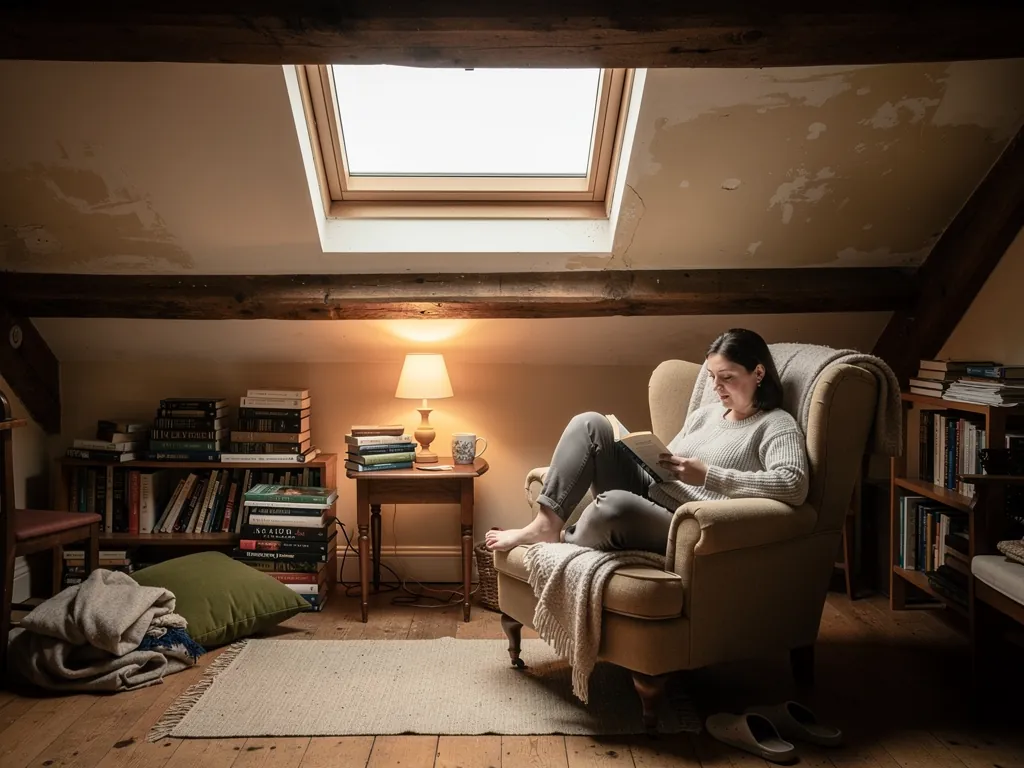
Some rooms are dark because they sit in the middle of the house. This chapter explains why those two rooms in particular suit a sun tunnel better than almost any other kind of skylight.
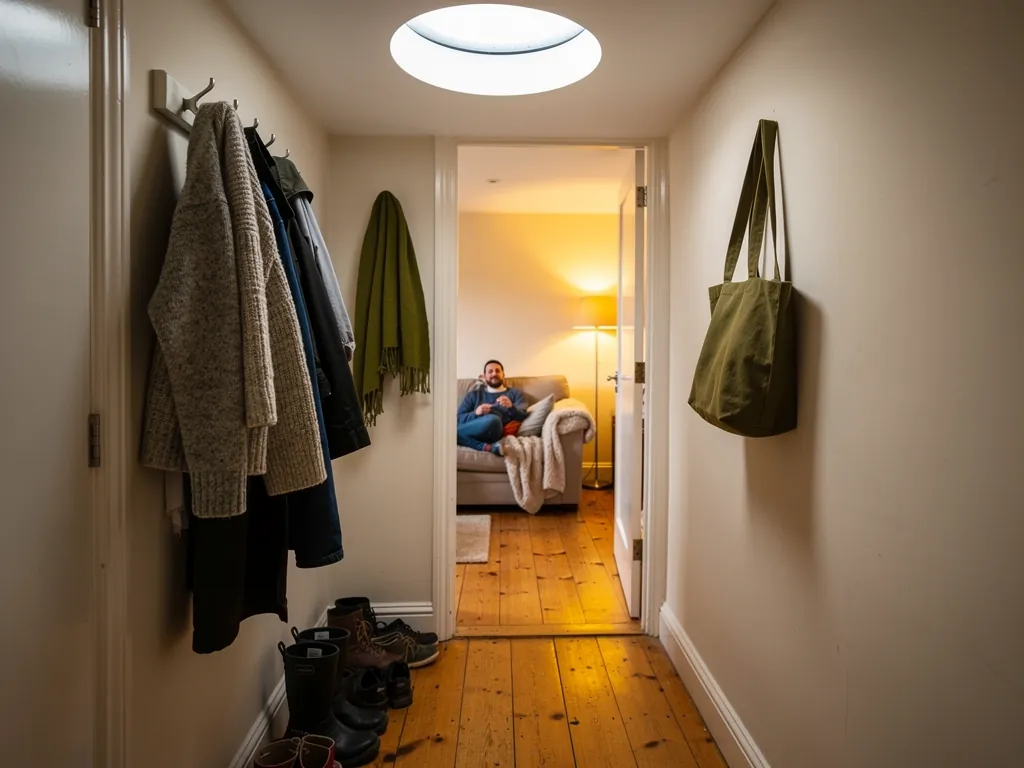
Think about where windows go. They go on outside walls, so the rooms that touch an outside wall get daylight and the rooms in the heart of the plan do not. A hallway with a front door at one end and a staircase at the other is a classic case. So is the bathroom that was squeezed between two bedrooms, or the downstairs cloakroom that backs onto the garage.
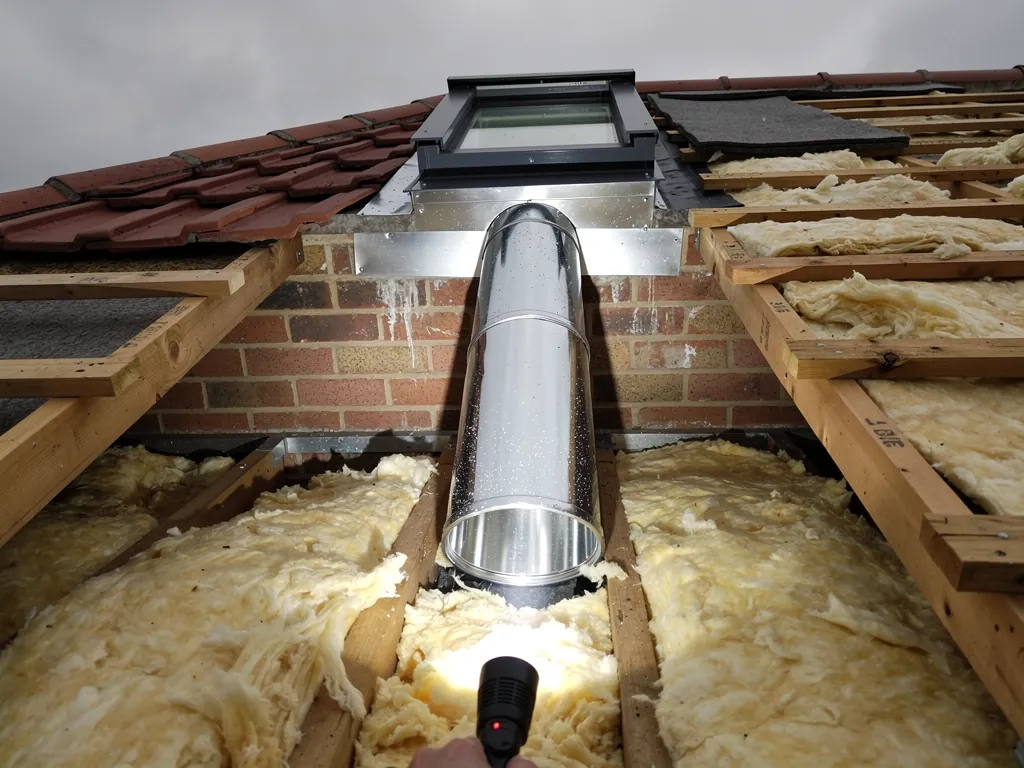
A sun tunnel is a small skylight on the roof joined to a ceiling diffuser by a tube with a mirrored lining. Daylight goes in at the top, bounces down the tube and spills out of the diffuser into the room. If you want the mechanics in full, our guide to how sun tunnels work covers the dome, the tube and the diffuser one at a time. This page is narrower. It is about two rooms and the questions they raise.
Hallways and bathrooms share three traits that make them good candidates. They are small, so a tube a little over a foot across can lift the whole space. They are used briefly and often, so people notice the difference every time they pass through. And both tend to have a roof, or at least a loft, somewhere above them, which is the one thing a tunnel cannot do without.
A window brings a view. A sun tunnel only brings daylight, and for a hall or a bathroom that is all you were missing.
02Hallways
Lighting a hallway, landing or stairwell
The hall is where the layout of your house decides what is possible. Here is how to tell whether a tunnel can reach it.
The first question is simple: what is directly above the ceiling you want to light? In a bungalow, the answer is the loft and then the roof, so a hall tunnel is a short, straight run. That suits the many bungalows and chalet bungalows across south Essex, where long central halls can run dark from front door to back.
In a two-storey house it is different. A ground-floor hall has a bedroom or landing above it, so there is no clear route to the roof. The answer there is to light the landing instead. A tunnel over the top landing pours daylight down the stairwell, and because the stairs are open, some of that light falls to the floor below. A 1930s semi or a Basildon new-town family house, with its straight flight of stairs, can work well this way.
Choosing the spot on the ceiling
Put the diffuser where the light will be useful rather than where the loft is easiest. Over the middle of a long hall it spreads light both ways. Over the top of the stairs it lights the steps themselves, which is where daylight helps most. Avoid placing it directly over a door, because the light then spills into the next room and the hall stays dim.
- Check that the space above the chosen ceiling spot is loft or roof void, not a bedroom or a boxed-in water tank.
- Look for where the ceiling joists run, because the tube has to pass between them without cutting any structural timber.
- Stand at both ends of the hall and decide which area feels darkest, then centre the tunnel nearer that end.
- Think about the stairwell: a landing diffuser lights the steps below as well as the landing.
- Note which way the roof slope above faces, since a slope that gets sun for longer gives a brighter result in the hall.
03Bathrooms
Putting a sun tunnel in a bathroom
Bathrooms bring steam, privacy and ventilation into the decision. A tunnel handles the first two well and does nothing about the third, so plan for it.
Privacy is the easy win here. A tunnel lets daylight in with no view in or out, so there is no frosted glass to fuss over and no blind to keep closed. Neighbours cannot see through a ceiling diffuser, and you do not have to pick between light and privacy the way you do with a window.
Steam is the second point. The diffuser is a sealed unit, so steam from a shower does not pass into the tube. The ceiling around the diffuser should still be finished in a moisture-resistant paint, as with any bathroom ceiling. Because warm, damp air meets a cooler surface near the diffuser, we pay attention to how well that joint is sealed and insulated, so condensation has nothing to gather on.
Third, ventilation. A sun tunnel is closed, so it does not vent a bathroom. A room with a shower or bath still needs its extractor fan or an opening window, in line with Part F of the Building Regulations. If your bathroom has an extractor already, the tunnel sits alongside it. If it relies on a small window, ask us about the ventilation at the survey, because the right answer depends on the room.
04Brightness
How bright will it be in a small room
Small rooms need less light than big ones, which works in your favour. Here is what the numbers on the box mean for a hall or bathroom.
Sun tunnels are sold by tube diameter, and the common sizes sit roughly between 250mm and 350mm across, with wider ones for larger rooms. A hallway or a bathroom of a few square metres is comfortable with the smaller end of that range. A longer hall, or a landing with a lot of stairwell below it, takes the bigger tube.
Brightness depends on four things: the tube width, how long and how straight it is, how clear the sky is, and which way the roof faces. Every bend in the tube costs some light, and a long run costs more than a short one. A bungalow hall with a metre of loft above it will out-perform a landing with a long, winding route. Our guide on how much light a sun tunnel gives goes further on the sums.
| Room | Tube width to consider | What to watch |
|---|---|---|
| Small bathroom or cloakroom | Smaller end of the range | Extractor position and ceiling finish |
| Short hall in a bungalow | Smaller to mid-range | Joist spacing in the ceiling |
| Long hall, chalet bungalow | Mid to larger range | One tube or two along the length |
| Landing over a stairwell | Larger end of the range | Route through the loft |
None of this makes a sun tunnel a floodlight. On a dull December afternoon it will give you a soft grey daylight, not sunshine. That is still a real change from a bare bulb, and on a bright day the room looks as if someone has opened a window.

05Cold
Keeping the heat in while you gain the light
A tube through your loft is a hole in your insulation unless it is dressed properly. This is the part of the job where warmth is won or lost.
Our approach is to treat the tube as a cold shaft in a warm house. Between the roof and the ceiling, the tube passes through the loft, which is the cold zone. Warm air from the room can reach the tube via the diffuser, and if the tube is bare, that warm, damp air condenses on the cold surface and drips back. So the tube is wrapped in insulation, and the ceiling collar is sealed so air cannot flow up around it.
Glazing matters too. A twin-skin dome and a double-skin sealed diffuser, with an insulated tube between them, keep the heat in better than a single skin, and in a small room that shows up in how the diffuser feels on a frosty morning. For the longer story, read do skylights make a room cold, or the shorter answer about sun tunnels.
Hallway tunnel
Often a longer route and a bigger tube, so more tube surface passing through the loft. The insulation wrap and a sealed ceiling collar matter most here. A cold hall ceiling is the first place you would see a mark.
Bathroom tunnel
Often a short route, but the air is damp. The sealed diffuser, a well-insulated collar and a working extractor matter most. The risk is condensation from steam, not heat loss from the tube itself.
06Extras
Lights, fans and finishing touches
Once the tube is in, there are a few additions that suit these rooms in particular. Some are worth it and some are not.
A tunnel gives you nothing after dark, which in a hall or bathroom is most of the hours you use it. Some tunnels take a light fitting in the tube, so one hole serves for both daylight and evening light. We cover what is possible, and the electrical side, in our answer on fitting a light in a sun tunnel. The wiring needs to be done to the standard for the room, and bathrooms have special rules about where electrical fittings can go, so we plan it before the tube goes in rather than afterwards.
For a bathroom, a diffuser with a clean, flat face is easier to wipe than a prismatic one, which is the sort with a ribbed pattern. For a hall, the prismatic type spreads light wider and hides the bright disc you would otherwise see from the stairs.
- Decide at the survey whether you want an evening light in the tube, because it affects the wiring route.
- Pick a diffuser style to suit the room: flat for steamy bathrooms, prismatic for long halls.
- Ask for a ceiling finish that matches your existing paint, so the new collar disappears.
- Confirm where the extractor sits relative to the diffuser so they do not compete for ceiling space.
07Fitting
What fitting looks like, from survey to sign-off
One team handles the whole job. Here is the order things happen in, and what you can plan around.
The survey is free and ends with a written quote. We look at the roof from outside, then climb into the loft to trace a route for the tube. That is where we find out about water tanks, cables, bracing and the exact joist positions, all of which change what we can do. For longer or more awkward runs we explain the choice between rigid and flexible tube in our guide to rigid versus flexible sun tunnels, and the loft route itself is covered in can a sun tunnel go through a loft.
- We survey the roof and loft, choose the spot, and give you a written quote.
- Floors and furniture are covered before we start, in the hall or bathroom and along the route in.
- The roof opening is made and the dome is fitted with its flashing or upstand, depending on the roof.
- The tube is run through the loft, wrapped in insulation and sealed at both ends.
- The diffuser is fitted, the ceiling is made good, and any light fitting is wired.
- We notify Building Control where the work needs it, then clean up and show you the result.
A single tunnel in a hall or a bathroom is a compact job, and the room is back in use quickly. Winter does not stop it, because so much of the work is in the loft.
08Rules
Planning, regulations and when to choose something else
A tunnel is a light job as far as the rules go, but there are a few points to check and a few cases where a different skylight is the better answer.
Most domes on a house roof are within permitted development, provided they do not stick out more than 150mm from the roof slope and do not rise above the highest part of the roof. Flats and maisonettes do not get that right, and listed buildings need consent. Our page on whether sun tunnels need planning permission goes through the cases, and for a conservation area or an Article 4 direction, check with the council. Anything electrical in a bathroom, and the way the ceiling is finished, falls under Building Regulations, which we handle.
Dark hall, steamy bathroom: what to check first
Can a sun tunnel light a hallway on the ground floor of a two-storey house?
Only if there is a clear route to the roof, which a bedroom above usually blocks. The practical answer is to put the tunnel over the top landing so daylight falls down the stairwell into the hall below. We check the layout at the survey before we suggest anything.
Will a sun tunnel make my bathroom cold?
Not if it is built properly. The tube is wrapped in insulation, the collar is sealed and the glazing is warm-edge as standard. The thing to watch in a bathroom is condensation from steam, so a working extractor still matters.
Does a sun tunnel replace the extractor fan?
No. The tunnel is a closed light path and does not move air. A bathroom with a bath or shower still needs ventilation to meet Part F, from a fan or an opening window.
Is a sun tunnel brighter than a ceiling light?
In daytime, for a small room, it can be as bright as you need, though softer and greyer in poor weather. At night it gives nothing, so many people have a light fitted in the tube for the evening.
Do I need planning permission for a sun tunnel on my roof?
Usually a dome on an ordinary house roof falls under permitted development if it stays within the limits, but flats, listed buildings and some conservation areas are different. Check with the council, or ask us at the survey.