Harlow
Harlow homes, from terrace to maisonette
How the new town's terraces, flats, bungalows and the older houses of Old Harlow each take a rooflight, and what keeps them warm.
01New town
Harlow was planned on paper, and the roofs show it
Harlow is a post-war new town, laid out in neighbourhoods around their own shops and greens. That layout decides what rooflight installation in Harlow looks like on the ground.
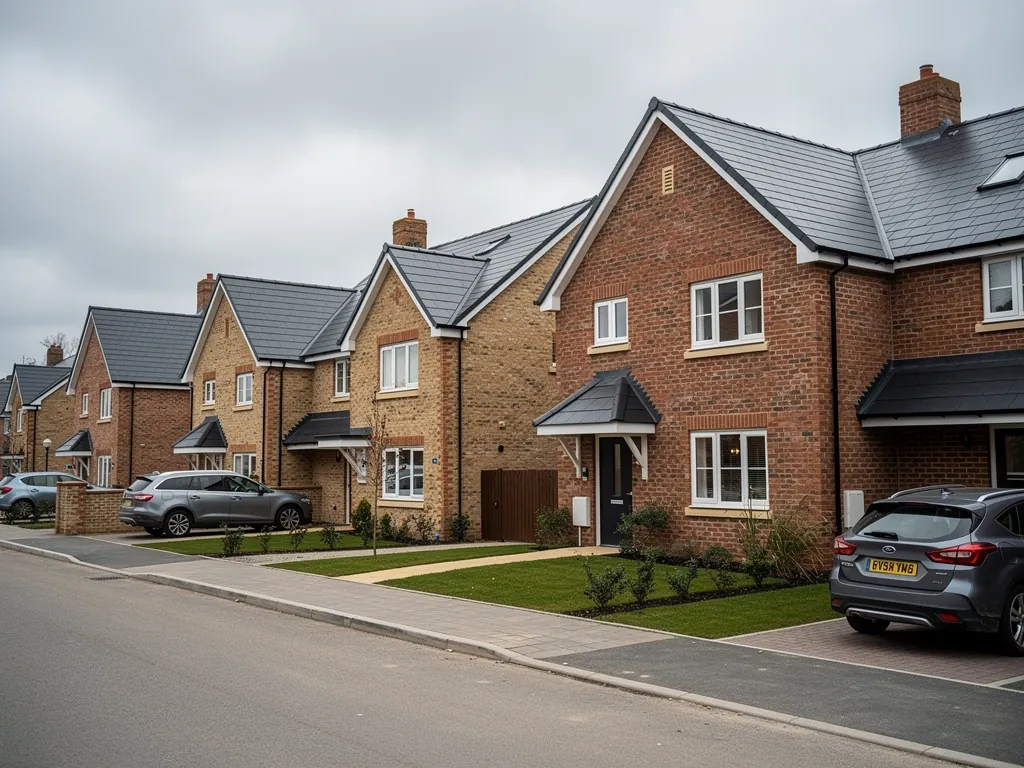
Most towns grow a street at a time. Harlow was designed as a whole, starting after the Second World War, with housing groups set among open green wedges and a town centre of its own. The result is a lot of homes built to similar patterns in the same few decades: short terraces, semi-detached houses, low blocks of flats and maisonettes, and bungalows for older residents. Roof shapes repeat from street to street, which makes the problems easy to predict, and the fixes too.
The older settlement of Old Harlow, east of the new town centre near Harlow Mill station, has a different mix of period houses and cottages. Out at the edges there are also later estates, built once the town's first phase was done. So a skylight job here starts with one question: which Harlow is your house from?
| Harlow home | Typical roof | What a rooflight fixes |
|---|---|---|
| Early new-town terrace | Low pitch, shallow slope | A dim stairwell and landing |
| Flat-roofed kitchen or garage conversion | Flat, often thin insulation | A deep room with one small window |
| Bungalow for downsizers | Gentle pitch, small loft | A hallway with no daylight at all |
| Old Harlow period house | Steeper clay or slate slope | A back bedroom under the rafters |
02Planning
What Harlow Council will want to know
Harlow Council is the planning authority for the whole town, so one phone number settles most questions, even though the houses vary a great deal.
For an ordinary house, a roof window is usually a permitted development matter. We have set the general rules out once, in our skylight planning permission guide, so they are not copied onto a page for every town. What belongs here is the local part. A town built as a single plan can carry restrictions that a town grown piecemeal does not, so it is sensible to ask Harlow Council whether anything applies to your road before you order glass.
Older parts of Harlow, around Old Harlow in particular, may sit in a conservation area. Whether yours does, and whether the council has removed any permitted rights there, is a question for the council, not for us. A listed house needs listed building consent for a new rooflight. Ask early, because an answer in writing makes the quote firmer.

03Terraces
Shallow roofs on the post-war terraces
New-town terraces were built to be economical, and many have a roof pitch lower than you would find on a Victorian street.
You can see the pattern from the top deck of a bus. Rows of near-identical houses, each with the same slope, mean one survey teaches us a lot about the next street. It does not mean every roof is the same. Extensions, loft conversions and re-roofing over the decades have all changed the picture, and we only trust what we measure.
A shallow slope matters for rooflights because every roof window has a lowest pitch it is designed for, and a flat rooflight needs a certain fall on the roof around it. Both rules are covered on our roof windows and flat roof rooflights pages. On a terrace, we measure the real slope on the day instead of trusting the drawing, and then choose between the two kinds of product.
The heat angle is about the loft. Terraces of this age tend to have thin insulation at ceiling level, and a window in the slope has to meet whatever is there. We fit an insulated collar round the frame, close the lining to the ceiling plane, and tell you if the loft insulation nearby deserves a top-up.
Roof window in the slope
Best where the loft is already used or could be, and where you want fresh air as well as light. The frame sits in the slope and needs enough pitch to shed water the way it was designed to.
Kerb-mounted flat rooflight
Better on a flat extension roof, or where the slope is too shallow for a roof window. Sits on an insulated kerb, so the build-up under it matters more than the glass.
04Flats
Flats, maisonettes and who owns the roof
A lot of new-town housing is in low blocks. That changes who you ask before a rooflight goes in.
If you own a flat or maisonette, the roof above you is usually not yours alone. The freeholder or managing company normally controls it, and the usual house permissions do not stretch to flats. So the first conversation is with them, then with the council, and only then with us about the glass.
A top-floor flat with a dark inner hall is a good candidate for a sun tunnel, a small tube that brings daylight down through the ceiling without needing a big opening. Our sun tunnels page explains how they work. We survey flats like any house, and we write down what you will need to show the freeholder.
- Lease or title: does it cover the roof above your flat?
- Written consent from the freeholder or managing agent before any order is placed
- A check with Harlow Council on whether flats in your block face any extra limits
- Access: how the team reaches the roof, and where the materials are stored on the day
- Neighbours below or beside you told about the date and the noise
05Hallways
Dark halls, landings and bathrooms inside a new-town plan
Compact houses put the stairs, hall and bathroom in the middle, where no outside wall can give them a window.
That middle-of-the-house darkness is the common complaint in housing of this period. You switch the light on at eleven in the morning. The cure is daylight from above, and there are two ways to get it. In a loft room or top landing, a small roof window is simple. Where there is loft space in between, a sun tunnel carries daylight down from the roof to a hall or bathroom ceiling.
A bungalow hall is the simplest case. The loft space is usually modest, the run from roof to ceiling is short, and a rigid insulated tube goes straight down. In a two-storey terrace the run is longer and bends are more likely, so we look in the loft before promising a position.
Warmth is the thing people worry about, and it is the thing we design around. A cheap tube can leave a cold spot on the ceiling. We specify the insulated version, wrap the tube where it passes through the loft, and use a double glazed dome. A lantern from our roof lantern range can do the same for a rear extension that is a step up in scale.
A landing or hall, specified for warmth
- Glass
- Double glazed with a warm-edge spacer, or triple if the room needs the extra performance
- Tube or frame
- Insulated tube wrapped through the loft, or an insulated collar on a roof window
- Ceiling
- Diffuser or lining sealed to the plasterboard so no draught finds a way in
- Size
- Chosen for the floor area below, not the biggest unit that fits
06Warmth
Holding the heat in a Harlow room after the glass goes in
Light is the easy half of the job. The other half is the heating bill in January.
Glass lets heat out faster than a solid roof, so the choice of unit matters. What we look at is how the pane is built, how the frame is made, and how it joins the insulation around it. Our energy-efficient rooflights page walks through each of those in plain terms, and our homepage shows how we put them together.
Harlow was laid out on paper, so its shallow terraces and low blocks keep their stairs and halls in the middle, and the roof is often the only way light gets in.
Harlow's flat roofs, the kind over kitchens and converted garages, are where this goes wrong most easily. A thin old roof build-up under a modern frame leaves a cold bridge round the edge. We take a look at the deck, raise the kerb if it needs to be, and bring the insulation up to meet the frame.
07Fitting
From the survey to the finished ceiling
Harlow is 27 road miles from our Basildon base, close enough that the team who surveys is the team who fits.
The town sits on the Hertfordshire border, with the M11 passing along its eastern side and the railway to Liverpool Street and Cambridge running through. We plan the trip so a day on site is a full day on site. Deliveries to roads built before everyone had two cars can be awkward, so we sort parking and access in advance.
Whole rooflight replacements and new openings are notifiable building work, and we handle that Building Control step for you. Our Building Regulations answer explains when. Our reach takes in the nearby towns too, including Epping, Waltham Abbey and Loughton. Skylight installation here follows five steps.
- A free survey, inside the house and on the roof, checking pitch, insulation and what the room needs.
- A quote in writing listing the glass, the kerb or collar, the lining and any council check needed.
- On the fitting day, one crew works from start to finish while floors and furniture stay protected.
- Finishing inside, with the reveal insulated and closed to the ceiling.
- Building Control notified where needed, and your 10-year workmanship guarantee in writing.
What Harlow households want to know before fitting a skylight
Can I put a rooflight in a post-war Harlow terrace?
Usually yes. We measure the roof pitch first, because a shallow slope decides whether a roof window or a flat rooflight suits it. Read our planning guide and check with Harlow Council.
I own a maisonette. Who do I ask first?
Your freeholder or managing company, because the roof above you is normally shared. After that, the council. We can tell you what to put in the request.
Can a sun tunnel light a hall in a compact Harlow house?
Often, yes. Compact new-town houses put the stairs, hall and bathroom in the middle, where no outside wall can give them a window. A sun tunnel or a roof window brings daylight down from above, and the roof pitch and loft space decide which one fits.
Do you fit glass on flat-roofed extensions in Harlow?
Yes. We look at the roof build-up under the kerb before quoting, since a flat roof is where heat is most easily lost around the frame.
Who do I contact to arrange a Harlow survey?
Want a Harlow survey? Tell us about the job on the quote form or by WhatsApp. Neither the survey nor the written quote costs anything.