Great Baddow
Great Baddow from the old village to the estates
How the suburb's cottages, interwar semis, estate houses and bungalows take a rooflight, and what keeps the glass warm in winter.
01Suburb
A village that became a suburb, and the roofs it left behind
Great Baddow sits on the south-east side of Chelmsford and has grown into one of the city's biggest suburbs. Its roofs show every stage of that growth.
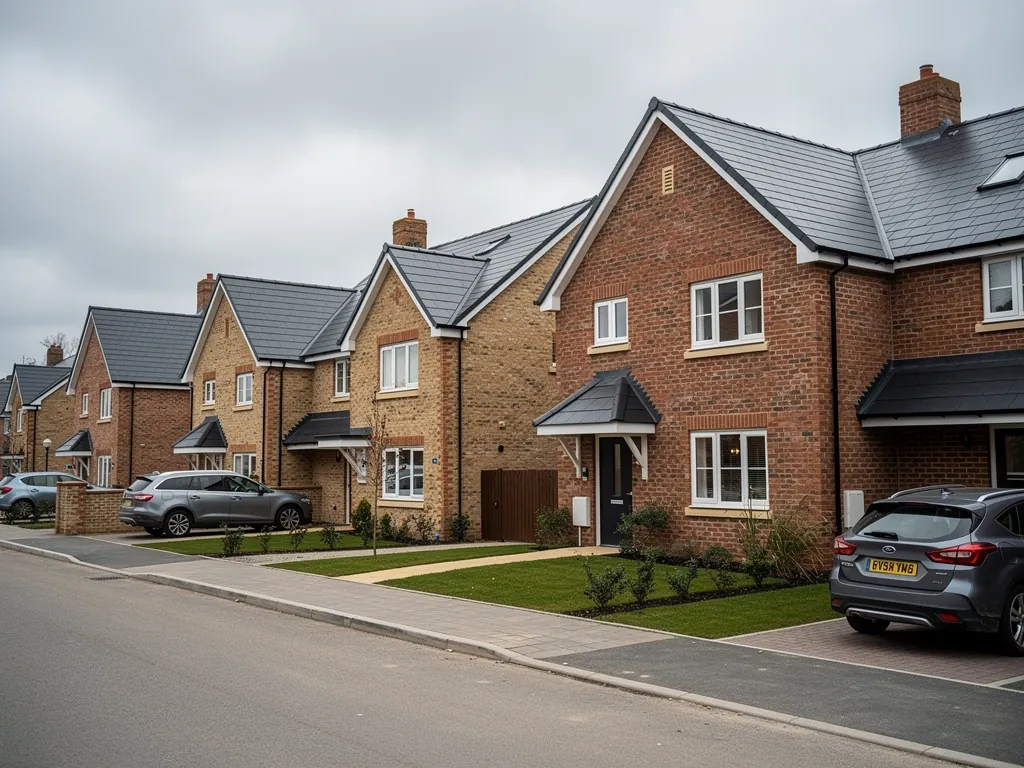
The oldest part is the village centre, where cottages and small period houses stand close to the road. Round them the suburb filled in, first with 1930s semis, then with large post-war estates, then with bungalows, chalets and newer family houses on the edges. Rooflight installation in Great Baddow is really four separate jobs, and each one begins with a different question about heat.
A cottage wants daylight into a deep, dark middle. A semi wants its rear extension opened up. An estate house wants a conservatory roof or a landing sorted. A chalet bungalow wants its bedroom to stop swinging between stuffy and cold. The table sets the four side by side.
| Great Baddow home | Where the glass helps most | Warmth to protect |
|---|---|---|
| Older village cottage | Back slope over a stair or kitchen | Thick walls but thin roof insulation |
| 1930s semi | Rear extension roof or loft room | Early flat roof with a weak kerb |
| Post-war estate house | Replacing an old conservatory roof | Single cavity glass and cold bars |
| Chalet bungalow | Sloping bedroom ceiling | Narrow rafter depth, little room for wool |
02Council
Planning and Chelmsford City Council
Great Baddow is covered by Chelmsford City Council, so one authority answers the planning questions for the suburb and for the city beside it.
For most family houses on the estates, a rooflight on the back slope is a simple matter, and our skylight planning permission guide explains the general position in full. It is not repeated here, because the details are better read in one place and kept up to date.
The older streets are where to be careful. A cottage in the village centre may be listed, and a listed building needs its own consent before any roof is touched. Whether any local controls apply to a particular road is something only the city council can tell you, so please ask them with your full address before you ask us to specify anything. We will work to whatever they say.
03Cottages
Cottages near the village centre and their dark back rooms
The oldest homes in Great Baddow have the most character and the least daylight, because their windows were sized for warmth in an age before cheap heating.
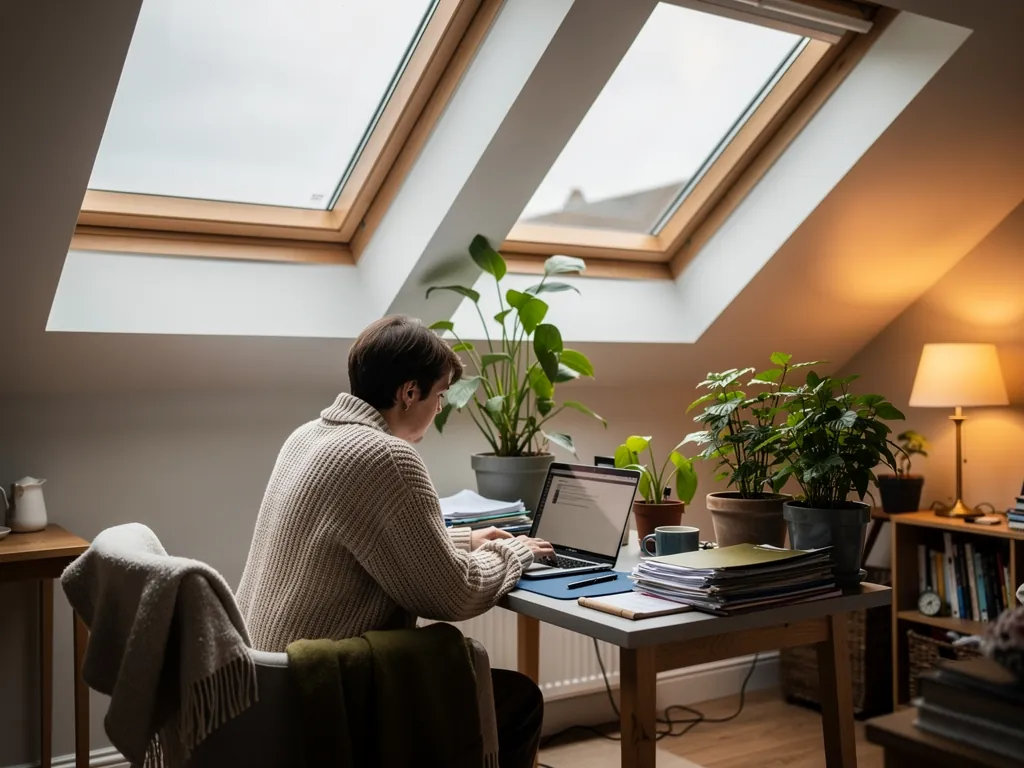
Small panes set in deep walls keep a cottage cosy but leave the room behind it dim. A stair running through the middle of a house gets almost nothing. The roof is the way in: a roof window on a rear slope throws daylight down over a staircase or into a back bedroom that has never had any.
These roofs often have old timbers and uneven slopes, so we measure them rather than assume. A slim, flush frame suits a small cottage best, and our conservation rooflights are designed for the purpose while still carrying modern double glazing. If the cottage is listed, none of this goes ahead until the consent is in hand.
Great Baddow grew from a village into Chelmsford's biggest suburb, so one street can hold a cottage, a 1930s semi and a chalet bungalow, each wanting different glass.
04Semis
Interwar semis and their rear extensions
The 1930s houses that ring the village have deep plans and, usually, a kitchen or dining room built on the back long after they were first lived in.
That extension is typically where the light is wanted and where the cold gets in. A flat roof that suited its time may carry thin insulation and a kerb (the raised frame the glass sits on) with none at all. A new rooflight over it only helps if we rebuild that detail.
A roof lantern lifts a flat ceiling into a room with real height, and it suits a wide dining area. A flat roof rooflight is simpler and cleaner, and it suits a narrow kitchen or a side return. The choice between them is a question of how the room is used, so we decide it at the survey, with the rafters and joists in view.
Lantern over a family table
Pitched glass on an upstand gives a tall, airy space for a wide room. More glass means more heat loss to manage, so we size it to the table and not to the whole ceiling.
Flat unit over a worktop
A single pane on an insulated kerb brings daylight to a run of units. It is neater under a low ceiling, and it needs less glass to do the job.
05Old glass
Swapping tired conservatory roofs on the post-war estates
Plenty of estate houses in Great Baddow added a glazed rear room years ago, and the roof of it is now the weakest part of the house.
A polycarbonate or early glass roof lets in light and lets out heat, and by the following winter the room is a place nobody sits. Taking the old roof off and fitting a proper insulated one, with a rooflight or lantern in the middle, changes how the whole house is used. It also tends to be more straightforward than building a new extension.
Swapping the complete rooflight, frame and glazing is notifiable building work, as is altering the roof structure of the room, and the Building Control notification is something we do for you. Our Building Regulations answer explains when that applies. If the roof carries a roof lantern, remember that a lantern on an extension follows the extension's own permission.
- Look at the base wall and the frame it will sit on, because the new roof is only as good as its support.
- Ask for the glazing build-up in writing: panes, coating, spacer and frame.
- Plan for opening vents in the glass, so summer afternoons do not cook the room.
- Make sure the new roof is insulated all the way to the wall, not just across the glass.
06Bungalows
Chalet and bungalow bedrooms under a low roof
Bungalows and chalets in Great Baddow have bedrooms built into the roof, and those rooms swing hardest between hot and cold.
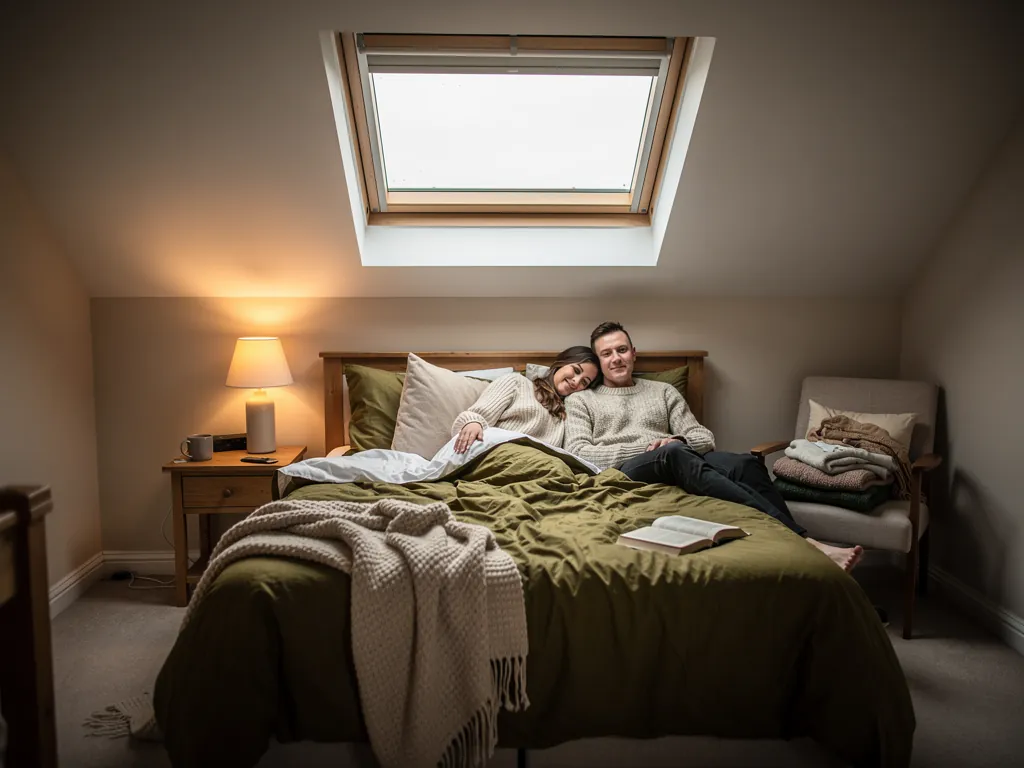
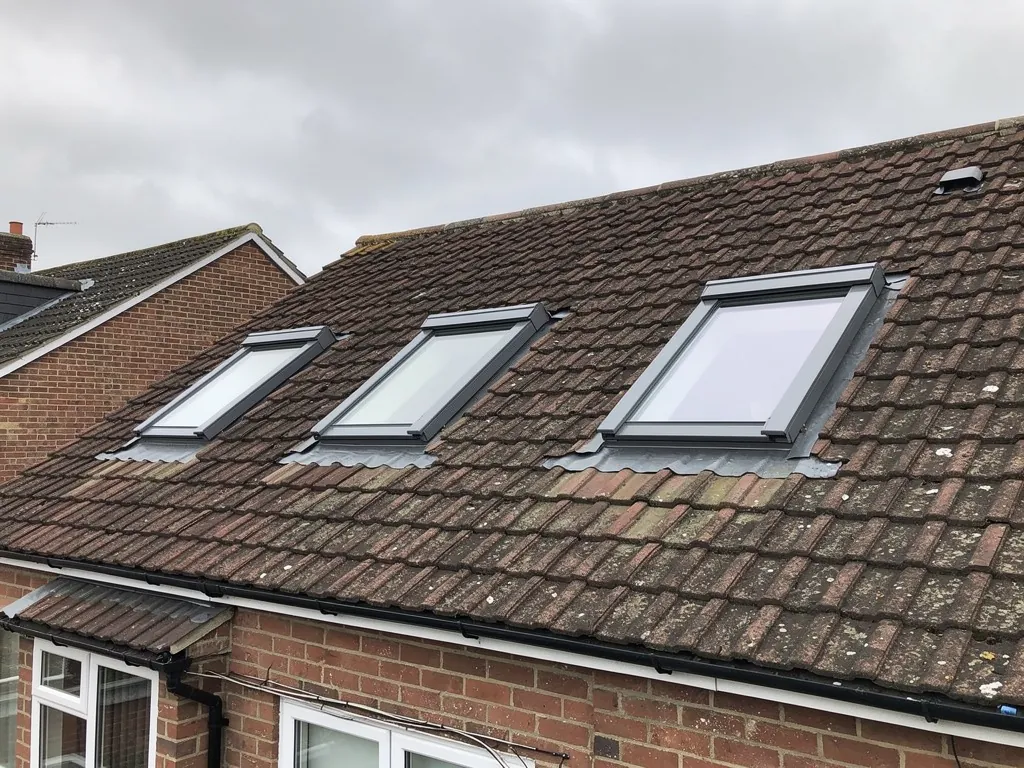
The ceiling follows the rafters, so the insulation can only be as thick as the rafters are deep. A single gable window leaves the far end of the room dim, and the afternoon sun on the slope does the rest. A pair of roof windows on the sloping side lights the room from above and gives you something to open.
If the house already has VELUX windows that have misted or stiffened, a bigger like-for-like swap is often the simplest upgrade, and it lets us renew the insulation and lining round the frame at the same time. Our guide to VELUX windows sets out the ranges. We also fit blinds that keep the heat in on winter nights.
A chalet bedroom roof window, specified for warmth
- Glass
- Double or triple glazed, with the inner pane coated to hold heat
- Spacer
- Warm-edge, to stop the edge of the glass running cold
- Collar
- Insulation collar round the frame before the flashing goes on
- Lining
- Insulated reveal boards, closed up tight to the old ceiling
- Blind
- Thermal blind for winter nights, reflective for summer afternoons
07Numbers
The numbers behind a warm rooflight
Glass is rated by how much heat passes through it, and a few honest numbers tell you what to expect from the units we fit.
This rating is the U-value, measured in watts per square metre for every degree of temperature gap (W/m²K). The lower it is, the warmer the room. Our page on energy-efficient rooflights shows how the glazing, spacer and frame combine, and these are the standard reference points rather than claims about one product.
- 2.2W/m²K, the upper limit Part L sets for a new rooflight in an existing home
- 1.4W/m²K, a typical result for a good double glazed rooflight
- 1.0W/m²K or lower, a level triple glazing can reach
- 10years of guarantee covering our workmanship, whatever the fitting
08Visits
Getting from Basildon to Great Baddow
We travel up the A130 and across to the south-east side of Chelmsford, 16 road miles in all, with the same team surveying and fitting.
Drives like this are short enough that a second visit to re-measure is never a problem. Parking in the older roads of the village can be narrow, so we agree where the van goes before the day. If you are close to the city centre, we also cover Chelmsford itself, and Galleywood is a short hop to the south-west.
- A free survey, inside and on the roof, noting insulation and the build-up under the old glass.
- A written quote naming the glazing, kerb or flashing, lining, and anything to check with the city council first.
- Fitting day with floors and furniture protected, and one team throughout.
- Finishing indoors, so the reveal is insulated and tidy to the ceiling.
- Building Control notified where it applies, and the 10-year guarantee handed over in writing.
Before you book a rooflight in Great Baddow
Is my Great Baddow cottage listed?
The council holds that record, so ask Chelmsford City Council with your full address. A listed building always needs consent first, and our planning guide covers the general position.
Can a rooflight replace my old conservatory roof?
Yes. We take off the old glazing, fit an insulated roof and set a rooflight or lantern into it. The result is a room you can use in winter as well as summer.
Can a rooflight help a 1930s semi with a deep plan?
Yes. These houses are deep, and the kitchen or dining room built on the back often leaves the middle of the plan dim. A rooflight over the extension or a roof window over the landing can bring daylight in. We decide which at survey, after looking at the roof build-up.
Do you fit a rooflight to a cottage with uneven rafters?
Yes, after measuring on site. Old roofs vary, so the survey is where we check the rafters and set the frame to suit before ordering the glass.
Who do I send my Great Baddow photos to?
Send your address and a photo through the quote form or on WhatsApp, and we will book a survey and prepare a quote in writing, both free of charge.